


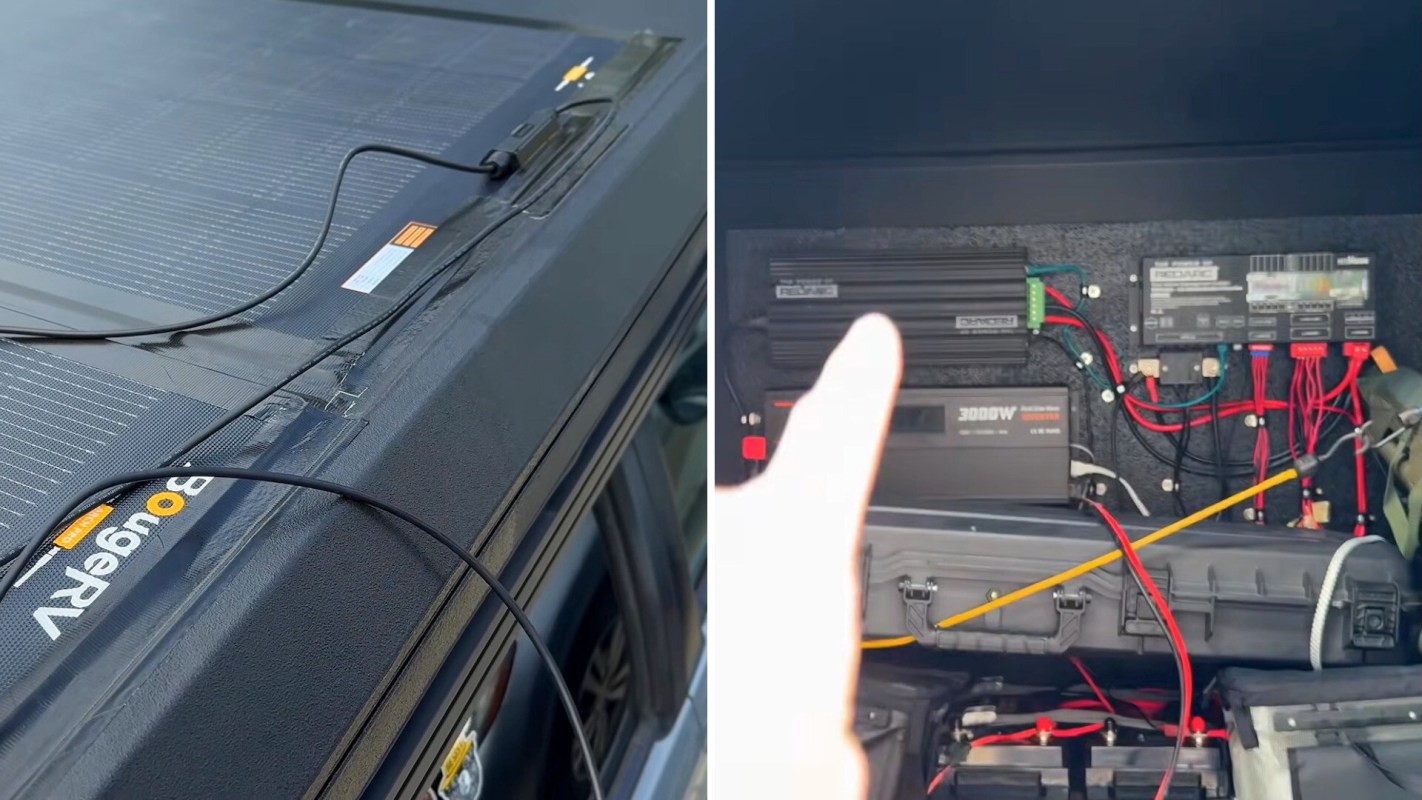
Adding solar to a camper roof can change the game for overlanding and make trips less dependent on hookups. An Indiana overlanding creator showed what that can look like with a custom 400-watt setup installed on a HiperLion camper.
Getting the system onto the camper was only part of the job. He spent much of the effort figuring out how to run the wires on a pop-up roof without damaging the wires or letting water in.
Here's what to know
His YouTube video walks through the full setup, from placing two 200-watt BougeRV flexible panels on the roof to feeding that solar power into a Redarc system through the camper roof.
He explained the practical reason for adding solar: "my truck sits a lot because it's not my daily driver. So, having the solar to just keep everything topped off without having to plug into shore power or run the alternator is just a good alternative and a nice backup."
To hold the panels in place, he used 3M VHB tape, and a cable gland served as the entry point for the MC4 connectors through the roof. He also applied extra tape and sealant to help guard the installation from water, dirt, and wind.
Routing the wires turned into the tougher part of the install. Since the top rises with the tent walls, the cables needed enough slack to move safely as the camper opened and closed. As he put it, "this was my biggest challenge with this whole thing."
TCD Picks » Quince Spotlight
💡These best-sellers from Quince deliver affordable, sustainable luxury for all




More background
Mounting the panels is one task; building a system that keeps working through everyday use is another.
He also said the panels are rated to operate in temperatures from -40 degrees to 185 degrees, which mattered because he camps in winter. That temperature range could make the setup useful across multiple seasons and locations.
One commenter wrote, "Nice. I have the same panels on mine and it keeps my bluetti elite300 topped off even with heavy use."
What can be done?
Plan panel placement and cable routing before anything gets stuck down or drilled through the roof. On a pop-up camper, wire movement may matter just as much as panel output.
Several commenters suggested alternatives to the creator's duct-tape approach, including one who wrote, "I would suggest using a self leveling sealant, such as Dicor, instead of that duct tape. That would ensure a good, water and dirt proof seal."
Solar does not have to be an all-or-nothing upgrade. Even a modest roof-mounted system can help keep batteries charged for lights, fans, device charging, and other essentials, potentially saving money on hookups and reducing the need to run a vehicle for power.
Reliable solar starts with careful planning and installation, not just buying the panels.
In the end, the creator was able to achieve the goal he set out to do: "I never have to unplug this. I'll always have 400 watts of solar."
Where can I learn more?
These articles look at the same solar questions from a few different angles. They cover easier access, the basics of how panels work, energy security, and what larger rooftop projects can look like in practice.
• In Colorado, officials are removing barriers and red tape around plug-in solar for renters.
• Across Ukraine, rooftop solar is becoming a lifeline as attacks strain power plants.
• On any roof, solar panels convert sunlight into electricity that can keep batteries topped off.
• In Scandinavia, crews completed their largest rooftop solar array atop a major facility.
For anyone weighing a small mobile setup or a larger rooftop system, dependable power without always relying on the grid or an engine is a valuable benefit.

Get TCD's free newsletters for easy tips, smart advice, and a chance to earn $5,000 toward home upgrades. To see more stories like this one, change your Google preferences here.







