


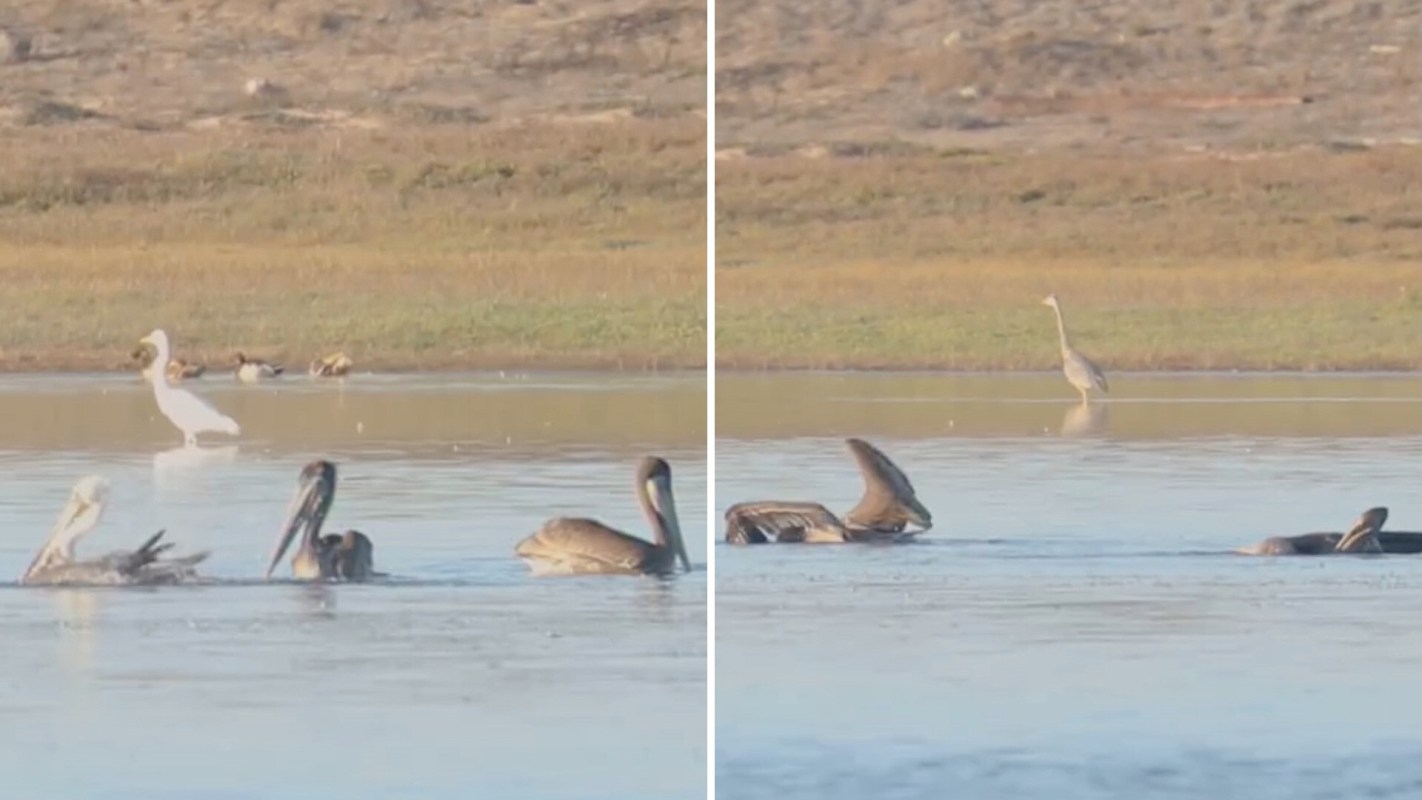
In California's Point Reyes National Seashore, river otters have been turning brown pelicans into prey, attacking the birds in the water, drowning them, and eating them afterward.
Researchers have said the episodes may help explain how changing ecosystems can steer wildlife to adopt unusual hunting patterns.
What happened?
During one season at Abbotts Lagoon in Northern California, researchers found 73 brown pelicans had been apparently drowned and eaten by river otters.
The scientists who noted this emerging predator-prey relationship published their findings in the peer-reviewed journal IUCN/SSC Otter Specialist Group Bulletin.
In the study, the researchers wrote, "So far as is known, this predator-prey relationship only exists in California, and had only previously been observed and documented in 2006 in Rodeo Lagoon… and in a single predation event in 1998 at Lake Tolowa."
Wildlife photographer Daniel Dietrich (@danieldietrichphoto) shared video from 2023 that he believed was the first footage of otters bringing down pelicans.
TCD Picks » Quince Spotlight
💡These best-sellers from Quince deliver affordable, sustainable luxury for all




In the video's caption, Dietrich wrote, "In my years of trying to be the first person to film a river otter capturing a pelican, I captured this. Not one, but a double kill. Never in my wildest dreams. Could you have ever thought this was even possible?"
Why does it matter?
Researchers said the deaths at the lagoon are not enough to threaten the broader brown pelican population. Even so, otters preying on pelicans is highly unusual.
Unusual predator behavior can sometimes point to wider environmental stress. In the earlier Rodeo Lagoon cases, researchers suspected algal overgrowth had reduced fish stocks and pushed hungry otters toward pelicans instead, per the New York Post.
When food webs change, animals adapt, and scientists have increasingly warned that habitat pressure and human-caused ecosystem shifts can reshape wildlife behavior in unpredictable ways.
These incidents do not mean otters have suddenly become a menace. But even beloved and charismatic wildlife can respond dramatically when prey availability, habitat use, or competition changes.

Get TCD's free newsletters for easy tips, smart advice, and a chance to earn $5,000 toward home upgrades. To see more stories like this one, change your Google preferences here.







