


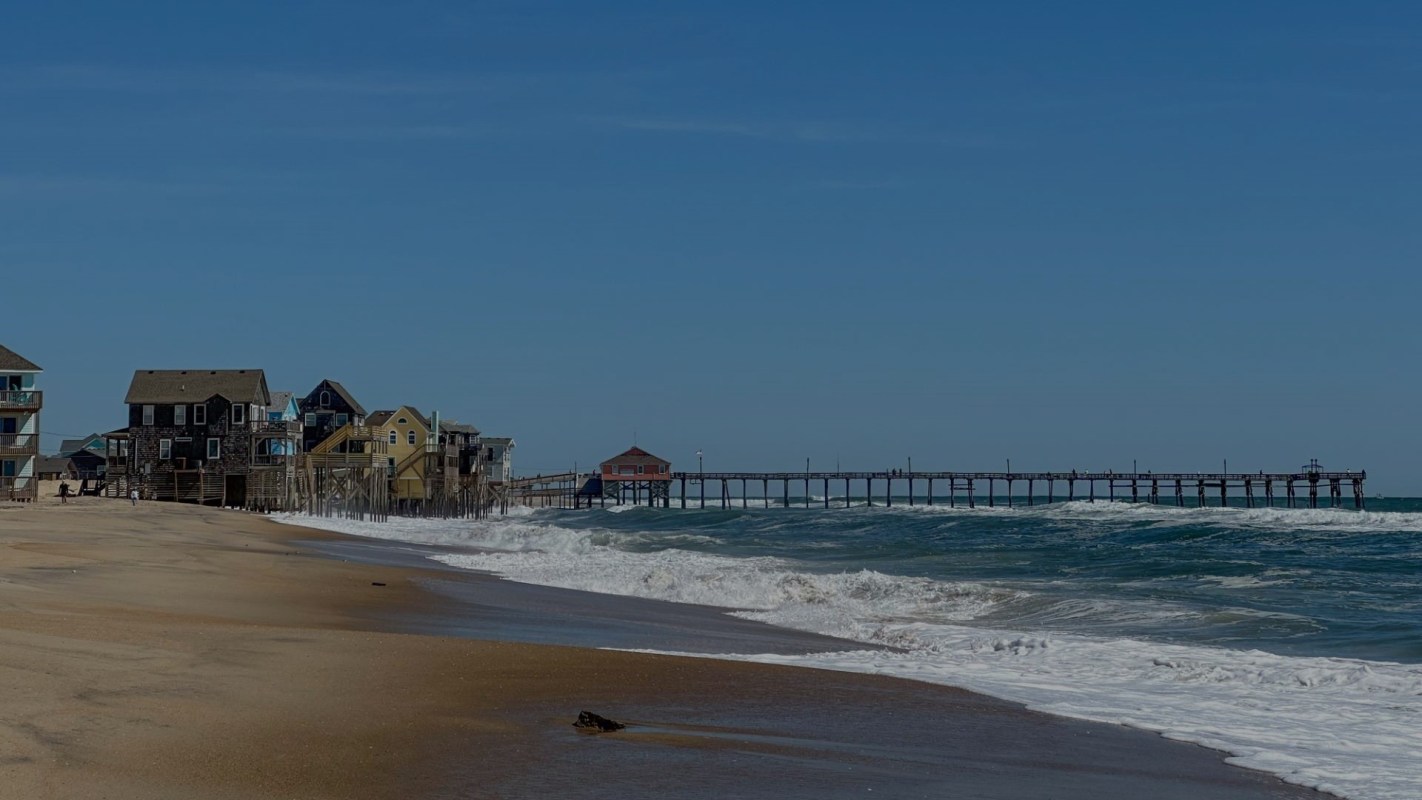
A neighbor in one North Carolina coastal community said some beachfront properties are barely hanging on as rapidly rising sea levels put homes at risk.
What's happening?
In the past five years, a dozen homes on the Outer Banks of North Carolina have fallen into the ocean due to rising waters and erosion rates, per WRAL News. Donny Bowers, a native of the area, expects more homes in the coastal community to collapse in the near future.
"There are about 40 of them that are sitting right there in the shore break," Bowers told WRAL. "And I would say out of those, there's probably about 4 or 5 that look like they're kinda ready to go. Nothing is done until it's on the verge of catastrophic and then the only thing anyone can do is abandon."
According to WRAL, insurance conditions essentially force residents to wait until their homes fall and become debris. The county manager said the cost to clean up the debris is usually between $35,000 and $50,000.
Why are rising sea levels important?
According to scientists, the burning of dirty energy sources produces planet-overheating pollution into the atmosphere and intensifies extreme weather events. Storms like hurricanes and typhoons are supercharged by warm ocean surface temperatures, per the United Nations.
Warming ocean temperatures and melting land ice are the primary reasons for the global sea level rise, according to the Earth Information Center. In 2024, the global sea level rose faster than NASA scientists anticipated at a rate of 0.23 inches.
TCD Picks » Quince Spotlight
💡These best-sellers from Quince deliver affordable, sustainable luxury for all




Even if heat-trapping pollution is reduced drastically, the average sea level in the United States is still projected to be around two feet higher in 2100 than it was in 2000, per the National Oceanic and Atmospheric Administration.
What's being done about protecting coastal communities?
Scientists have been raising awareness about rising sea levels and how they impact coastal communities. A research team at the Virginia Institute of Marine Science developed a Sea Level Report Card for dozens of communities across the U.S. to help residents stay vigilant.
Exploring critical climate issues can help consumers learn more about reducing their reliance on dirty energy sources. Installing solar panels and battery storage can reduce your home's carbon impact while increasing its resiliency during extreme weather events and blackouts.
EnergySage provides a free service that helps solar customers easily compare quotes in their area from vetted local installers and save up to $10,000 on solar installations.
Switching to an electric vehicle or taking public transit can also reduce the amount of pollution in the air, which ultimately mitigates sea level rise and protects coastal communities.
|
Do you worry about having toxic forever chemicals in your home?
Click your choice to see results and speak your mind. |
 Majorly 😥
Join our free newsletter for good news and useful tips, and don't miss this cool list of easy ways to help yourself while helping the planet.







