


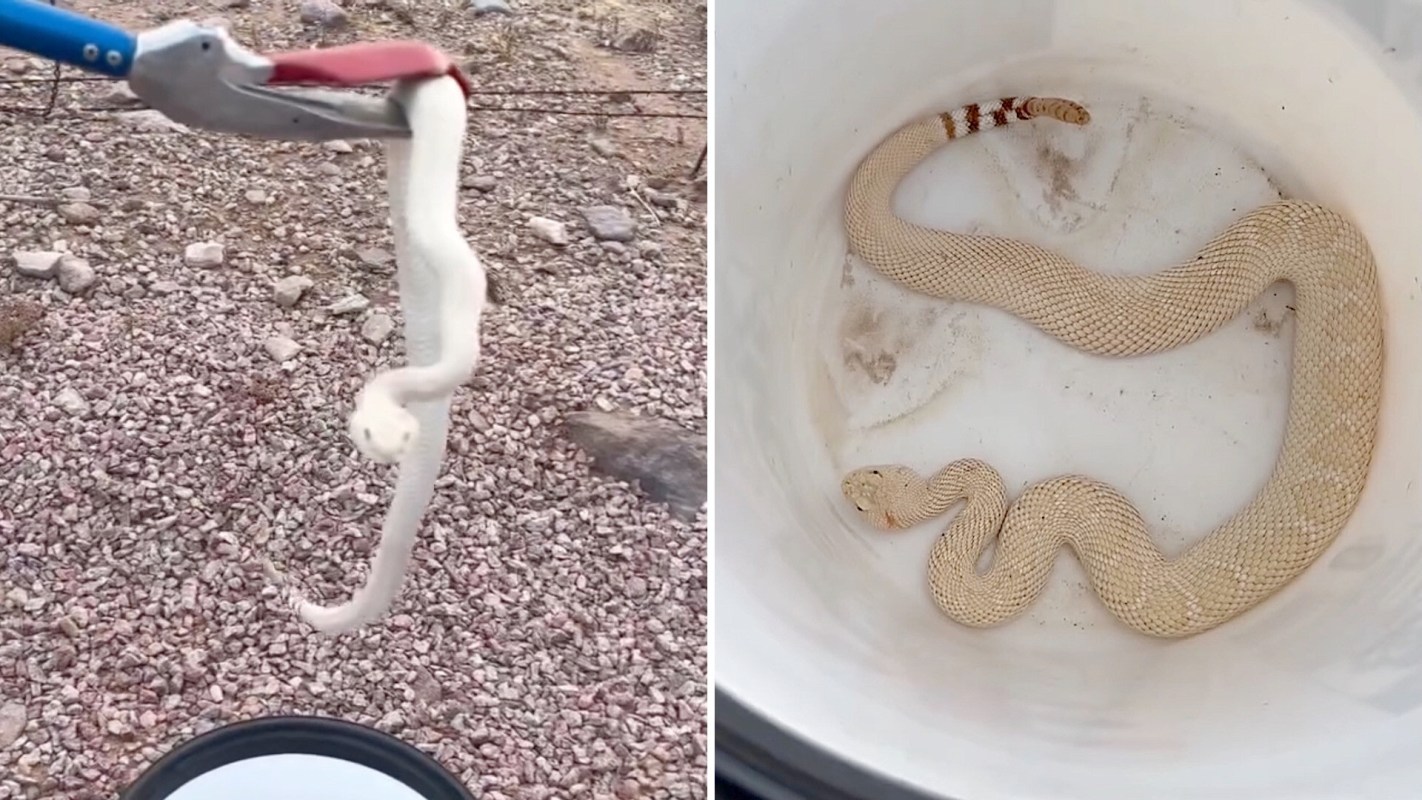
Phil Roberts, a retired Arizona police officer who now removes rattlesnakes from neighborhoods, is drawing attention after capturing an unusually pale snake in Gold Canyon that may be a rare leucistic western diamondback.
What happened?
According to People, Roberts first shared the catch on Facebook, saying he initially suspected the snake was albino. After hearing from snake enthusiasts, he said a different explanation seemed more likely: leucism, a rare genetic condition that causes partial pigment loss.
The distinction comes down in part to eye color. Albino animals usually have pink eyes, while leucistic animals keep dark eyes, and Roberts said this snake had dark eyes. In a June 12 follow-up on Facebook, he said he believed it was a leucistic western diamondback rattlesnake.
He also suggested the animal might not have been the first unusually colored rattlesnake reported in that area.
"Last September I got a call only about 150 yards from where I got this current snake for a report of another 'albino' rattlesnake," he wrote. "It was a delayed report by several days so when I got there it was gone but a photo was taken."
He later added: "Is it the same snake? Has it been in the general area since September 2025?"
TCD Picks » Quince Spotlight
💡These best-sellers from Quince deliver affordable, sustainable luxury for all




Why does it matter?
Even aside from the rare coloration, a rattlesnake wandering into a residential area reflects how often people and wildlife now overlap. As housing expands deeper into desert habitat, encounters like this can become more common — not necessarily because animals are becoming more aggressive, but because humans are increasingly occupying the same space.
BBC Future has reported on how housing, landscaping, and human movement through formerly wild areas can contribute to encounters like this.
Rattlesnakes play an important role in controlling rodent populations, helping maintain balance in local ecosystems. Safely relocating them instead of killing them can protect both residents and native wildlife.
Unusual genetic variants can be especially vulnerable in the wild because their coloration may make them more visible to predators and other threats.
What's being done?
According to ABC 15 Arizona, Roberts has caught more than 85 rattlesnakes over the past year and relocates them away from homes at no charge.
Trying to handle a snake can put both people and animals at risk. Delayed calls can make it harder for trained handlers to find and relocate wildlife before another close encounter occurs.
In snake country, practical safety steps include keeping a safe distance, bringing pets indoors if needed, avoiding reaching into brush or rock piles, and calling trained professionals rather than attempting a DIY removal.
In another update, Roberts reassured followers that this particular snake "is safe and in the great hands of Rattlesnake Solutions."
Roberts said people with more snake expertise had stressed how unusual the capture was: "A lot of people far more knowledgeable on snakes [than] I will ever be have said this is a once-in-a-lifetime capture, so I'm super stoked."

Get TCD's free newsletters for easy tips, smart advice, and a chance to earn $5,000 toward home upgrades. To see more stories like this one, change your Google preferences here.







