


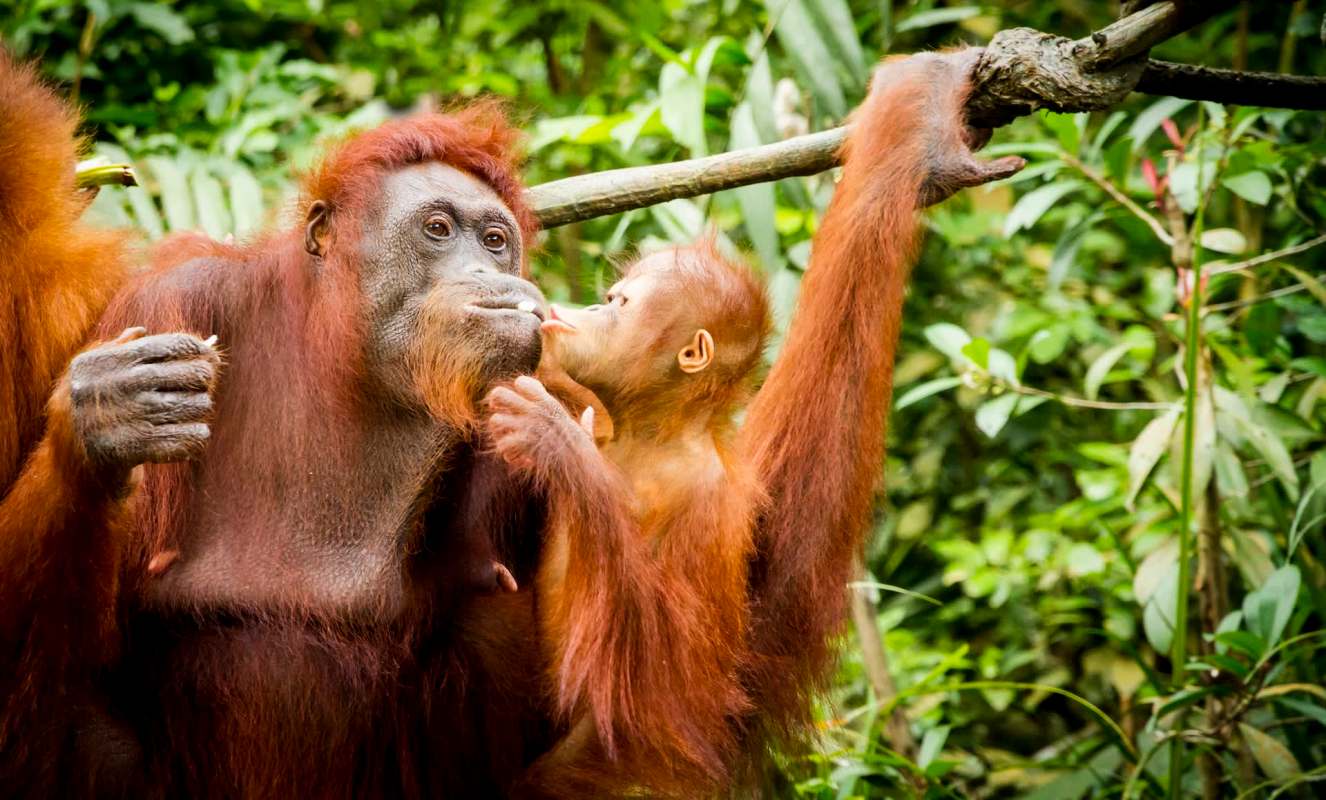
An Indonesian forest that previously had no Sumatran orangutans is becoming a birthplace for a new wild population.
Since 2011, conservationists have been releasing rescued apes into Jantho Pine Forest Nature Reserve and are seeing some of those orangutans rear infants born free in the canopy.
Here's what to know
According to Good News Network, this turning point is playing out in Aceh province on the island of Sumatra, where rehabilitated orangutans have been returned to protected forests.
Jantho started as a destination for orangutans that had been orphaned or removed from captivity and conflict. It is growing into a settled community of wild apes.
Since 2011, the Sumatran Orangutan Conservation Program has moved nearly 200 Sumatran orangutans to Jantho. Researchers have documented at least 10 births in the reserve, a major sign that the animals are not just surviving after release but also raising families.
Orangutans cannot simply be taken from human care and returned to the wild without preparation. Young orangutans normally spend years with their mothers, learning how to find seasonal food, move safely through the canopy, and build nests each night.
TCD Picks » Quince Spotlight
💡These best-sellers from Quince deliver affordable, sustainable luxury for all




For rescued animals that missed those lessons, rehabilitation can take months or even years. Only once they can forage, climb, and live independently are they considered ready for release.
More background
Sumatran orangutans are critically endangered, and their populations recover slowly. Good News Network reported that females usually spend years raising one infant before another is born, giving the species an unusually long gap between births for a mammal.
These infants were not transported in crates or raised in enclosures. They were born in the wild to mothers who were once rescued themselves and are passing essential survival skills to a new generation.
Healthy orangutan populations are a sign of functioning rainforest ecosystems, and resilient forests support biodiversity, cleaner air, and more stable landscapes for nearby communities.
Jantho represents more than emergency rescue alone. Long-term protection and rehabilitation can create the conditions needed for an entire population to take root.
What's being done?
The strategy in Jantho centers on three pieces: rescue, rehabilitation, and safe habitat. After recovering from captivity or trauma, orangutans are assessed for independent survival before being released into a more secure forest.
Jantho provided a sizable protected forest removed from some of the more immediate threats orangutans face elsewhere, giving released animals a better chance to settle, reproduce, and remain wild. When rescued females successfully give birth and raise infants, the impact multiplies across generations.
Conservation success often depends on sustained investment rather than one-time interventions. Protected forests and wildlife rehabilitation efforts can help preserve ecosystems that benefit both animals and people.
Jantho is no longer only a refuge for rescued orangutans. It has become evidence that steady, careful conservation can rebuild what was nearly lost, one mother and one baby at a time.

Get TCD's free newsletters for easy tips, smart advice, and a chance to earn $5,000 toward home upgrades. To see more stories like this one, change your Google preferences here.







