


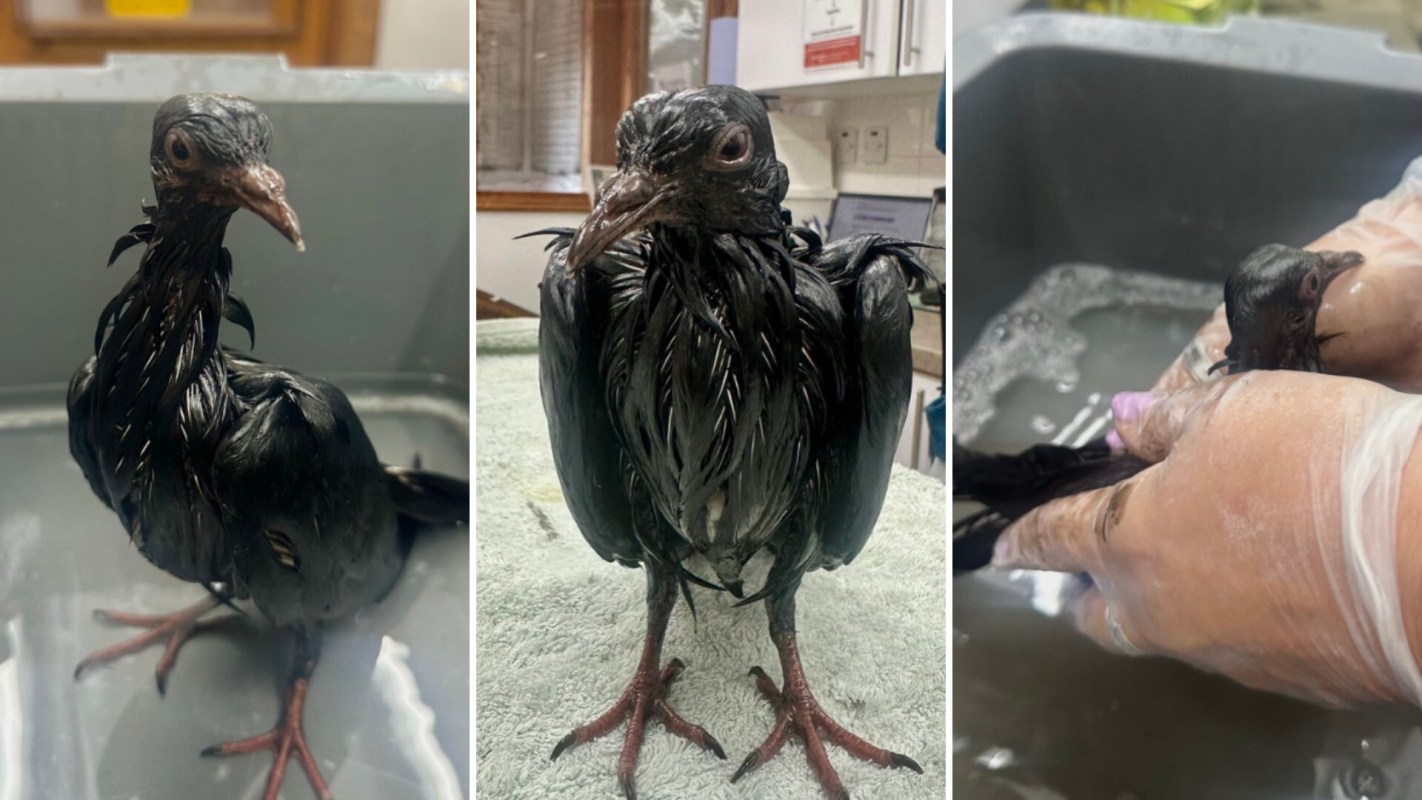
A pigeon rescued in the U.K. after being drenched in motor oil did not survive, despite an urgent effort to save it.
The heartbreaking case has shocked animal lovers and shows how quickly common pollutants can turn deadly for wildlife.
What happened?
On July 14, Wildlife Aid Foundation (@wildlifeaid) shared an Instagram post about a pigeon that arrived in extremely poor condition. The organization said the bird was in such bad shape that staff were stunned by what they found.
"When this little pigeon arrived at WAF, our team were shocked to see the state he was in," the rescue wrote.
They added: "While we see many birds admitted after becoming coated in harmful substances, we rarely see anything as severe as this."
Staff immediately began cleaning the bird, bathing him in an effort to remove the oil. WAF said the pigeon was "covered from head to toe in thick motor oil" and that it had "seeped into his eyes, coated every feather, and he'd even ingested the toxic substance."
TCD Picks » Quince Spotlight
💡These best-sellers from Quince deliver affordable, sustainable luxury for all




Despite those efforts, the bird died. In the post, WAF described the outcome bluntly: "This poor pigeon lost his life. 💔 He deserved so much better."
Why does it matter?
Motor oil is dangerous for birds in several ways. It can destroy the structure of their feathers, making it harder for them to stay warm, move normally, or fly.
If the substance gets into their eyes or they swallow it while trying to clean themselves, it can also cause serious internal harm.
Pollution from roads, driveways, and vehicles does not simply disappear. Leaks, spills, and improper disposal can spread into shared spaces where animals feed, rest, and look for water.
What's being done?
WAF's team responded right away, trying to bathe the pigeon and remove as much oil as possible. The case also illustrates how wildlife rehabilitators are often the last line of defense for animals exposed to toxic substances.
That kind of emergency care can be labor-intensive, time-sensitive, and emotionally difficult, especially when animals are already in critical condition.
WAF advised people to keep containers of toxic substances closed when not in use and to "be mindful of the wildlife that could accidentally fall into them."
People who find contaminated wildlife should contact a licensed wildlife rehabilitator or local animal rescue organization rather than trying to treat the animal themselves. In many cases, specialized handling is needed to avoid worsening the animal's condition.

Get TCD's free newsletters for easy tips, smart advice, and a chance to earn $5,000 toward home upgrades. To see more stories like this one, change your Google preferences here.







