


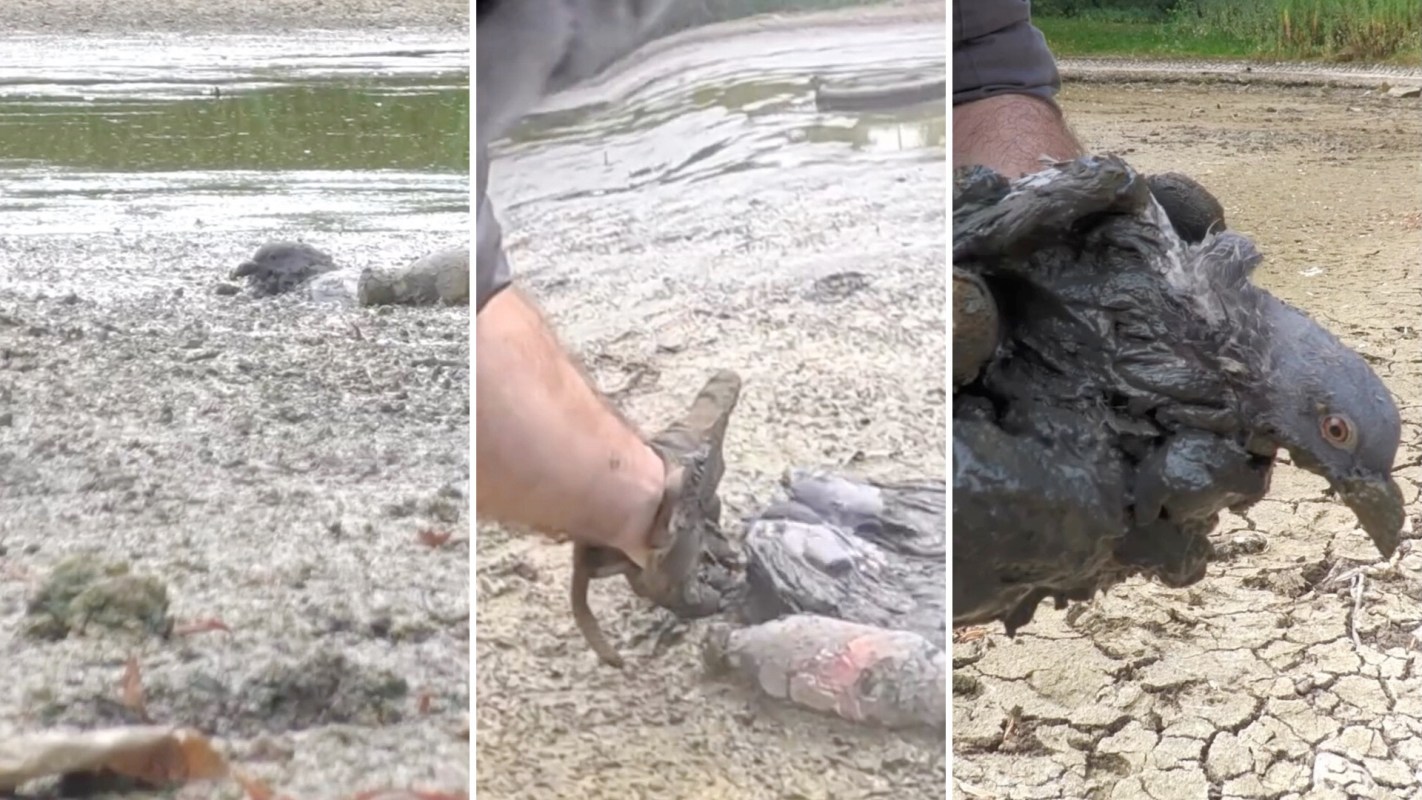
A young pigeon became trapped in the mud of a dried-up pond and came close to disappearing beneath it.
After several days of being immobilized, unfed, and slowly sinking, the bird was finally saved by Wildlife Aid Foundation (@wildlifeaid), which documented the rescue on social media.
Here's what to know
Rescuers discovered the young pigeon after it had spent days in a dried pond, where it was found "firmly embedded" in the ground, per their Instagram post.
"Sinking deeper, hungry, and completely alone, this little man had given up hope," the organization said.
A rescuer named Louis managed to get the pigeon out of the mud and transport it to the foundation for treatment. He creatively used a log to access the bird without sinking into the water.
At the center, volunteer vet nurse Sam continued cleaning the exhausted bird, fed it, and left it in the team's care for close monitoring.
TCD Picks » Quince Spotlight
💡These best-sellers from Quince deliver affordable, sustainable luxury for all




The pigeon's attempts to break out of the enclosure later signaled to staff that it had recovered enough to return to the wild, the rescue wrote. The organization added a longer cut of the rescue on YouTube, showing more moments from the rescue, release, and time at the center.
More background
Dry ponds, muddy banks, and shrinking water sources can create hidden hazards for wildlife. Birds and other animals can become trapped when soft ground hardens on the surface while remaining deep and sticky underneath.
Once an animal is brought to safety, rehabilitation groups improve its chances with food, cleaning, rest, and ongoing observation.
This rescue involved an animal that many people often overlook. Pigeons are common in towns and cities, but their familiarity does not make them any less vulnerable to environmental hazards.
Local rescue organizations can have an immediate impact in their communities, protecting animals that might otherwise go unnoticed and die.
What's being done?
In this case, the response was hands-on from start to finish. The work unfolded in key stages, with multiple individuals advancing the process. Louis pulled the bird free, Sam provided its initial care, and the team watched over it until it appeared ready for release.
The rescue relied on trained staff, volunteers, and public support. Without people on the ground and facilities equipped to care for distressed animals, many rescues would end at the point of discovery.
For people who want to help sustain work like this, one practical option is donating money to climate causes, especially when those efforts support habitat protection, conservation, and community-based rescue networks.
For this pigeon, the clearest sign of recovery came when its instincts kicked back in. That signifies a job well done, even if it means the time in the rescue's care is over.

Get TCD's free newsletters for easy tips, smart advice, and a chance to earn $5,000 toward home upgrades. To see more stories like this one, change your Google preferences here.







