


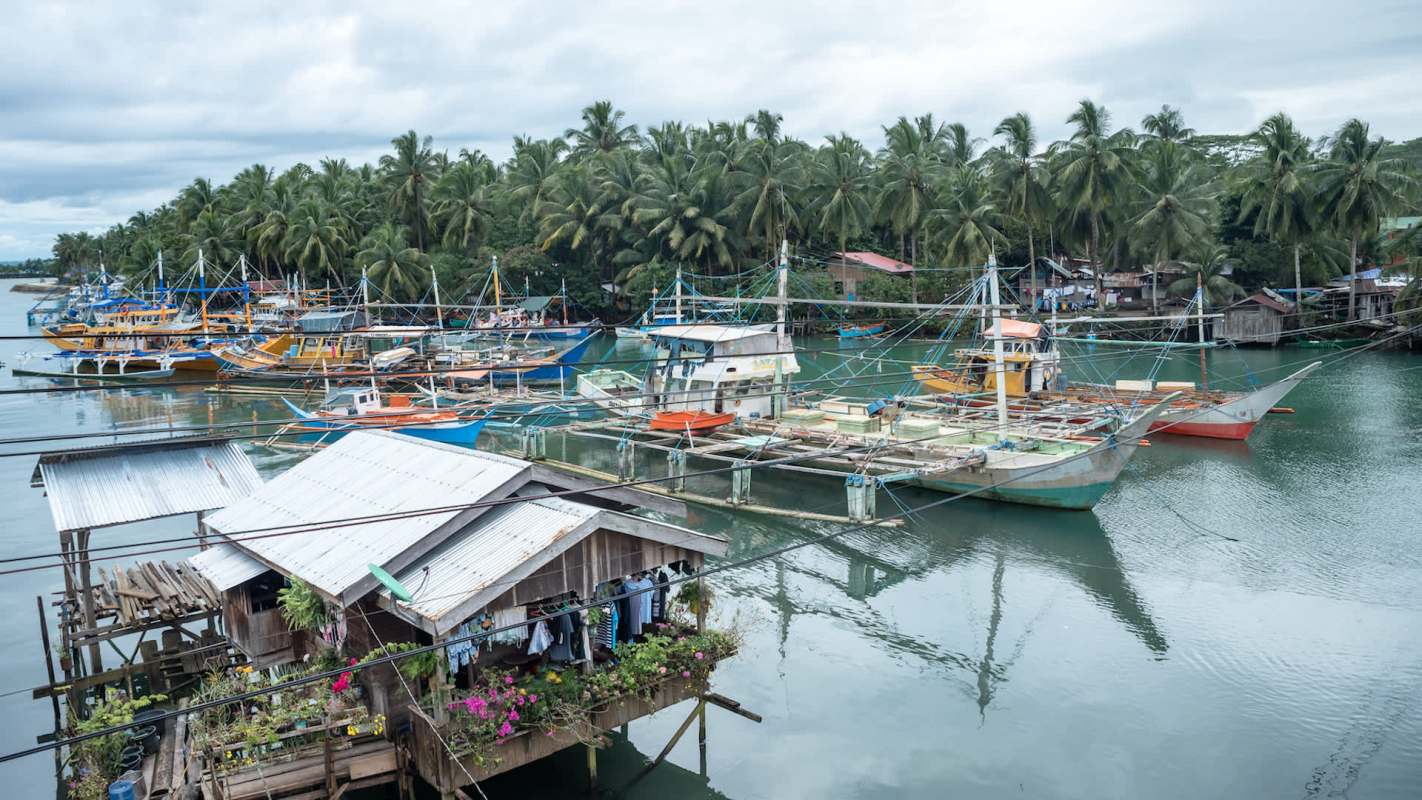
A Supreme Court decision in the Philippines has alarmed small-scale fishers, who said it may weaken protections for the coastal waters that many communities depend on for food and income.
Their concern is that if commercial vessels no longer have to transmit their positions, local fishers worry bigger boats will be harder to catch when they move into fishing grounds meant mainly for community use.
Here's what to know
On Jan. 21, 2026, the Philippine Supreme Court invalidated a rule requiring commercial fishing vessels to continuously transmit location data and electronic catch reports; the decision was made public on Aug. 3, according to Mongabay.
Fisheries Administrative Order No. 266 has broadened vessel monitoring requirements to include all Philippine-flagged commercial fishing boats. Authorities intended it as a tool against illegal, unreported, and unregulated fishing, including commercial vessels crossing into municipal waters, the coastal zone of about nine miles (15 kilometers) that is largely reserved for small-scale fishers.
In a 2017 assessment, the Bureau of Fisheries and Aquatic Resources found that 88.6% of the 166 fish stocks it evaluated nationwide were overfished.
In comments to Mongabay, Pangisda Pilipinas president Pablo Rosales said: "If some vessels could still enter municipal waters even when monitoring devices were installed, it could become even worse now that the Supreme Court has declared the requirement unconstitutional."
TCD Picks » Quince Spotlight
💡These best-sellers from Quince deliver affordable, sustainable luxury for all




More background
Because many local governments lack sufficient patrol boats, staff, or fuel to monitor nearshore waters, electronic oversight has been especially important. For families that rely on small daily catches, weaker monitoring could lead to even more competition from industrial-scale boats capable of hauling thousands of pounds (kilograms) in a single trip.
In explaining its decision, the court said the rule failed constitutional review. The justices said the government had not sufficiently established a legal basis for constant tracking and cited concerns involving trade secrets, due process, and the fact that the requirement applied only to commercial vessels.
Even so, the court recognized the public interest at issue.
It said, "combating illegal fishing and protecting the country's marine resources are legitimate and compelling State interests."
It added that "these objectives cannot justify measures that unnecessarily infringe constitutional rights, particularly when the same goals may be achieved through lawful and less restrictive means."
Researchers said shared fish stocks were already under intense pressure.
Wilfredo Campos, a fisheries professor at the University of the Philippines Visayas, told Mongabay: "If current rates of fishing continue, stock abundance will continue to decrease."
What's being done?
The legal fight is continuing. On Aug. 14, the Bureau of Fisheries and Aquatic Resources asked the Supreme Court to reconsider the ruling before it becomes final, and Pangisda Pilipinas filed a separate motion.
A statement carried by the Philippine News Agency quoted Philippine agriculture secretary Francisco Tiu Laurel Jr.: "We are fairly confident the Supreme Court will reconsider the ruling." BFAR also said any future monitoring framework would include "constitutional safeguards."
Other monitoring tools are still operating.
Oceana Philippines runs Karagatan Patrol, which uses satellite data to identify bright lights associated with commercial fishing vessels inside municipal waters. Jessie Floren, Oceana's database administrator and the platform's developer, said, "While there was a reduction in recent years, Karagatan Patrol data indicate a continuing apparent intrusion into municipal waters."
Campos also warned that losing vessel tracking could worsen the problem: "Without the VMS [vessel monitoring system], commercial fishing in municipal waters is likely to increase from current levels. Our simulations provide an idea of how the scenario would look."
Where can I learn more?
The fight over vessel tracking in the Philippines is part of a broader debate over how far governments can go to rein in industrial fishing. There are similar clashes over conservation, commercial fleets, and the coastal communities that depend on local waters.
• In the Philippines, industry groups backed a measure following the ruling to protect municipal waters.
• In New Zealand, officials enforced a milestone fishing ban despite fierce commercial-fishing backlash.
• In France, dolphin deaths prompted an unprecedented fishing ban for parts of the fleet.
• In Greece's Fourni Archipelago, authorities outlawed a common fishing practice after years of seabed damage.
Each case asks who gets access, how rules are enforced, and what happens to marine life and fishing income when those choices shift. For anyone following the Philippine case, the additions provide useful context on what can change when regulators try to protect fisheries without overstepping legal bounds.

Get TCD's free newsletters for easy tips, smart advice, and a chance to earn $5,000 toward home upgrades. To see more stories like this one, change your Google preferences here.







