


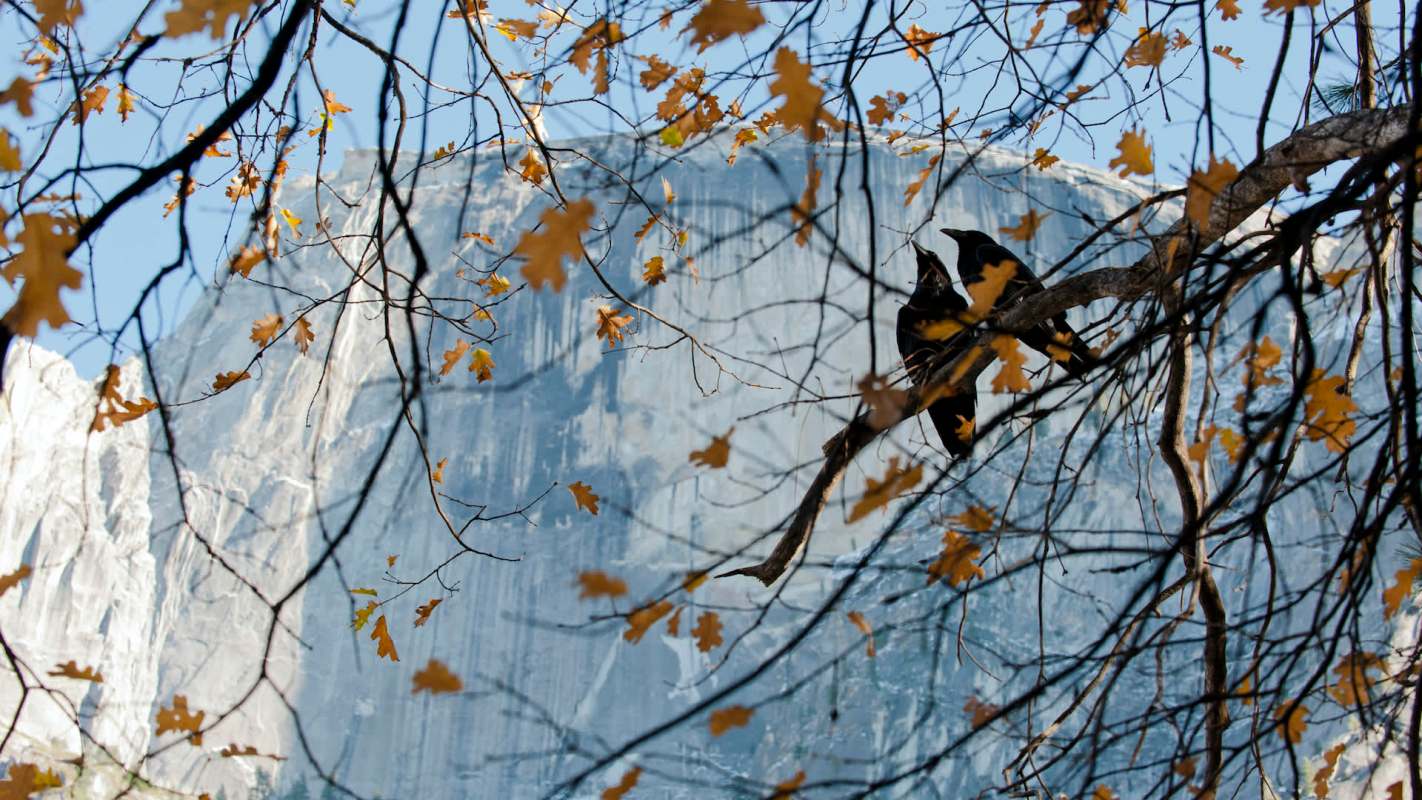
A new study suggests scientists are getting far better at listening to nature — and that could be good news for birds, ecosystems, and the people working to protect them.
According to a report summarizing the study from Phys.org describing it as a peek into "the secret lives of birds," researchers at the Cornell Lab of Ornithology found that networks of inexpensive microphones can do much more than simply confirm whether birds are present in a landscape.
By analyzing massive amounts of audio recorded across California's Sierra Nevada, the team showed that bird sounds can also reveal what birds are actually doing — including how they respond to danger and how habitat influences those choices.
The findings, published in Ecology, point to a cheaper and less intrusive way to study wildlife behavior across large areas that would otherwise be difficult and expensive for field teams to monitor on the ground.
That matters because behavior offers an important clue to how animals are coping with changing conditions in the wild. If scientists can better understand when birds are feeding, defending territory, courting mates, or reacting to predators, they can make more informed conservation decisions that protect biodiversity while helping land managers and communities care for forests more effectively.
For the study, researchers analyzed hundreds of thousands of hours of recordings gathered by microphones spread across roughly 420 miles of the Sierra Nevada. Those recordings were already being used to track bird diversity, but this time the team asked a different question: How do birds respond when they hear the call of an American goshawk, a predator that hunts other birds?
TCD Picks » Quince Spotlight
💡These best-sellers from Quince deliver affordable, sustainable luxury for all




Using the BirdNet machine learning tool, the scientists identified birds in the recordings and then focused on moments when goshawks were detected. They found that birds generally called and sang less after a goshawk vocalized — a sign that the predator's presence changes behavior in measurable ways.
The picture became even more interesting when the team examined geography. Birds in the southern Sierra Nevada reduced their singing and calling more than birds in the north, suggesting that even within the same mountain range, animals may respond differently to risk depending on local conditions.
The researchers also took a closer look at mountain chickadees which use a "fee-bee" song for mate attraction and territory defense, while the "chickadee-dee-dee" call warns others about danger.
The team predicted chickadees would move from songs to alarm calls when a goshawk was heard. That did happen — but only in certain habitats.
At sites with sparse vegetation beneath the forest canopy, chickadees were more likely to make that shift. Overall, the birds also sang more in these more open areas, which may be better nesting territory even as they leave the birds more exposed to predators.
In other words, the birds appear to be making nuanced tradeoffs: defend a high-value nesting site, but quickly change tactics when danger appears.
That kind of fine-scale behavioral insight is difficult to capture with traditional fieldwork, especially across an entire mountain range. Sending teams of biologists into remote forests for that level of observation can be prohibitively expensive. Microphones, by contrast, can collect data day and night over long stretches of time and across vast landscapes at a fraction of the cost.
Lower-cost monitoring tools can help conservation agencies, researchers, and local land managers stretch limited budgets further while still gathering better information. It also means data to guide habitat protection, forest planning, and biodiversity conservation.
The study also shows an example of how artificial intelligence can be used for good, as much as it's infamous for less valuable uses to society like generating images and videos. Better wildlife monitoring can ultimately lead to better decisions toward conservation.
As co-author Connor Wood of the Cornell Lab of Ornithology explained, "Monitoring birds using hundreds of microphones across the Sierra Nevada revealed subtle patterns of risk assessment that birds make based on habitat quality."
He added that the birds appear to be weighing a difficult balance: "I'm going to sing more here because it's a high-value nesting site worth defending, but I'm also more exposed to predators here, so if I hear a goshawk I'll switch to alarm calls to avoid getting eaten."
Lead author Mickey Pardo, who was a postdoctoral researcher at the Cornell Lab of Ornithology at the time of the study, said the work shows how powerful passive audio monitoring can be: "We've shown that you can use microphones placed out in the forest with no attending human observers to study really fine-scale behaviors, at a really large spatial scale."
For conservationists, that is an encouraging sign that the secret lives of birds may be easier to understand — and protect — than ever before.

Get TCD's free newsletters for easy tips, smart advice, and a chance to earn $5,000 toward home upgrades. To see more stories like this one, change your Google preferences here.







