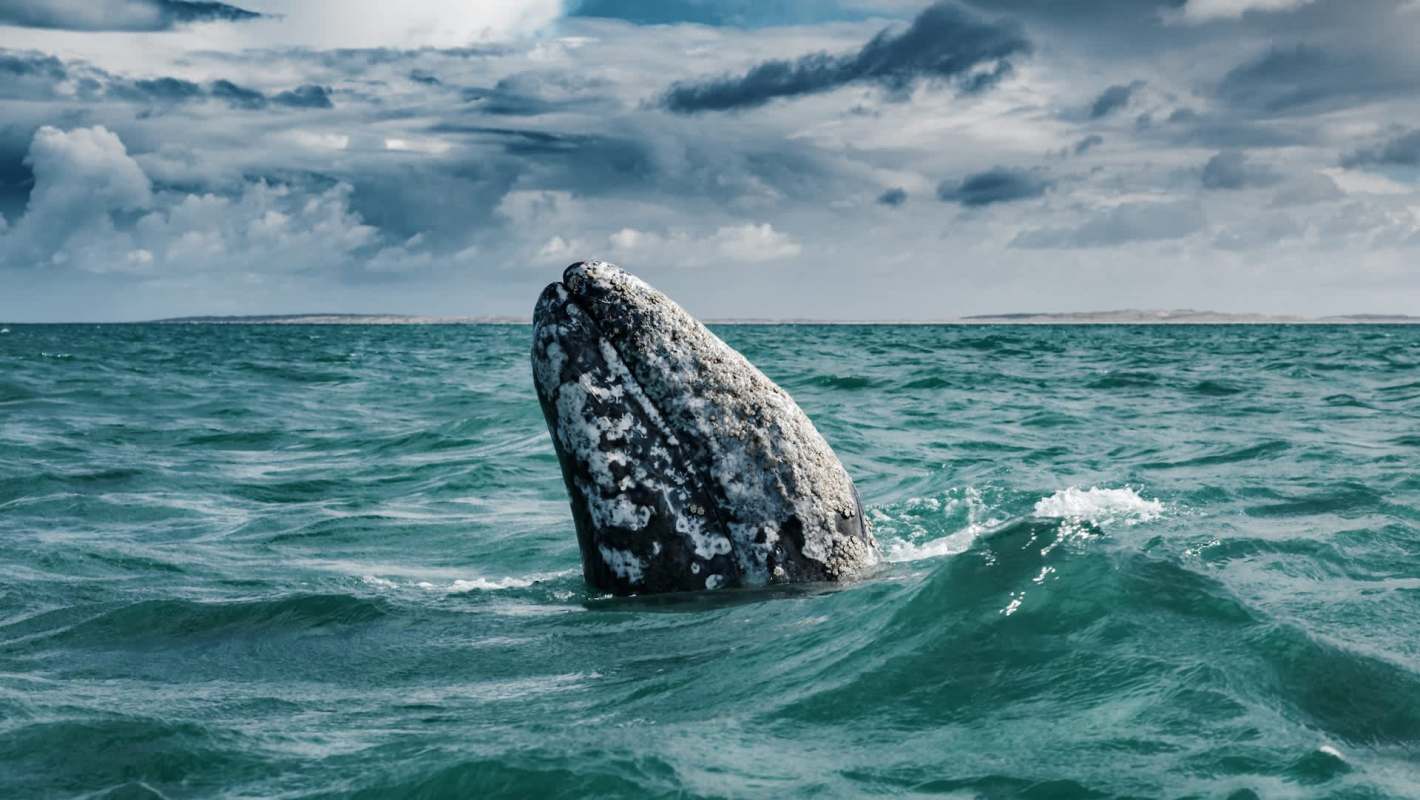
Three environmental organizations allege that the Trump administration failed to respond to a push for renewed endangered species safeguards for Pacific gray whales, whose numbers have dropped dramatically.
Now the groups are beginning the process of suing, according to the Anchorage Daily News.
For communities along the West Coast and in Alaska, the whales' decline is a warning sign of worsening ocean conditions. Those changes could have huge negative impacts on coastal ecosystems and the people who depend on them.
Here's what to know
The Center for Biological Diversity, the International Marine Mammal Project, and Oasis Earth have sent the National Oceanic and Atmospheric Administration a notice of intent to sue over the agency's handling of gray whale protections, Anchorage Daily News reported.
A petition from Oasis Earth sought out Endangered Species Act protection for the Eastern North Pacific gray whale population. The groups contend NOAA Fisheries failed to produce the legally required findings after that request was filed.
Survey results show how severe the drop has been. After reaching about 27,000 animals in 2015 and 2016, the population fell to roughly 12,890 by 2025, among the smallest counts since monitoring began in the late 1960s, Anchorage Daily News reported. NOAA said the 2026 survey suggested improvement, putting the median estimate at 17,750 whales.
TCD Picks » Quince Spotlight
💡These best-sellers from Quince deliver affordable, sustainable luxury for all




Advocates say the 2026 uptick does not reduce the need for swift protections.
More background
From Mexico to Alaska, dead gray whales have repeatedly turned up. Between 2018 and 2023, 690 such deaths were documented, and NOAA designated the die-off an "unusual mortality event," a label that calls for closer investigation.
The losses have continued. NOAA counted 179 dead gray whales along the Pacific coast in 2025, and the 2026 number had climbed to 187, including 22 in Alaska.
Researchers say many of those deaths appear tied to climate shifts in Arctic and subarctic areas where gray whales normally feed heavily each summer and store the fat they need.
As sea ice retreats and waters warm, the climate is disrupting the whales' rich prey base, and some animals are ending up severely malnourished. Trouble for a major marine species can also point to stress across ocean ecosystems, and there are implications that will likely ripple out into coastal food webs and local economies.
What's being done?
The notice satisfies the Endangered Species Act requirement that the groups give 60 days' notice before filing a complaint. By taking that step, they argue the whales should not have been left without federal protection in the first place.
The Eastern North Pacific gray whale population was removed from Endangered Species Act protections in 1994, when numbers rebounded in a shift scientists linked to the end of commercial whaling. The groups argue that change came too soon, given the population's sharp decline and the number of threats the animals face.
Climate change is only part of the case they are making. The notice also points to ship strikes, fishing gear entanglements, and marine debris. A NOAA Fisheries report cited 31 Alaska cases of gray whales becoming entangled in fishing gear between 1990 and 2024.
Restoring legal protections would not solve every threat overnight, but advocates say it could push the federal government to act more quickly at a moment when delays only make the risks worse.
Where can I learn more?
Gray whale losses along the Pacific coast are part of a larger pattern of stress in marine ecosystems. The whales dying off en masse have underscored the species' worsening outlook.
In California, a concerning trend rises as more gray whales wash ashore dead. And in the Gulf of Mexico, courts found that they underestimated the risk and harms facing Rice's whales.
In Massachusetts, on the other hand, judges upheld a law aimed at saving endangered right whales.
When whale populations start to slide, the fallout quickly reaches both ecosystems and the courts. That context helps explain why advocates say delays in federal action carry such high stakes.

Get TCD's free newsletters for easy tips, smart advice, and a chance to earn $5,000 toward home upgrades. To see more stories like this one, change your Google preferences here.