


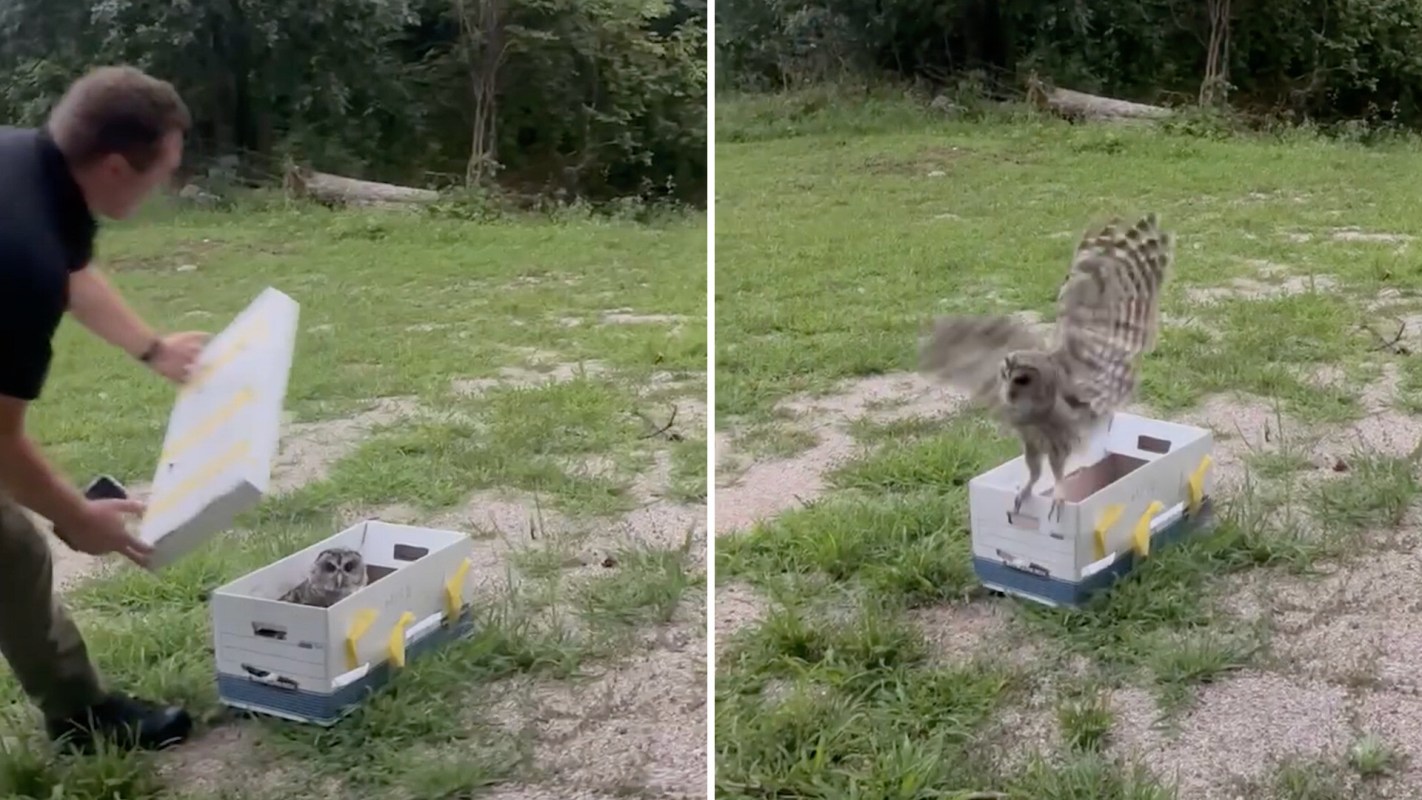
An owl that could do little more than sit beside a Kentucky interstate after suffering a wing injury is now back where it belongs in the sky.
Its return to the wild followed a rescue that began when deputies in Harrison County stopped to help it receive the two months of rehabilitation that it needed.
What happened?
The roadside emergency that started on May 11 ended more than two months later with the bird flying free again.
Deputies in Harrison County found the owl near the interstate shoulder and pulled over, WAVE reported. Although it was alive, an apparent wing injury meant it could not take off.
It was taken to Raptors Rise Rehabilitation Center for specialized treatment and monitoring, then released back into the wild after more than two months of rehabilitation.
The Harrison County Sheriff's Facebook page later posted a video of the release, where the bird can be seen effortlessly flying back into the forest.
TCD Picks » Quince Spotlight
💡These best-sellers from Quince deliver affordable, sustainable luxury for all




Why does it matter?
This was an example of a rescue where everything went right. There was seamless coordination among public servants, wildlife rehabilitators, and residents who reported the injured animal.
Once they arrived, the deputies recognized that the owl needed help and a rehabilitation center equipped to provide the specialized care a bird of prey requires. Wildlife rehabilitation is often time-intensive, requiring safe transport, evaluation, treatment, rest, and careful planning for release. So despite the successful rescue, this owl spent more than two months in care before it was released.
High-speed traffic corridors can be dangerous for birds and other animals, leaving them vulnerable to collisions, stress, and injury. Too often, animals die trying to traverse these busy roadways.
And owls play critical roles in local ecosystems by helping control rodent populations and supporting a healthier food web balance, making the rescue like these even more important.
If you see an injured owl, hawk, or other wild bird near a roadway, keep a safe distance, avoid direct handling, and contact local animal control, a licensed wildlife rehabilitator, or law enforcement for guidance.

Get TCD's free newsletters for easy tips, smart advice, and a chance to earn $5,000 toward home upgrades. To see more stories like this one, change your Google preferences here.







