


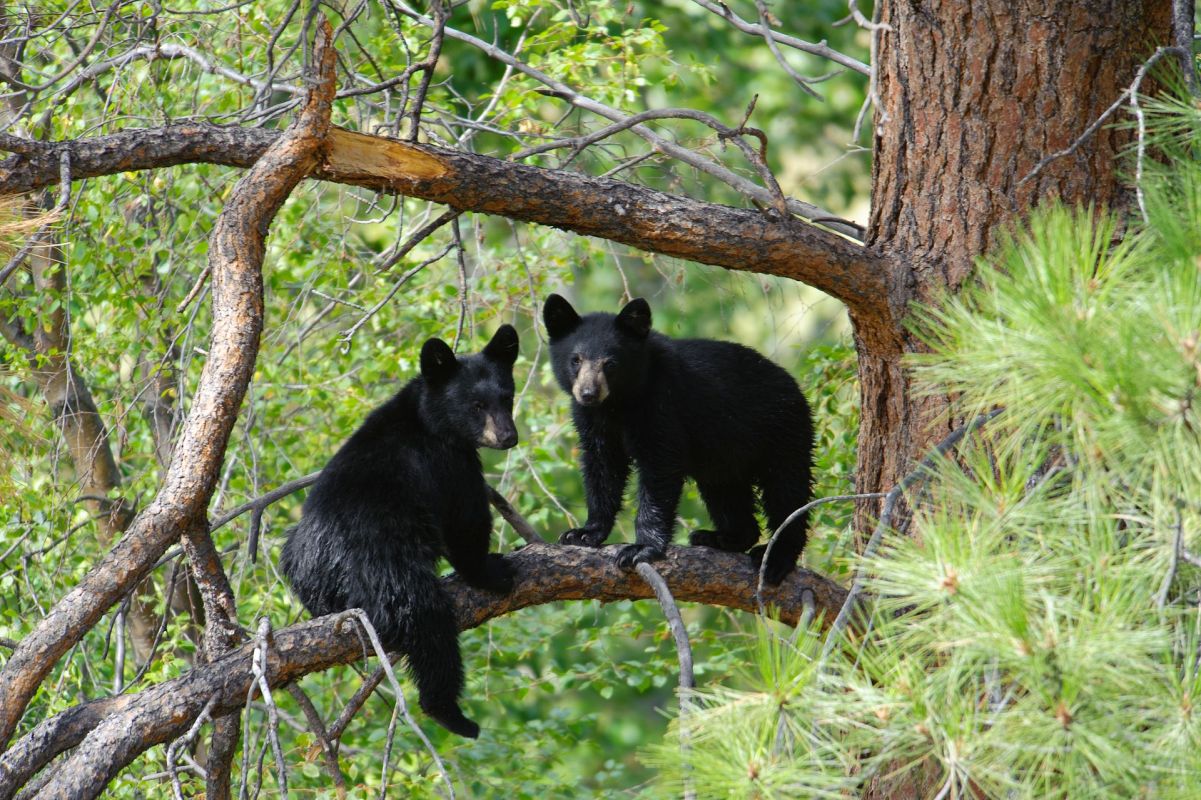
California may have found a new approach for giving orphaned black bear cubs a better chance at returning to the wild.
Last fall, five rehabilitated cubs were released in Northern California. All five made it through hibernation and were healthy when spring arrived, a result California officials say is a first for the state.
What happened?
Rather than keeping five orphaned black bears in care until the normal spring release window, California wildlife officials turned them loose in November 2025 to see if they could successfully navigate the winter months on their own. According to the California Department of Fish and Wildlife, as reported by the Sacramento Bee, the state had not done that before.
Officials wanted to find out whether the cubs could manage the winter cycle — locating dens, remaining there through hibernation, and coming out in good condition. The department said the cubs did just that.
Because black bears usually settle into dens in late fall and emerge in spring, the timing gave the cubs a chance to follow their natural seasonal patterns.
"Bears are incredibly resilient," Alexia Ronning, a Tahoe bear specialist and environmental scientist with the Department of Fish and Wildlife, said in the release. "They have an innate behavior to find shelter when snow starts to accumulate on the ground."
TCD Picks » Quince Spotlight
💡These best-sellers from Quince deliver affordable, sustainable luxury for all




The five surviving bears included a pair of female siblings from near Nevada City, a male cub from South Lake Tahoe, and two male siblings from Arnold. A third male sibling from the Arnold group was unfortunately sick and had to be euthanized.
Before being returned to their home regions, the bears spent time recovering at Sonoma County Wildlife Rescue and San Diego Humane Society's Ramona Wildlife Center.
Why does it matter?
This positive result may determine how California handles some orphaned cub cases in the future.
A successful winter release means young bears may be able to spend less time in captivity and more time adapting to life in the wild, which is the main goal for rehabilitation efforts. It could also reduce some of the cost of caring for bears for extra months until spring.
Wildlife rehabilitation is often expensive and uses many resources, especially for large mammals that require lots of food, space, and specialized care.
"This is a massive win," Dr. Heather Perry, the wildlife rehabilitation program coordinator for the Department of Fish and Wildlife, said in the release. "It highlights the important and unique role of wildlife rehabilitators — and wildlife rehabilitation by its very definition — in the conservation of California's native wildlife."
California's black bear numbers have remained fairly steady over the past decade, at roughly 49,000 to 71,000 statewide.
While the animals can sometimes come into conflict with people, they remain an important part of local ecosystems.
What's being done?
State officials used tags and GPS collars to track the bears and assess whether the fall release strategy worked.
California officials said that while this was a first-time project for them, nearby states such as Nevada and Washington have tried similar efforts in the past.
The early results suggest the strategy could become another tool for wildlife experts when conditions are favorable. Rather than assuming every orphaned cub must remain in care until spring, rehabilitators may be able to make more case-by-case decisions based on an animal's health, the timing of release, and habitat conditions.
According to the Department of Fish and Wildlife, black bears are "highly food motivated," which means unsecured trash, pet food, and other scented items can be a tempting lure for them to come to residential areas.
Putting safety measures into place helps protect both people and wildlife. When bears stay wild and avoid associating humans with easy meals, they are more likely to survive on their own, just as these cubs did after getting a second chance.

Get TCD's free newsletters for easy tips, smart advice, and a chance to earn $5,000 toward home upgrades. To see more stories like this one, change your Google preferences here.







