


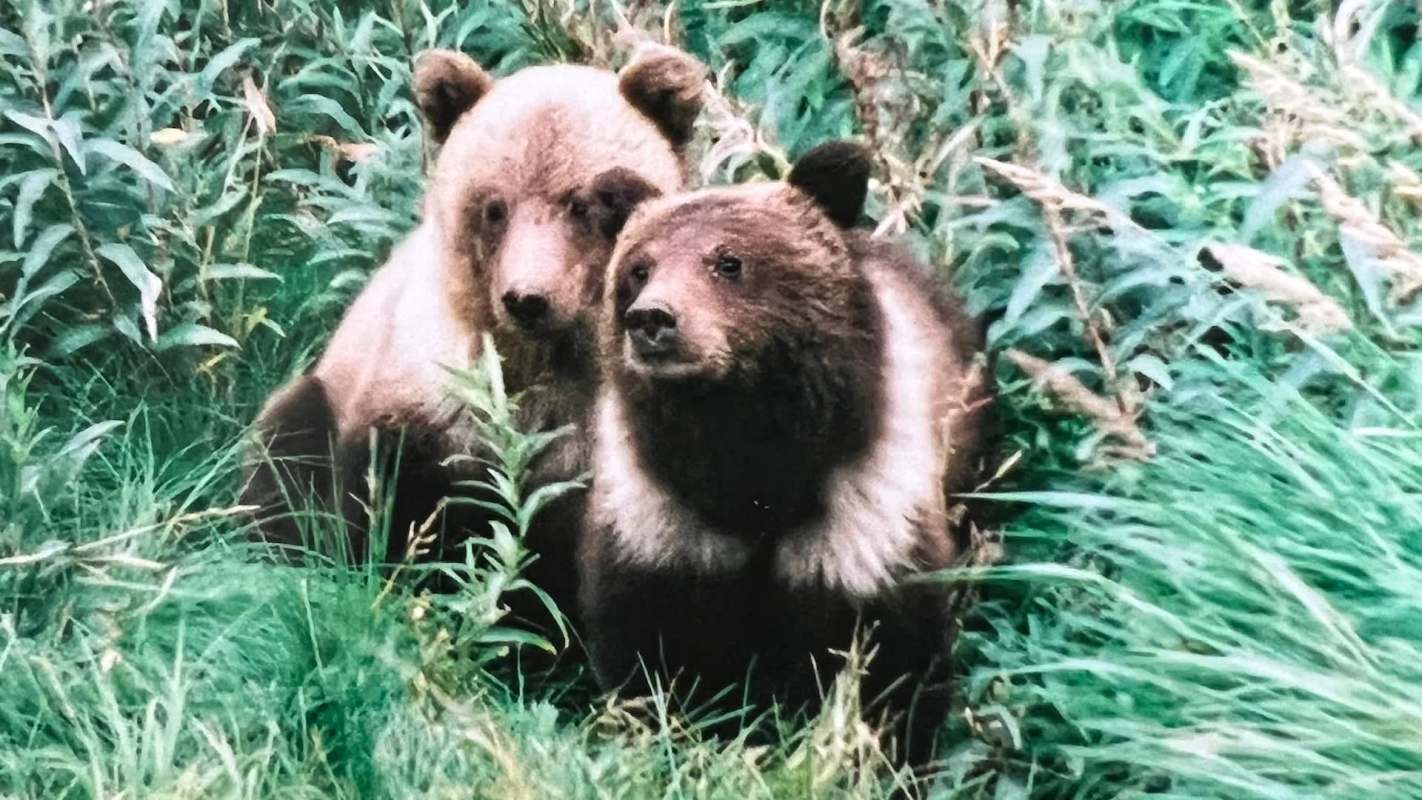
Two orphaned bear cubs in northwestern Ontario have been given a second chance after their mother was killed in a fatal train incident.
Here's what to know
CBC Thunder Bay reported that the cubs were located near West Loon Lake in Shuniah, just east of Thunder Bay, after a September 19 train collision killed their mother and left her beside the tracks. The Ontario Ministry of Natural Resources said multiple people reported the young bears.
"Ministry staff determined the cubs were too young to survive on their own," the ministry said in a written statement. "On September 22, staff safely captured the cubs and transferred them to a wildlife rehabilitation facility in Nipigon, [Ont.], where they will remain until they are ready to be released next year."
Andrew Cotter, who was at his family's cottage in the area, said a friend told him about backyard camera footage showing the cubs behind the tracks. After he learned the mother bear had died and the cubs had gone up a nearby tree, he said he joined others in contacting the ministry through its Bear Wise reporting line.
The ministry said fall can bring more black bear sightings near communities as bears search for food ahead of hibernation but that cubs are still dependent on their mother as they prepare for winter.
More background
Over his 30 years at the cottage, Cotter said only "a handful of years" have brought significant bear activity around West Loon Lake, remembering a few times when bears got "really friendly around humans."
TCD Picks » Quince Spotlight
💡These best-sellers from Quince deliver affordable, sustainable luxury for all




"I don't think there's any cycle to it, but where there's food and there's hungry bears and human interactions, that's what happens," Cotter told the news outlet.
He noted that railroad tracks run through the area and that the Trans-Canada Highway is nearby, creating repeated points of contact between animals and people where wildlife is hit quite frequently.
"It's unfortunate, but reality," Cotter said, adding that the residents around West Loon Lake care deeply about the wildlife.
What can be done?
Early reporting and reducing attractants can help discourage hungry bears from moving in.
Locals in the area already share wildlife alerts through social media and other platforms, especially when bears are nearby and families need to know.
Cotter noted that bears will "lick barbecues, the grease, anything they can get at" when natural food sources are scarce. Securing garbage and cleaning outdoor cooking areas can help.
The ministry stated urban bear activity hasn't increased in the northwestern region, as reports are below 2025 levels. Residents are urged to use the Bear Wise line at 1-866-514-2327 for non-emergency bear encounters and to call 911 if a bear poses an immediate threat to public safety. The ministry also asked people to contact the line if they see cubs on their own for a prolonged period.
Luckily, the two bear cubs were rescued and are in good hands.
"It's a good news story and a good ending," Cotter said.
Where can I learn more?
Rehabilitation efforts for young cubs who are separated from their mothers is paramount, as are the wildlife recovery centers that provide it.
• At a California wildlife facility, record numbers of orphaned cubs are being prepared for release next year.
• In a California neighborhood, cubs found wandering alone were taken in during a critical moment.
• After their mother died in Montana, two orphaned grizzly cubs arrived at Colorado's Cheyenne Mountain Zoo.
• At an Indian rehabilitation center, back-to-back bear cub rescues raised fears that poaching had orphaned them.

Get TCD's free newsletters for easy tips, smart advice, and a chance to earn $5,000 toward home upgrades. To see more stories like this one, change your Google preferences here.







