


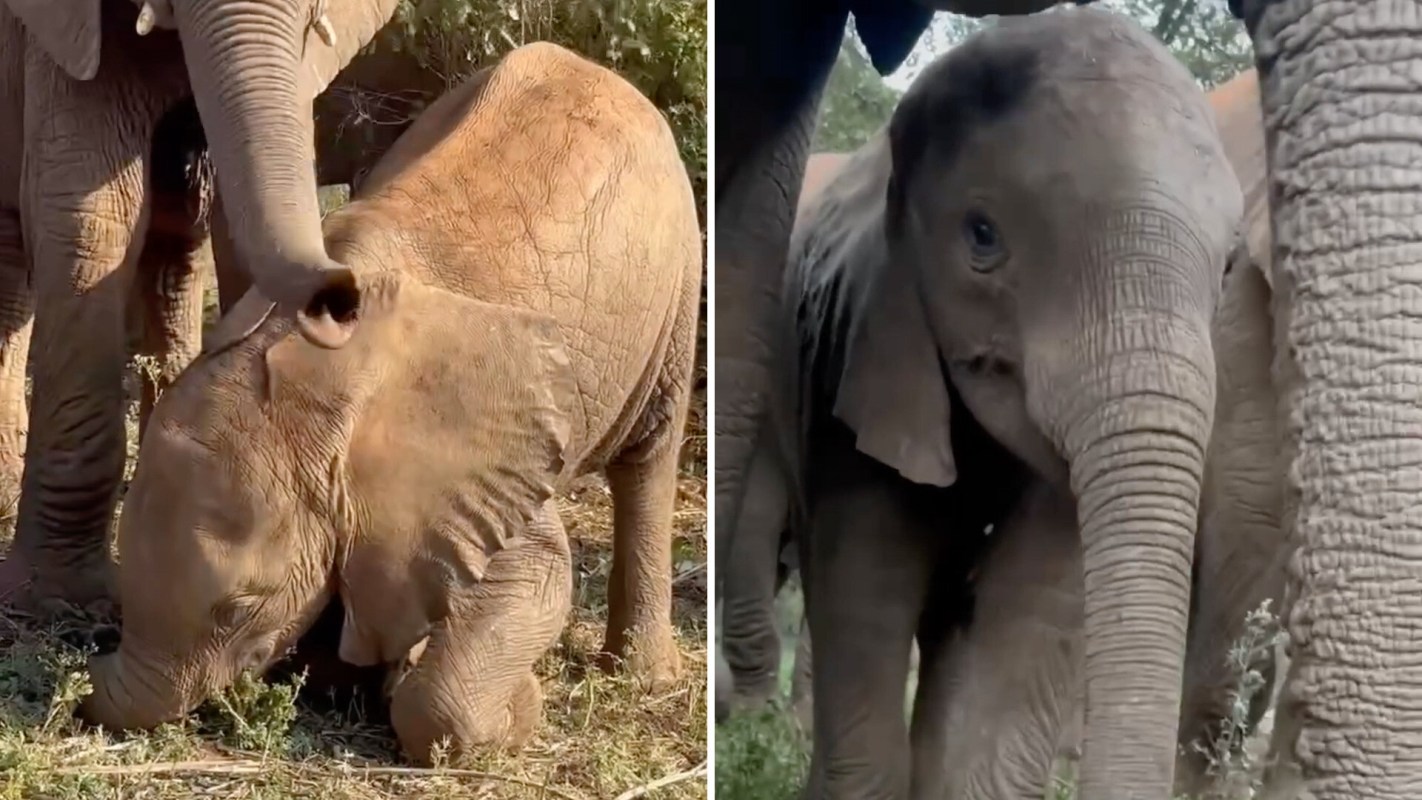
A baby elephant that survived a terrifying rescue in Kenya is now receiving something that may be just as vital as medical care: companionship.
Images show orphan Zuri being closely watched over by two older "nanny" elephants, an encouraging sign as she continues to recover from the traumatic ordeal.
What's happening?
In a post on social media, the Sheldrick Wildlife Trust shared an update on Zuri, the elephant rescued after being found trapped in a septic tank. According to the organization, the rescue was a "harrowing nighttime operation," and the young orphan was found "just in the nick of time."
The trust said Zuri is "now doted on by her nanny elephants," naming Nyambeni and Mzinga as the older elephants helping care for her.
Each has her own approach, the trust explained in the post:
"Nyambeni takes a more pugnacious approach to caretaking, warning off even the most well-intentioned interlopers with a wave of the trunk. By contrast, Mzinga prefers to cocoon her precious baby through her everyday activities."
TCD Picks » Quince Spotlight
💡These best-sellers from Quince deliver affordable, sustainable luxury for all




Why does it matter?
For orphaned elephants, survival involves far more than escaping immediate danger. Young elephants are highly social animals, and in the wild they rely on the protection, guidance, and closeness of a herd.
Zuri's relationship with her nanny elephants reflects those needs. A calf that has endured separation and a frightening rescue can benefit from the steady reassurance older elephants provide through daily routines such as walking, resting, and feeding.
Stories like Zuri's also highlight the many human-made hazards wildlife can face, including unsafe pits, tanks, and other structures that can become deadly traps.
Coexisting with wildlife often depends on safer infrastructure, stronger monitoring, and rapid-response conservation teams.
What's being done?
The most immediate work is being carried out by wildlife rescue and rehabilitation organizations such as the Sheldrick Wildlife Trust, which not only intervenes during emergencies but also supports animals through the recovery that follows.
In Zuri's case, that recovery appears to include a carefully managed social environment. Pairing vulnerable calves with older elephants can help recreate some of the stability and learning that orphaned animals would typically receive from a family unit in the wild.
At the trust, many animals are later returned to their natural habitats, with successful reintegration often proving the importance of the social skills developed while under the care of animal elders.

Get TCD's free newsletters for easy tips, smart advice, and a chance to earn $5,000 toward home upgrades. To see more stories like this one, change your Google preferences here.







