


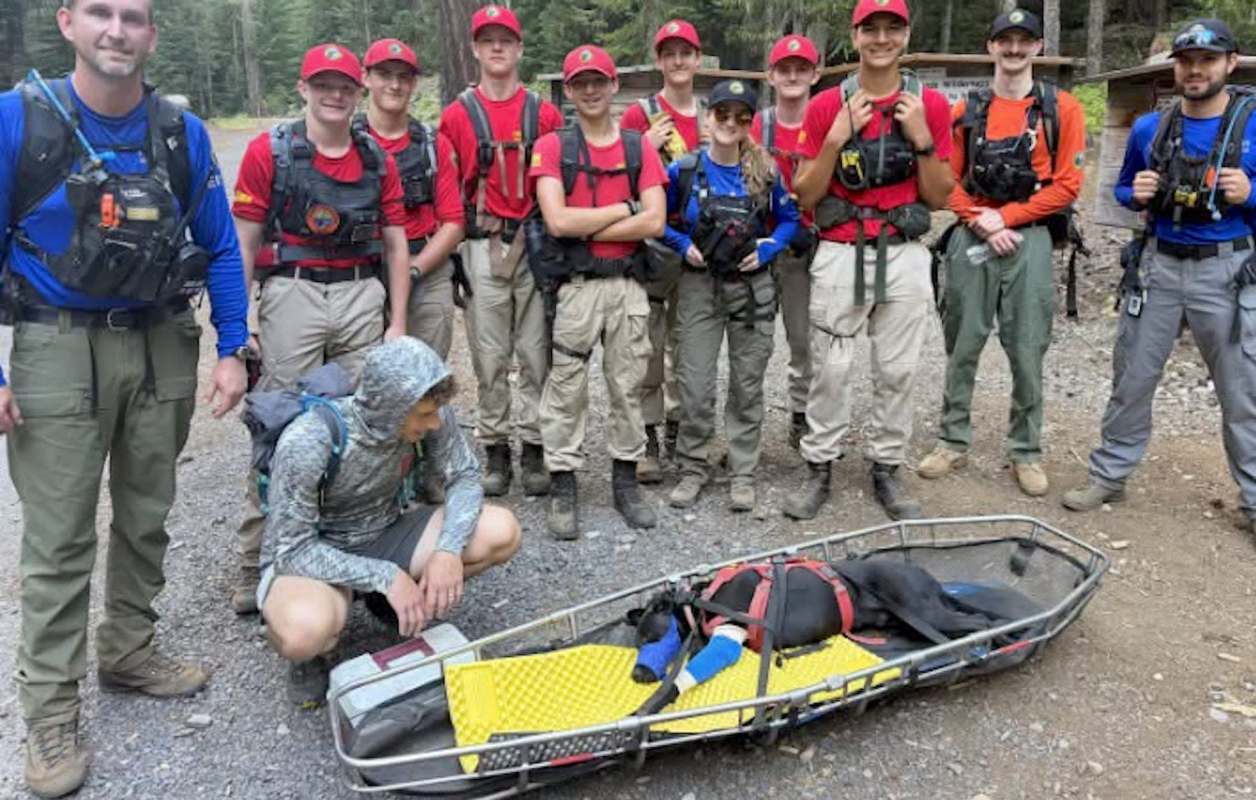
A backcountry hike in Oregon became an emergency when a dog suffered a severe cut in the Mount Jefferson Wilderness and was left unable to walk.
The response drew on several kinds of help at once: a satellite SOS message, a veterinarian who volunteered to go in, and a search-and-rescue team that trekked miles to reach the injured animal.
What happened?
Near Jorn Lake on July 22, hiker Astrid Scholz's dog Monster sustained a deep laceration that left it unable to keep moving. At about 10 a.m., Scholz sent an SOS from her Garmin device, according to KEZI.
Ric Lentz, search-and-rescue coordinator for the Linn County Sheriff's Office, stayed in touch with Scholz via her Garmin device and began organizing a response. Scholz also told rescuers that Monster was growing more aggressive in pain.
Before help arrived, Scholz improvised a harness and covered about three miles with Monster, reaching Duffy Lake on her own. From there, members of the Linn County Sheriff's Office search-and-rescue team and Dr. Harrison Reid, a veterinarian at Reid Veterinary Hospital in Albany, closed the remaining four-mile gap on foot.
Once Monster was sedated, the crew carried him back out to the trailhead at Duffy Lake. KEZI reported that Monster was doing well.
TCD Picks » Quince Spotlight
💡These best-sellers from Quince deliver affordable, sustainable luxury for all




Why does it matter?
Devices such as Garmin communicators can be lifesaving when someone is far off the grid and needs immediate help for themselves or an animal companion.
Readers who want to back the kind of preparedness gear that made this rescue possible can explore TCD's guide to supporting eco-friendly initiatives by mainstream brands.
What can I do?
Bringing a pet-specific first-aid kit, plenty of water, and a backup plan for carrying an injured animal can help. Research trail difficulty, weather conditions, and the distance from the nearest emergency services before heading out.
If you regularly hike beyond cell range, a satellite communication device can provide an extra layer of safety. In this case, Scholz's Garmin SOS allowed rescuers to understand the situation and respond efficiently, even in a wilderness setting.
Search-and-rescue teams, like the volunteers who recently pulled a dog off a cliff ledge in Bend, Oregon, are often made up of people willing to do physically demanding work for strangers and their pets.
Monster ultimately made it out safely. KEZI reported that the Linn County Sheriff's Office also thanked Dr. Harrison Reid for donating his time and expertise during the rescue.

Get TCD's free newsletters for easy tips, smart advice, and a chance to earn $5,000 toward home upgrades. To see more stories like this one, change your Google preferences here.







