


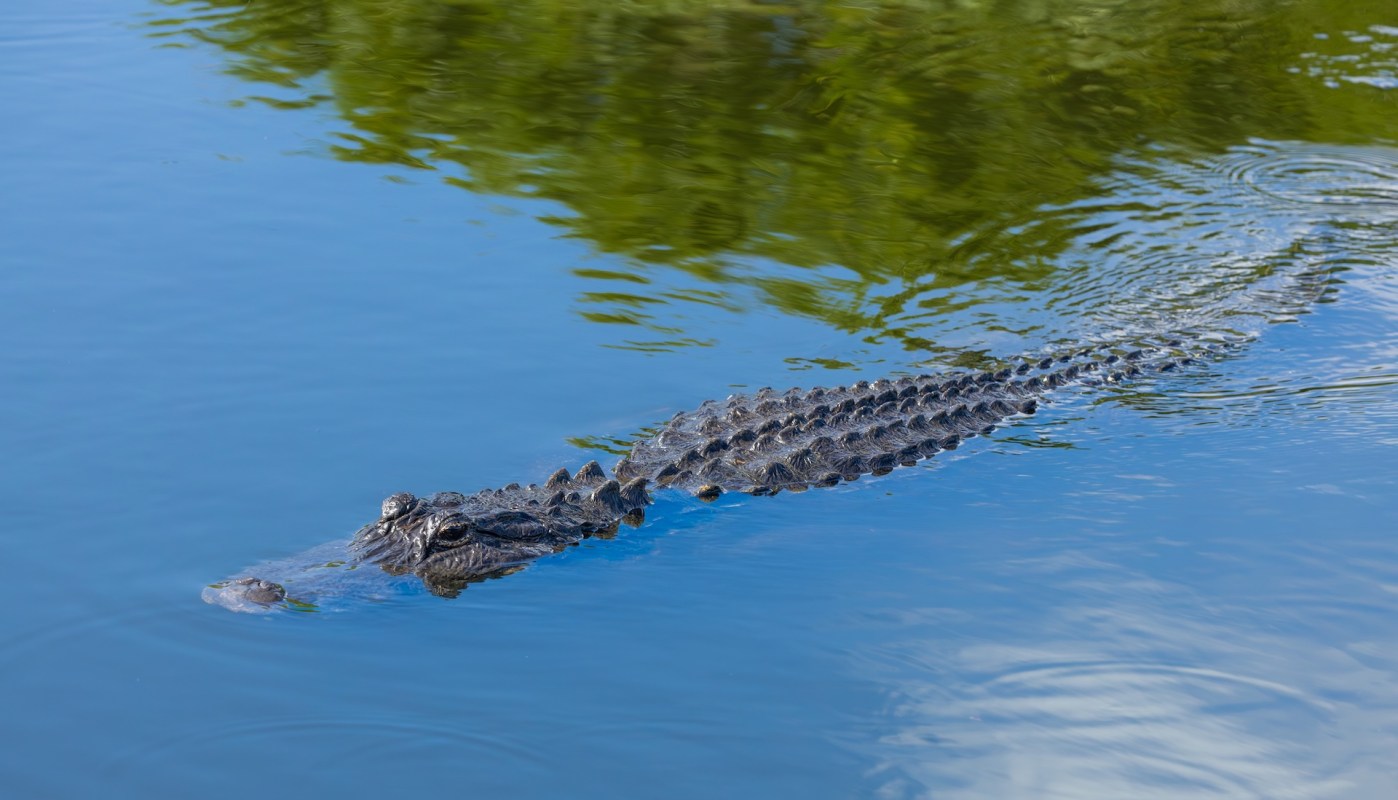
A group of Oklahoma hunters pulled a 14-foot, 6-inch alligator from Louisiana's Little Tensas Bayou — a catch so heavy it took a tractor to get it out of the airboat.
Here's what to know
Guide David Hanson said the giant reptile was the largest of eight big gators his four clients took on Sept. 22, and Safari Club International records place it among the longest ever documented.
According to Outdoor Life, Hanson, 59, of Swartz, Louisiana, left fresh liver on baited hooks in Little Tensas Bayou on Sept. 21. The next day, he returned with four Oklahoma gator hunters and guided them to several alligators.
One of those hunters, Brandon Crossley, took the largest alligator. Hanson told Outdoor Life, "We got to that big gator about 9:30 a.m., and I knew it was a giant bull gator," and added that the group put on safety glasses before Crossley fired Hanson's .357 revolver. One shot killed the animal.
The harder part was getting the carcass aboard Hanson's 18-foot Phoenix airboat, the "Swamp Donkey." Hanson told Outdoor Life that for oversized alligators he uses "Mule Tape" — a flat line rated to 1,800 pounds and tied to a baited 14/0 hook, and that the group also used a custom Zook gaff to manage the animal.
Hanson said, "It was dead, but I taped its mouth closed for safety," while the group worked to get it into the boat. The gator's head was too heavy to lift directly, so the men pulled in a leg first and then rolled the reptile into the boat.
TCD Picks » Quince Spotlight
💡These best-sellers from Quince deliver affordable, sustainable luxury for all




Once they were back at Cypress Point Hunting Lodge, Hanson said he called his father-in-law, Richard Zimmerman, to bring a tractor to help lift the animal out of the boat.
More background
The alligator measured 14 feet, 6 inches long. Hanson said Louisiana wildlife personnel witnessed the alligator being measured, and the team checked the length twice after unloading it with the tractor.
Louisiana does not have an official alligator record system like Florida's, making Safari Club International the main benchmark. Based on SCI records cited by Outdoor Life, the Louisiana alligator ranks fourth in recorded length, moving ahead of a gator taken by Robert Ammerman from Lake Washington, Florida, in 2010.
The longest SCI-listed alligator was a 15-foot, 9-inch, 1,011-pound animal from the Alabama River in 2014. Hanson estimated Crossley's gator weighed about 700 pounds.
What's being done?
Hanson said after it was processed, "That 14-footer was so big, that when we skinned it out we found a 4-foot-long gator inside that it had eaten … They do eat their young."
Hanson said the animal is slated for a life-size taxidermy mount before being sent to Crossley in Oklahoma.
BBC Future has examined why wild animals attack humans, and it's imperative to check hunting and protective rules before venturing out. Wild animals generally do not attack humans without a reason, often triggered by factors such as feeling threatened, protecting offspring, defending territory, or competing for food.
Human behavior and expanding development have increased encounters with wildlife, creating situations in which animals and people come into closer and sometimes dangerous contact. Understanding why animals behave defensively or aggressively can help people avoid dangerous encounters and coexist more safely with wildlife.
Where can I learn more?
Here are a few more alligator stories from across the South.
• In Berkeley County, South Carolina, animal control had to call for backup after a huge alligator climbed onto a porch.
• In Davie, Florida, firefighters and police cornered an alligator sought for two years during a water main break.
• In Fort Worth, Texas, crews tag native alligators in Trinity wetlands after rumors they were released pets.
• In the Florida Everglades, a wild alligator eats an invasive python in a rare reversal caught on video.
• In a Florida backyard, a homeowner was hospitalized after a gator attack near a mulch bed.

Get TCD's free newsletters for easy tips, smart advice, and a chance to earn $5,000 toward home upgrades. To see more stories like this one, change your Google preferences here.







