


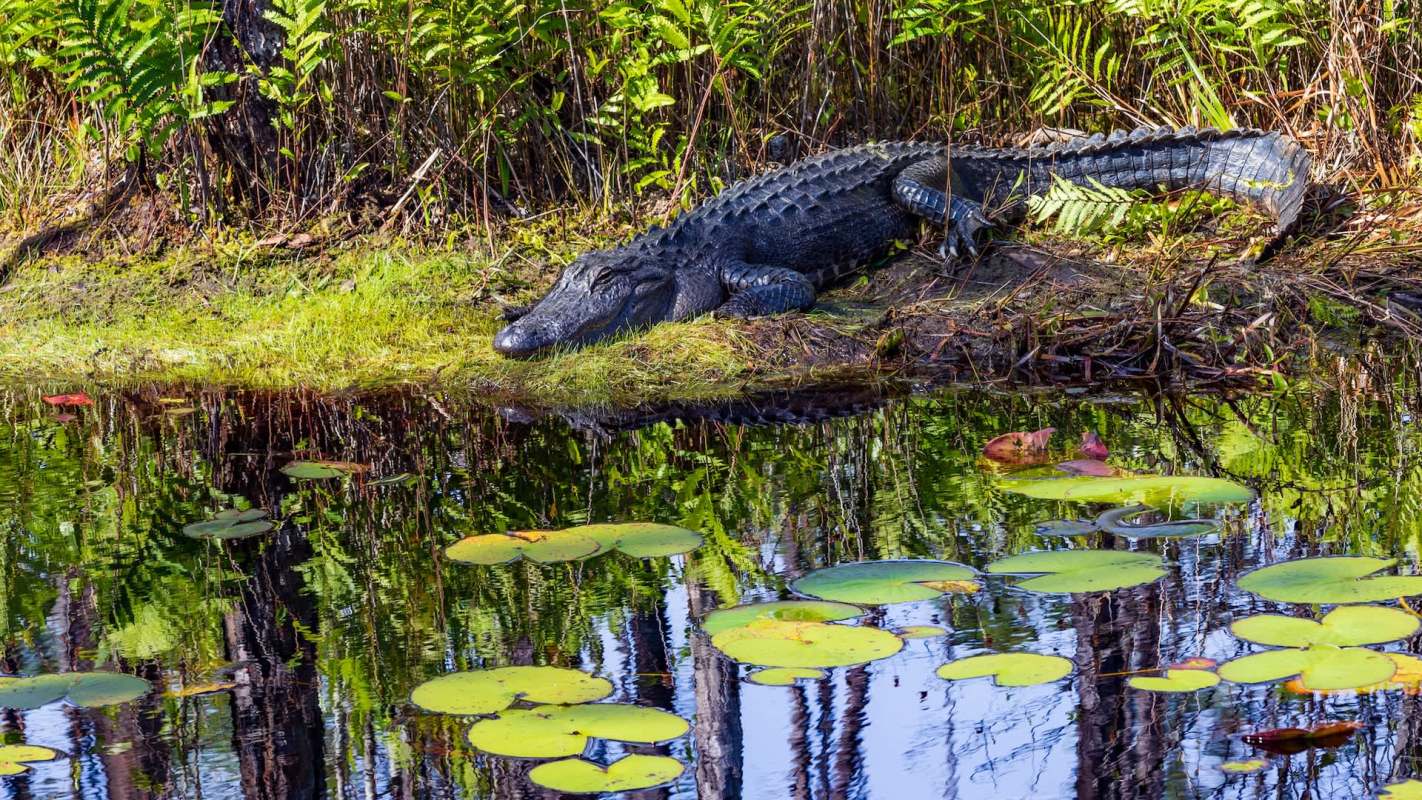
Georgia's Okefenokee National Wildlife Refuge — a sprawling blackwater swamp home to an estimated 15,000 alligators — is moving closer to possible UNESCO World Heritage Site status.
According to Inside Climate News, approval would make the refuge the Peach State's first UNESCO World Heritage Site and the first national wildlife refuge in the United States to receive the designation.
The Okefenokee, along the Georgia-Florida border, was formally submitted for consideration in January, with a final vote expected in July at a committee meeting in South Korea.
Much of the buzz has focused on what makes the swamp so remarkable: tea-dark waters, cypress forests, rare birds, deep peatlands, and an enormous variety of wildlife. Supporters say the refuge meets UNESCO's standard of "outstanding universal value," meaning it holds importance not only regionally but globally.
The area contains the largest blackwater swamp in North America. Public access is limited to only a small portion of the Okefenokee, leaving most of it undisturbed wilderness.
The Okefenokee is home to one of North America's most important peat systems, with some peat layers extending over 15 feet deep.
TCD Picks » Quince Spotlight
💡These best-sellers from Quince deliver affordable, sustainable luxury for all




Peatlands lock away enormous amounts of planet-warming carbon when they remain intact. Estimates suggest the Okefenokee peatlands store over 124 million tons of carbon, ICN noted.
The refuge also supports hundreds of species, including endangered animals such as wood storks, red-cockaded woodpeckers, and eastern indigo snakes.
The Okefenokee already draws about 800,000 visitors each year, and UNESCO recognition could raise its international profile.
UNESCO recognition could also bring more support for conservation, education programs, and nature-based tourism in surrounding communities.
"You want to know why I think this place deserves to be on that list?" Joshua Howard, a longtime visitor and president of Friends of Okefenokee National Wildlife Refuge, asked ICN. "Because when I got here this evening, I was stressed and now I am not."
Kim Bednarek, executive director of Okefenokee Swamp Park, said the designation could transform how the refuge is seen around the world, noting that UNESCO status carries "a global brand that people travel far and wide to see."

Get TCD's free newsletters for easy tips, smart advice, and a chance to earn $5,000 toward home upgrades. To see more stories like this one, change your Google preferences here.







