


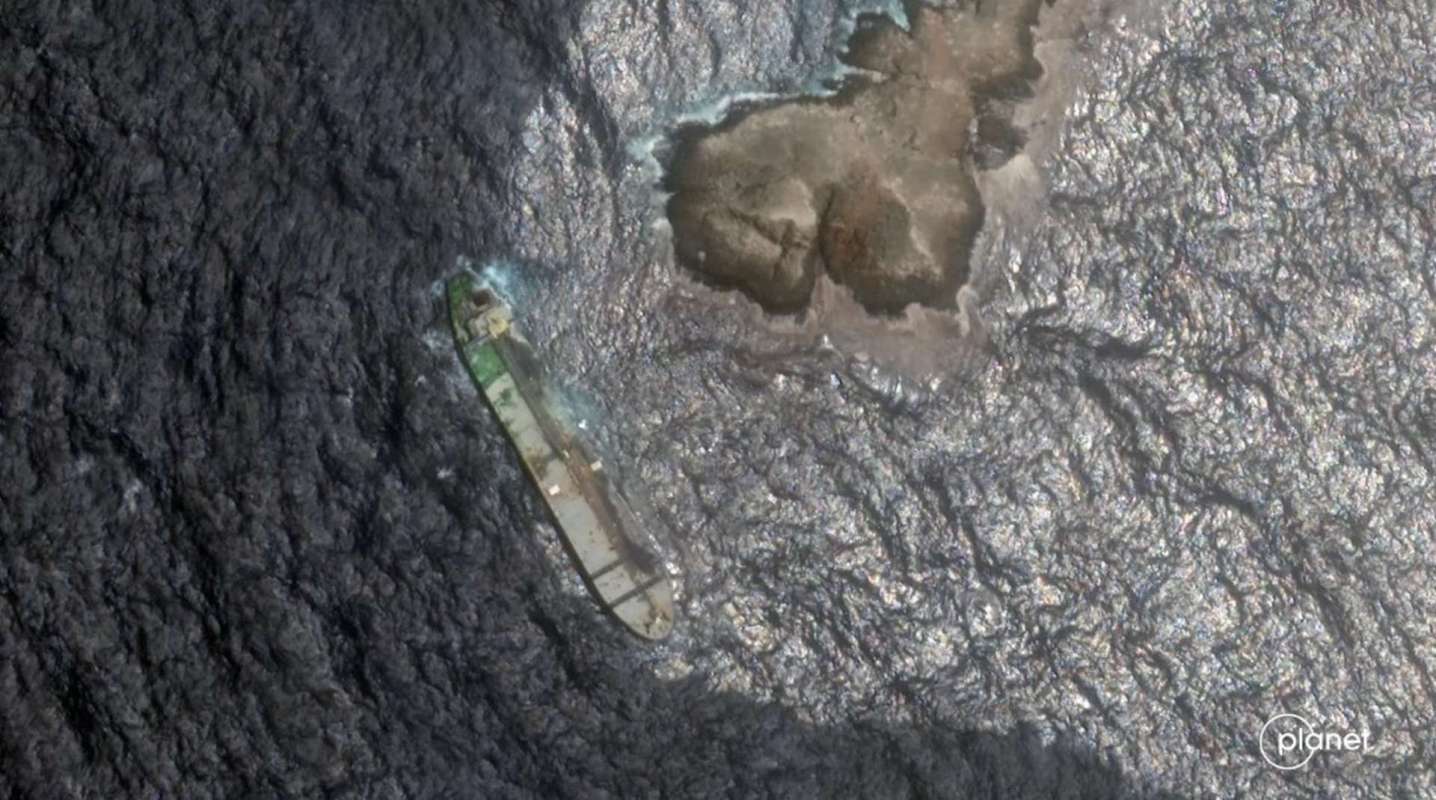
Environmental groups are sounding the alarm as a major oil spill off the coast of Oman is shifting into a serious marine emergency. Satellite images indicate the contamination is spreading from a tanker stuck near a protected island chain home to whales, seabirds, and rare sea turtles.
What happened?
According to Arab News, the oil sheen from an alleged Russian shadow fleet tanker has swelled from about 20 square kilometers, or 7.7 square miles, on July 24 to roughly 600 square kilometers, or 232 square miles, by Aug. 4.
The outlet reported that data from Kpler indicated that the tanker loaded 1 million barrels of crude oil at Sheskharis, a Russian Black Sea terminal, on May 11 and seemed to be carrying that cargo when its last tracking signal appeared. Arab News, citing AFP, said that the vessel has since been stranded near Al-Qibliyyah island off Oman's southern coast.
New satellite imagery from July 31 released by @planet showing increased oil spills at the stranded CAROLINE BEZENGI tanker stranded at #Oman's Qibliyah Island, part of marine nature reserve. The ship is laden with over 800.00 barrels of oil, 3x more than the Exxon Valdez pic.twitter.com/fEfy49AAjX
— Wim Zwijnenburg (@wammezz) August 2, 2026
Arab News reported that the U.K. sanctioned the Russian ship, believed to be the Caroline Bezengi, in February over suspected oil shipments. Vanguard Tech, a maritime security firm, also said, as reported by Arab News, that three explosions hit the ship on June 6.
The outlet noted that, while it is not clear what caused the explosions, the damage has left the ship stranded.
In comments to AFP, Nina Noelle, a Greenpeace campaigner, said the danger of the oil spilling is ongoing, warning that "with oil apparently continuing to leak and the vessel stranded in a difficult location, the risk of an even larger environmental disaster remains serious."
TCD Picks » Quince Spotlight
💡These best-sellers from Quince deliver affordable, sustainable luxury for all




Why does it matter?
The location adds to the concern. AFP, via Arab News, said Oman established a marine reserve around the islands located in the region in 2025, an area that supports rare sea turtles, migratory seabirds, and Arabian Sea humpback whales. That makes any large-scale contamination potentially devastating to those ecosystems and animals.
Oil spills can coat birds and marine mammals, damage coral and shorelines, and disrupt breeding and feeding grounds. They can also affect fishing and tourism, two sectors that many coastal communities depend on for jobs and income.
Greenpeace and other NGOs are sounding the alarm as satellite evidence continues to track the slick's spread.
The reserve status around the regional islands could also raise the stakes for containment and cleanup, since the affected waters are recognized as ecologically important. With the tanker disabled in a difficult location, preventing a larger rupture appears to be a key concern.

Get TCD's free newsletters for easy tips, smart advice, and a chance to earn $5,000 toward home upgrades. To see more stories like this one, change your Google preferences here.







