


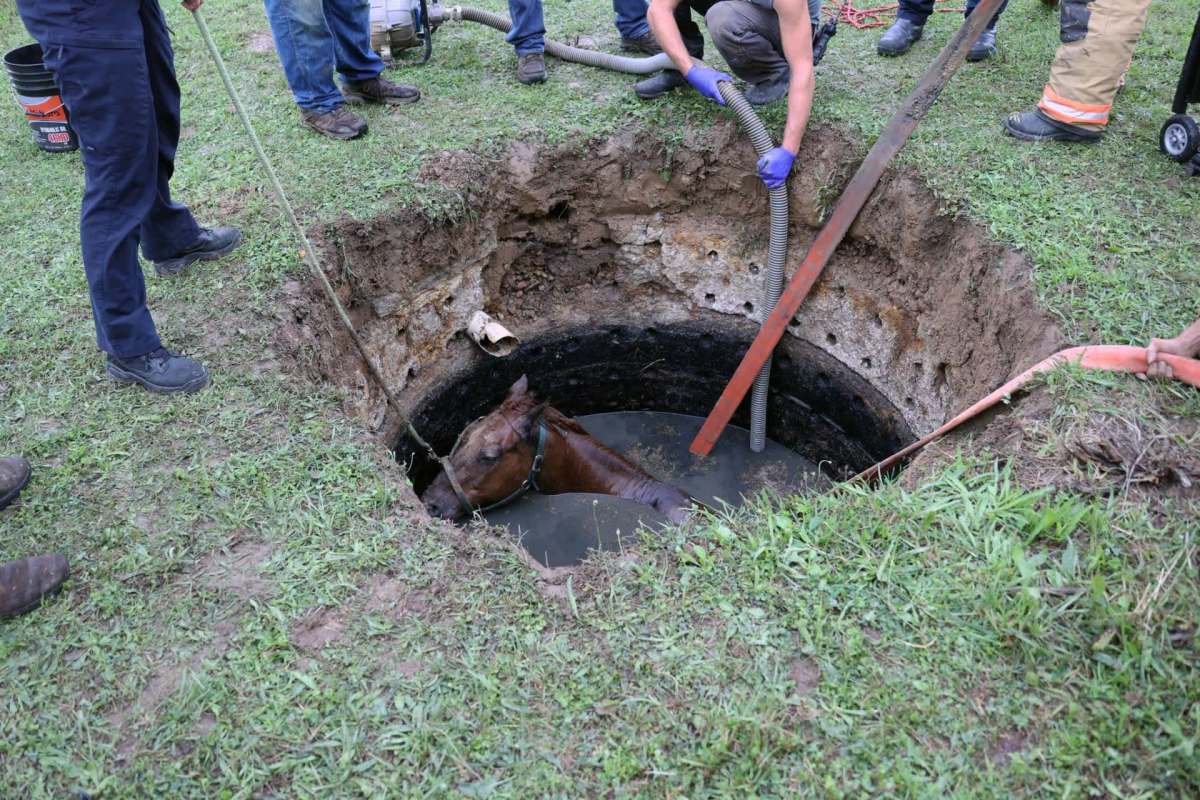
An Ohio horse survived after breaking through the roof of an in-ground tank and becoming trapped in water deep enough that only its head stayed above the surface until firefighters arrived.
Here's what to know
On Aug. 17, 2026, crews from the Polk Jackson Perry Fire District were dispatched to Jackson Township in Ashland County shortly after 8 a.m., according to WKBN.
A Facebook post by local news outlet Ashland County Pictures (@AshlandCountyPictures) shared an in-depth account of the rescue.
The fire district said the animal had stepped onto the tank's roof, which gave way and dropped it into the water. When crews reached the scene, only the horse's head remained above the surface.
"You couldn't even see its ears," a witness told Ashland County Pictures.
Before they could use a portable pump to drain the tank, firefighters first removed water by hand with buckets, according to the Polk Jackson Perry Fire District.
TCD Picks » Quince Spotlight
💡These best-sellers from Quince deliver affordable, sustainable luxury for all




They also used specialized equipment to get the horse out, including a crane.
"I don't think the horse realized at first that the ground was beneath it and that it could stand," Polk Jackson Perry Fire District Fire Chief Daniel Nolt recalled to Ashland County Picture. "It took a little bit. Then it seemed like it realized, 'Hey, I can stand up again.'"
More background
In many communities, especially rural ones, first responders are also the people neighbors rely on when pets, livestock, and wildlife end up in immediate danger.
Horses are powerful animals, but they can quickly suffer stress, fatigue, or injury when they cannot regain their footing, particularly in water-filled pits, tanks, or other enclosed spaces.
A successful rescue can spare a family heartbreak and major financial loss. It can also prevent a more dangerous recovery effort later if an animal becomes more distressed or if the structure around it grows even less stable.
Hidden infrastructure on farms and rural properties can pose risks when covers weaken or were never designed to support the weight of a large animal.
What's being done?
That kind of readiness depends on training, maintained equipment, and local support for emergency crews that may be called on to handle highly unusual situations. Animal rescues can require patience, improvisation, and tools that go well beyond a standard emergency call.
Regularly inspecting tank covers, fencing off vulnerable areas, and securing openings can help reduce the chances of a curious animal stepping onto an unsafe surface.
The horse made it out alive with volunteer firefighters and community members playing a major role.
"I thank our guys, it puts a new sense of service in their minds when we do stuff like this," Nolt concluded to Ashland County Pictures.
Where can I learn more?
Rescues like this often come down to quick thinking, specialized tools, and responders who know how to adapt on the fly. That plays out in very different emergencies, from stranded livestock to pets facing heat and wildfire.
• In Boyle County, firefighters mounted a dramatic boat rescue after a cow was stranded in a lake.
• In Ohio, wildlife officers rescued a gasoline-doused dog before saving kittens and their mother from dangerous heat.
• In Canada, a nonprofit saved animals from wildfire despite budget strain during a devastating fire season.
Each of these emergencies unfolded fast, and each depended on rescuers who were ready for something out of the ordinary. They're also a reminder that prevention, training, and community support matter long before the next call comes in.

Get TCD's free newsletters for easy tips, smart advice, and a chance to earn $5,000 toward home upgrades. To see more stories like this one, change your Google preferences here.







