


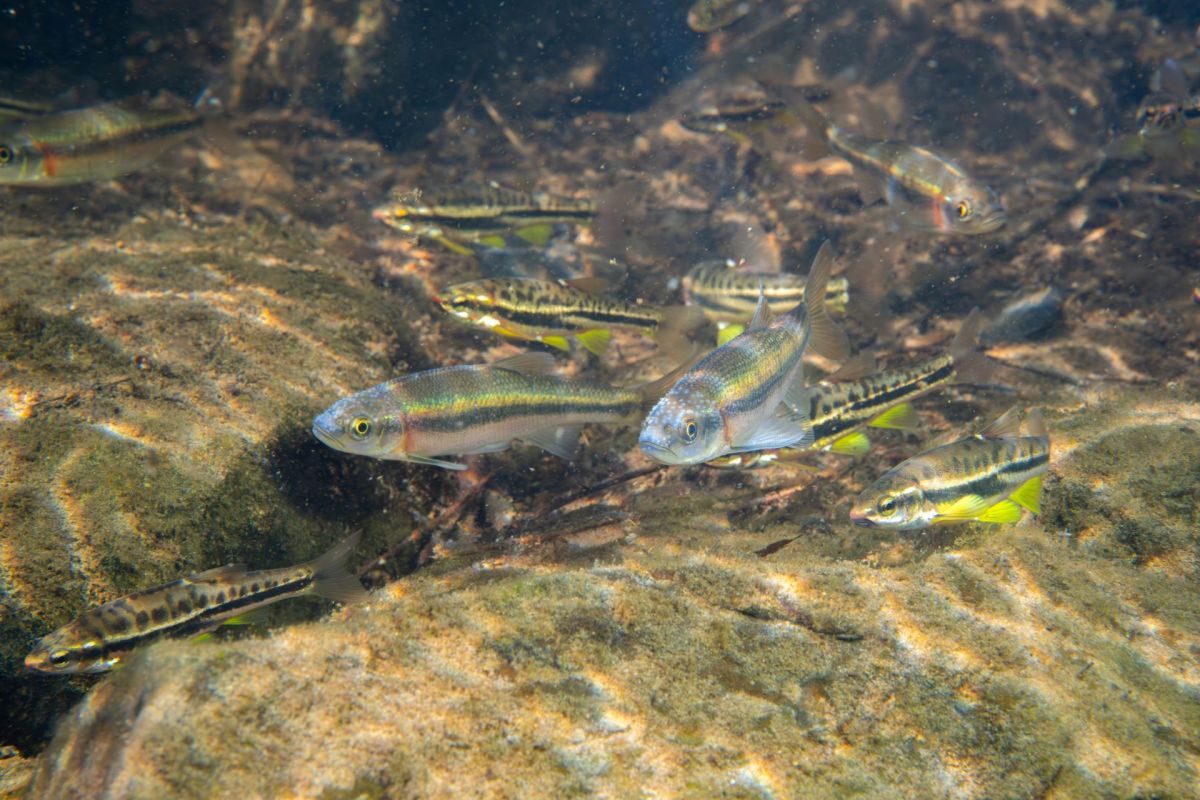
Thousands of tiny endangered fish are making a big comeback in Colorado.
New efforts from the Colorado Parks and Wildlife and the U.S. Department of Agriculture Forest Service have brought the northern redbelly dace, a tiny minnow, back to public waterways in the region for the first time in 20 years.
What happened?
According to a report from 9News, on May 13, wildlife officials put more than 18,000 northern redbelly dace into a small spring-fed creek at Pawnee National Grassland.
The project relied on both biologists and rangers, who worked together in northern Colorado to establish the rare native fish in habitat that may aid its recovery.
9News reported that Colorado Parks and Wildlife classifies the northern redbelly dace as a Tier 1 Species of Greatest Conservation Need in its State Wildlife Action Plan. Populations of the small fish have declined for decades as habitat loss, environmental changes, and the spread of non-native species have reduced its range.
Why does it matter?
"The northern redbelly dace are considered an indicator species for biologists, like a canary in a coal mine," Matt Haworth, CPW's Platte River Basin Native Aquatic Species Biologist, told 9News. "If we observe their presence in a body of water, we learn a lot about that environment. If dace are eliminated from the area, we know something in the habitat has become unstable."
TCD Picks » Quince Spotlight
💡These best-sellers from Quince deliver affordable, sustainable luxury for all




That means the species' presence can help scientists determine whether a stream is healthy enough to support life. If the dace can survive and reproduce, that is a promising sign for the broader aquatic ecosystem as well. For nearby communities, healthier waterways can support stronger landscapes, better wildlife habitat, and more resilient public lands.
The stocking effort shows what can happen when agencies work together early enough to protect a species before it disappears from even more of its range. Restoring endangered native animals on public land helps preserve biodiversity while keeping these landscapes healthy for future visitors, researchers, and local residents alike.
"By proactively restoring northern redbelly dace to more locations on the landscape, we are building species resiliency with a long-term target of successful reproduction in the wild that would no longer need the support of stocking," Haworth said.

Get TCD's free newsletters for easy tips, smart advice, and a chance to earn $5,000 toward home upgrades. To see more stories like this one, change your Google preferences here.







