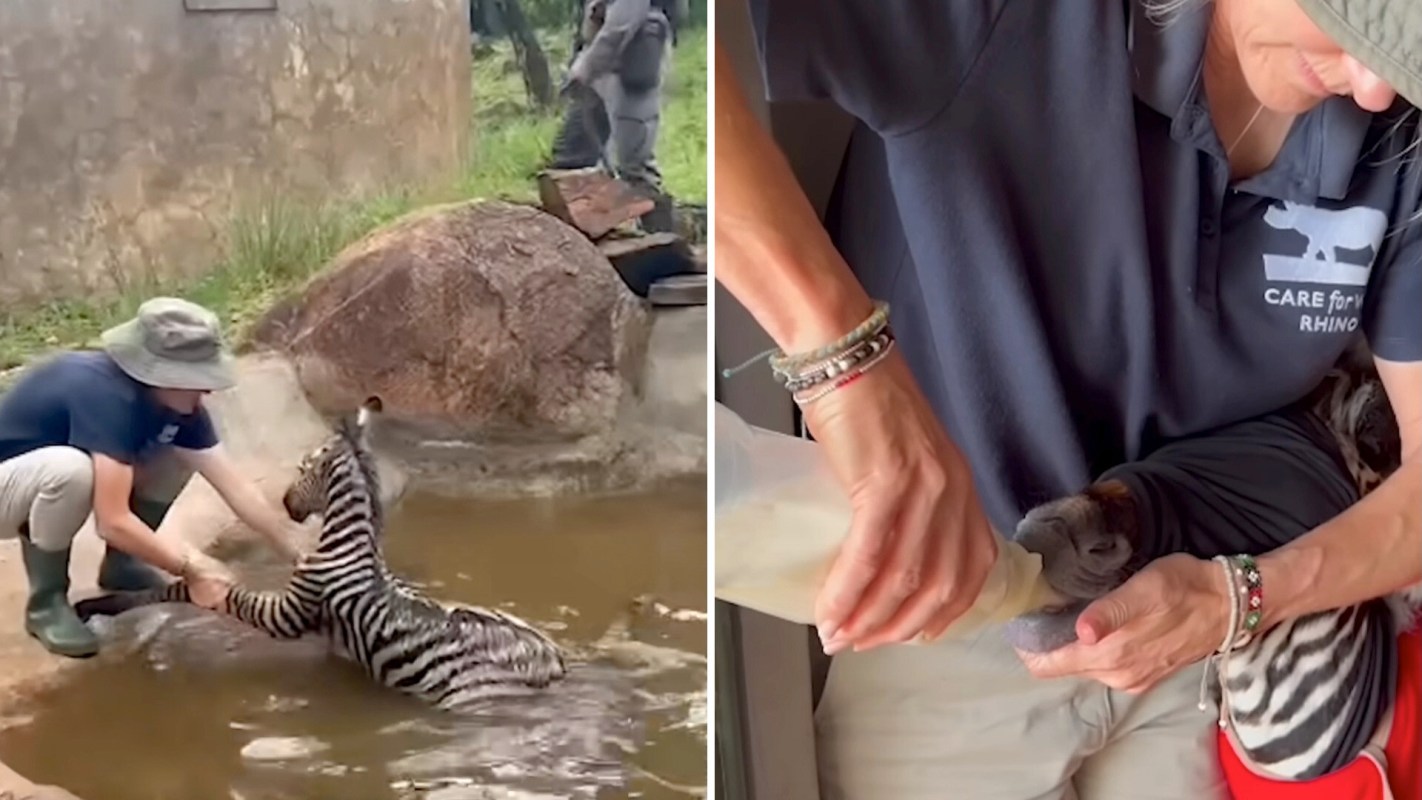
A newborn zebra was moments from disaster after he was spotted thrashing and slipping in a dam in South Africa. In a video shared by The Dodo producer Rebecca, rescuers pulled the hypothermic foal from the water — then reunited it with its mother.
What happened?
In the short video shared on YouTube, Rebecca explains that Ranger Bernardo alerted the Care for Wild team after noticing the newborn struggling in the dam.
Because no mother was anywhere in sight, the team decided they could not leave the foal where he was. Working together, they pulled him safely from the water, believing he would not survive otherwise.
Rebecca said the baby was so cold that he was showing signs of hypothermia. His umbilical cord was still attached, suggesting he was only about a day old. As they moved him to intensive care, rescuers covered the foal's eyes to help keep him calm. Once there, they warmed him and gave him sugary milk to help rebuild his strength.
While the team worked to stabilize him, rangers searched for his herd both on the ground and with drones. After they found the group, the outcome depended on whether the foal would be recognized and accepted.
That question was answered when the foal cried out, his mother rushed over to nuzzle him, and he rejoined the herd.
TCD Picks » Good Store Spotlight
Get 10% off your next purchase with code TCD10


Why does it matter?
For a zebra foal that young, even a brief separation can turn life-threatening.
Exposure, exhaustion, dehydration, and predators all pose major risks, especially after a near-drowning incident. The speed of the rescue likely gave the newborn his best chance of survival.
Rescuers did not stop at getting him out of immediate danger. They focused on returning him to his mother and herd, which is often the best possible outcome for a wild animal. That kind of intervention helps preserve natural bonds instead of replacing them with extended human care.
Saving an animal is one step; ensuring it can successfully return to the wild is another. In this case, both happened. One commenter wrote, "Awesome to see and so happy that it was accepted back into the dazzle!"
What's being done?
Care for Wild staff and rangers paired hands-on rescue work and emergency medical care with search technology in the effort to return the foal to the wild. By tracking the herd from the ground and by drone, they found the group quickly enough for a reunion to remain possible.
Pulling the zebra from the water was urgent, but so was minimizing stress and keeping the animal in a condition that would allow his mother to recognize him.

Get TCD's free newsletters for easy tips, smart advice, and a chance to earn $5,000 toward home upgrades. To see more stories like this one, change your Google preferences here.