


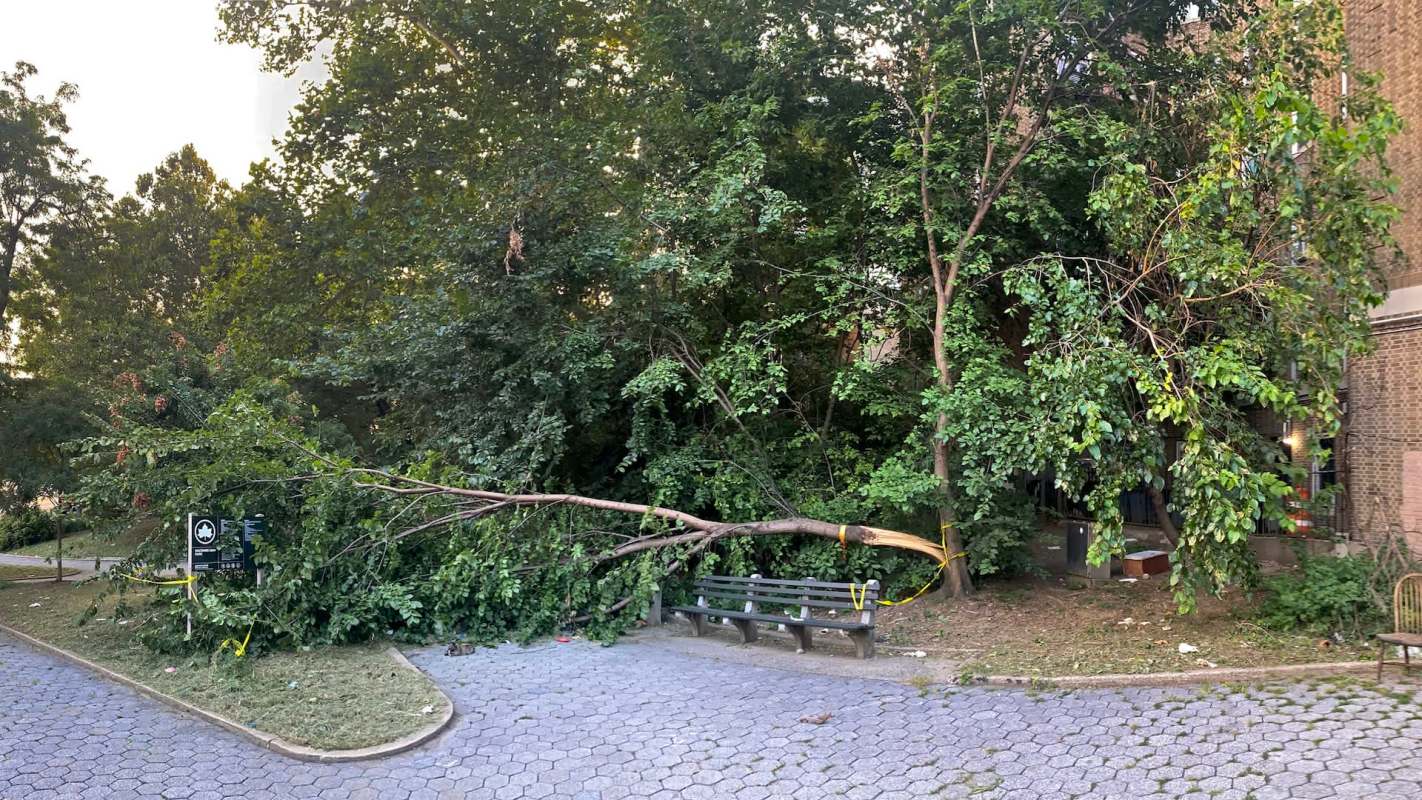
New York City's trees are getting hit hard by severe weather, with damaged and fallen trees piling up at an unusually fast rate. A run of storms is forcing city crews to respond to far more tree-related incidents than usual as strong winds, heavy rain, and snow hit in quick succession.
Here's what to know
Through July, New York City Parks Department crews this year had addressed 11,020 work orders involving damaged or fallen trees, as reported by Gothamist. That's more than double the average total of 5,437 recorded during the same stretch over the previous three years.
Officials said three separate severe weather events on Feb. 22, June 6, and July 3 each led to more than 1,000 tree-related service requests. Over the past 10 years, the city has typically seen only one such event in a given year.
According to Adriana Jacykewycz, the Parks Department's chief of forestry operations, storms increase the strain on all parts of a tree, including its branches, trunk, and roots.
"That is why we do routine tree maintenance as a component of risk mitigation so that we can address concerning defects that might fail during a storm," she said, per Gothamist. "But at a certain point, high enough winds can take down even a perfectly healthy tree."
After residents submit reports through 311 or the department's online service request system, crews first focus on the most urgent dangers, such as trees blocking streets, damaging buildings, or impeding power restoration.
TCD Picks » Quince Spotlight
💡These best-sellers from Quince deliver affordable, sustainable luxury for all




More background
City trees don't just make sidewalks more visually appealing. They help cool neighborhoods, absorb some stormwater, improve air quality, and make streets more livable as temperatures rise and weather grows less predictable.
Storms are only part of the problem. Jacykewycz told Gothamist that urban trees also face ongoing pressures such as pollution, drought, cramped growing conditions, and construction disruption.
More intense extreme weather can threaten lives and livelihoods in immediate ways. Fallen trees can injure people, crush cars, damage homes, block roads, delay emergency access, and contribute to power outages that disrupt businesses and daily routines. Repeated storms can also reduce the shade that helps limit dangerous heat exposure.
As Gothamist reported, the city is still working under its Urban Forest Plan to raise canopy coverage from 23.4% to 30% by 2040, but increasing storm damage could make that goal both harder and more expensive to achieve.
What can be done?
Jacykewycz said caring for these trees can make a major difference, especially during dry periods. Watering, weeding, and mulching tree beds can help younger trees build stronger roots and give mature trees extra support in stressful conditions.
Gothamist reported that for non-urgent work without an immediate safety risk, residents can also hire private tree care companies for backyard pruning or for street trees that are not urgent hazards. Those businesses are also under intense pressure as storm-related demand rises.
Elizabeth Arce, an arborist with Arborpolitan, described to Gothamist how quickly things changed after one winter storm: "The winter season is very slow for us. We went from 0 to 100 in, like, that week. It was wild."

Get TCD's free newsletters for easy tips, smart advice, and a chance to earn $5,000 toward home upgrades. To see more stories like this one, change your Google preferences here.







