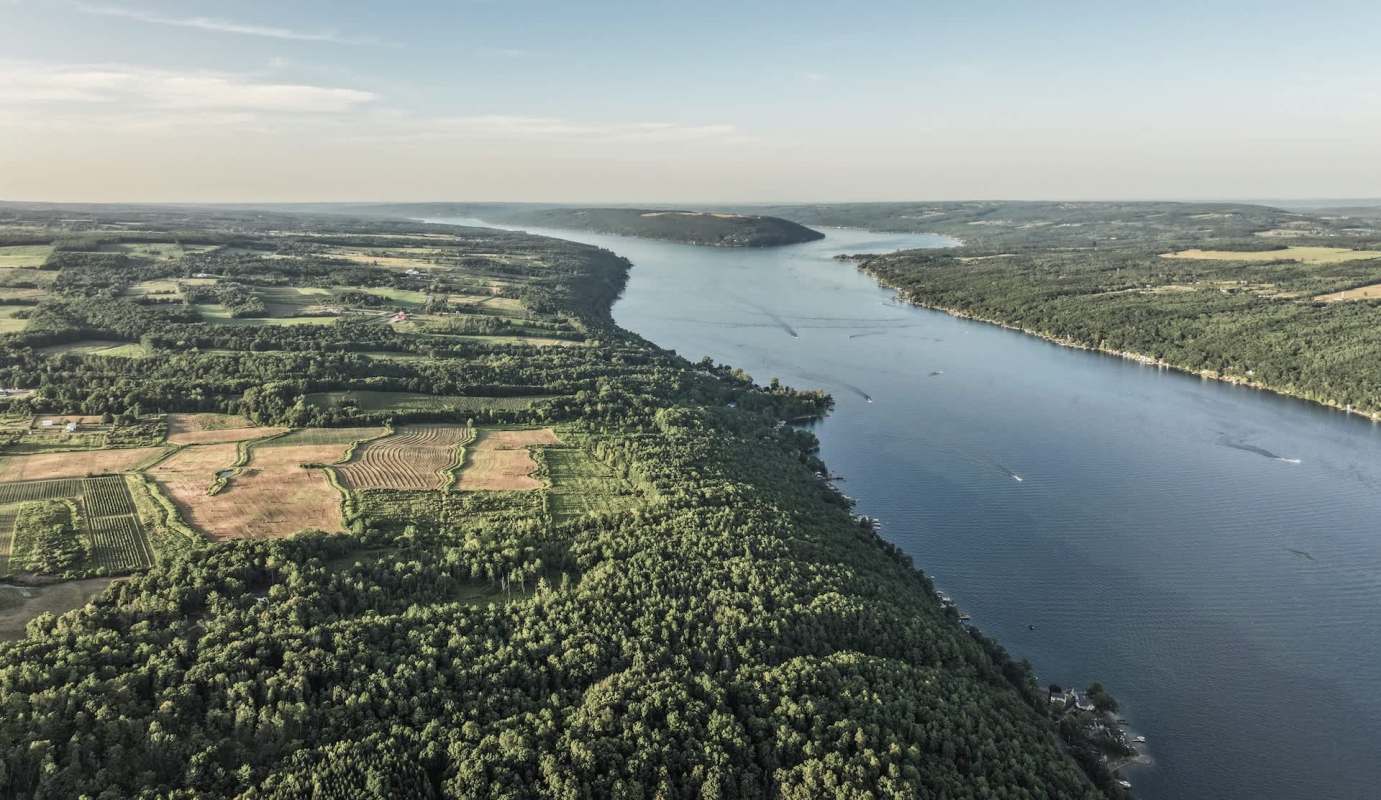
New York's drought watch now covers 13 more counties. The expansion follows an unusually dry fall that has raised concerns about the Finger Lakes' water supplies ahead of winter.
Here's what to know
FingerLakes1.com reported that unusually low rainfall across upstate New York in fall 2026 prompted the state's Department of Environmental Conservation (DEC) to broaden the drought watch.
A watch is the first of the state's four drought advisory stages and carries no mandatory statewide limits on water use.
Nassau and Suffolk counties remain under an earlier drought advisory. The outlet said the newly affected counties are Allegany, Cattaraugus, Cayuga, Chemung, Livingston, Onondaga, Ontario, Schuyler, Seneca, Steuben, Tompkins, Wyoming, and Yates.
Binghamton received 1.65 inches of precipitation in October, below its normal 3.76 inches, according to National Weather Service figures cited by FingerLakes1.com. Rochester's total was 1.47 inches, less than half its usual monthly amount, while Syracuse received 1.25 inches against a normal 3.89 inches.
The publication noted the interior Northeast and Great Lakes region are most likely to remain in drought through February, according to the Climate Prediction Center's seasonal outlook.
TCD Picks » Quince Spotlight
💡These best-sellers from Quince deliver affordable, sustainable luxury for all




More background
Declining groundwater is a particular concern for households that rely on private wells. If those wells stop delivering enough water, FingerLakes1.com said rural homeowners may have fewer alternatives than residents served by municipal water systems.
Reduced water pressure or interrupted service can signal falling groundwater, though similar symptoms may also result from mechanical faults, according to DEC guidance.
Worsening drought can threaten public health, community safety, and economic stability by putting dependable water supplies at risk. In the Finger Lakes, the outlet noted those concerns extend from households with individual wells to livestock operations that need reliable water year-round.
While the end of the growing season eases some agricultural demand, farms drawing from wells, ponds, or streams still need those sources to recover. For the region's vineyards and orchards, FingerLakes1.com indicated groundwater levels and soil moisture heading into spring will also be crucial.
What can be done?
State officials are urging residents and businesses to voluntarily cut unnecessary water use, repair leaks, and avoid waste, according to the outlet. Municipalities or water suppliers may impose local conservation rules in response to conditions in their areas, even while an area remains at the watch level.
Homeowners experiencing supply problems should contact a registered well contractor, according to the DEC. Residents can also report shortages through the state's dry well reporting system, helping officials spot local problems that may escape broader monitoring.
Farmers are encouraged to monitor available water and raise concerns with their county's emergency management officials or their local soil and water conservation district, according to FingerLakes1.com.
If conditions worsen, the publication indicated a drought warning could prompt stronger conservation efforts and local response plans. A drought emergency could bring mandatory restrictions and require communities to seek other water sources.
The Finger Lakes' existing precipitation deficit makes the spring groundwater recovery period particularly important. Recharge generally peaks in March and April, and U.S. Geological Survey research shows that fall precipitation helps replenish groundwater in northern New England and upstate New York, as FingerLakes1.com noted.
Where can I learn more?
Rainfall shortages are straining water supplies well beyond the Finger Lakes.
• New England scientists launched a snowpack watch as warming winters bring drought and flash floods.
• In Massachusetts, Cambridge may buy water as drought left its main reservoir just 20% full.
• North Carolina needs over 12 inches of rain for drought relief, but forecasts offered little.
• Florida's drought now affects 15.5 million people, threatening drinking water supplies and increasing wildfire risks.

Get TCD's free newsletters for easy tips, smart advice, and a chance to earn $5,000 toward home upgrades. To see more stories like this one, change your Google preferences here.
Cool Picks