


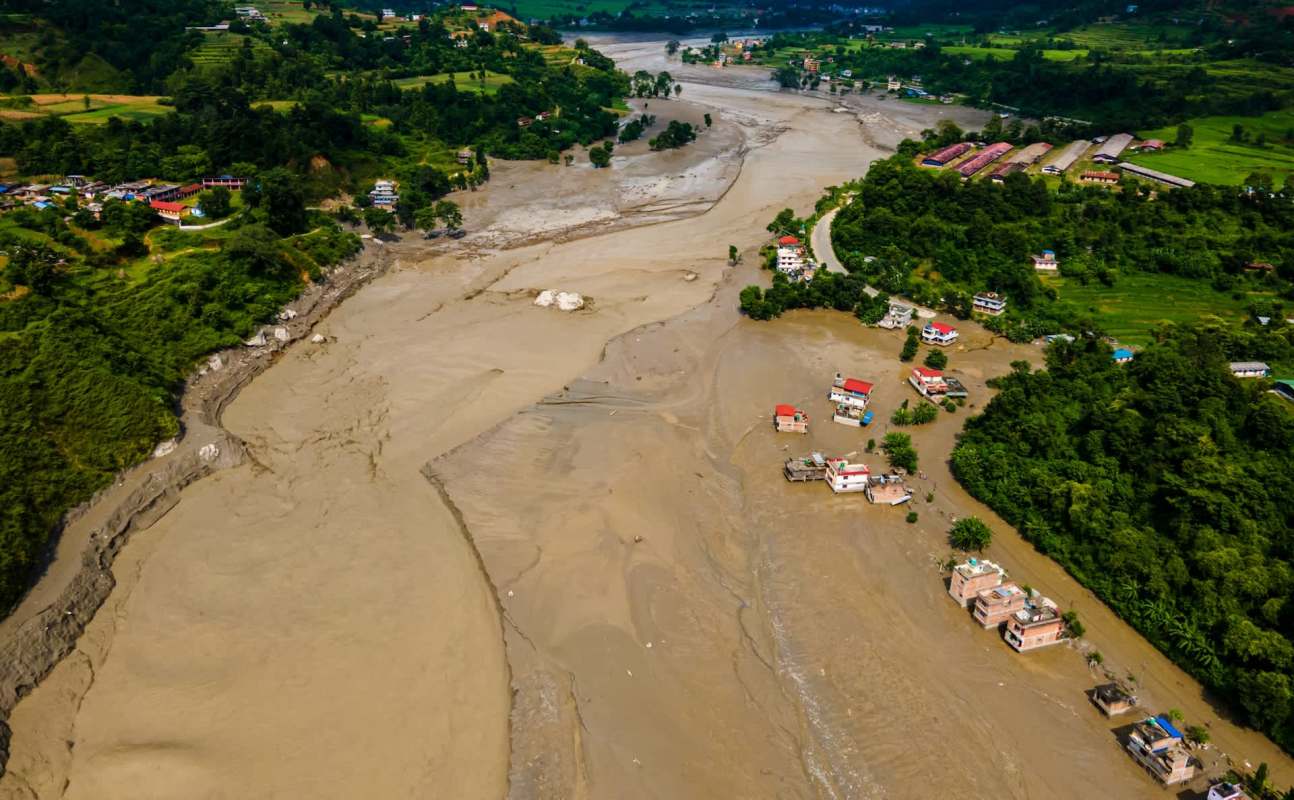
A flash flood on Nepal's Budhi Gandaki River hit central Gorkha district, sweeping away homes and bridges and leaving five people missing. Nepal's army said the torrent may have been caused by an upstream river blockage, possibly from a landslide.
Here's what to know
Nepal's National Disaster Risk Reduction and Management Authority said the flooding affected more than 650 people, damaged 204 homes, and prompted the rescue of 95 people, including nine foreigners, the BBC reported.
"This is what happens when we don't listen to science....poor people of Nepal..." one commenter wrote on footage shared by BBC News (@BBCNews) to Instagram.
"Climate catastrophe will be experienced as a series of increasingly violent extreme weather events, more and more frequently and closer, until you are the one filming," another said.
Nima Lama, the municipality chairperson, said at least two villages were wiped out and several bridges were swept away. Lama said officials believe the five missing people were herders and that about 100 cows were also unaccounted for after the flood.
As communities prepared for Dashain, Nepal's biggest and longest festival, the flood forced hundreds of people from their homes, Assistant Chief District Officer Netra Prasad Sharma said.
TCD Picks » Quince Spotlight
💡These best-sellers from Quince deliver affordable, sustainable luxury for all




More background
Before official warnings reached some villages, residents were already calling one another to escape. The BBC reported that resident Suna Gurung told The Kathmandu Post that people in riverside communities spread the alarm by phone.
"Within ten minutes, the river swelled dramatically in the dark. We raised an alarm, woke everyone up, and fled into the forest," Gurung said.
Alerts were delayed: residents in some higher areas received messages nearly two hours after the flooding began, while people in lower regions didn't receive them for almost five hours. Ganesh Karki of Jagatbagar told The Kathmandu Post that residents took shelter about 1,640 feet uphill and were afraid to return home after the river surged repeatedly throughout the morning.
Nepal's Himalayan landscape leaves communities especially exposed to sudden flooding, as landslides, avalanches, earthquakes, and rapidly melting glaciers can all trigger surges in rivers.
Nepal is still recovering from August flooding near the Tibet border that left hundreds dead and thousands missing. Planetary warming is likely worsening those risks, putting lives, homes, livestock, and already fragile local economies in danger.
What's being done?
Rescue crews have focused first on saving people and reestablishing access. According to the BBC, Nepal's army deployed four helicopters for search-and-rescue missions and conducted aerial reconnaissance to assess damage and help determine what caused the flood.
More than 700 security personnel have been sent to the affected area, where some settlements can now be reached only by air. Narayan Prasad Sapkota, administrative chief of Chumnubri Rural Municipality, said, "The entire rural municipality is now cut off, with air travel the only remaining way to reach it."
The BBC reported that officials planned to seek alternative routes after prioritizing rescue operations. Ram Kumar Gurung, ward chair of Chumnubri-3, said that the flood terrified residents and forced them to abandon their homes.
Speaking to the BBC, Tek Bahadur Adhikari, a public official for Arughat, said, "[Residents] can't sleep at home with peace of mind."
Where can I learn more?
These articles provide a wider look at the toll of severe flooding and other climate-related disasters.
• In Pakistan, relentless monsoon rains caused deadly flooding that killed dozens and displaced families.
• Across Europe, flooding could shake the financial system as disaster losses strain insurers and banks.
• In Vanuatu, mounting climate threats are eroding local resources and deepening disaster risks.

Get TCD's free newsletters for easy tips, smart advice, and a chance to earn $5,000 toward home upgrades. To see more stories like this one, change your Google preferences here.







