


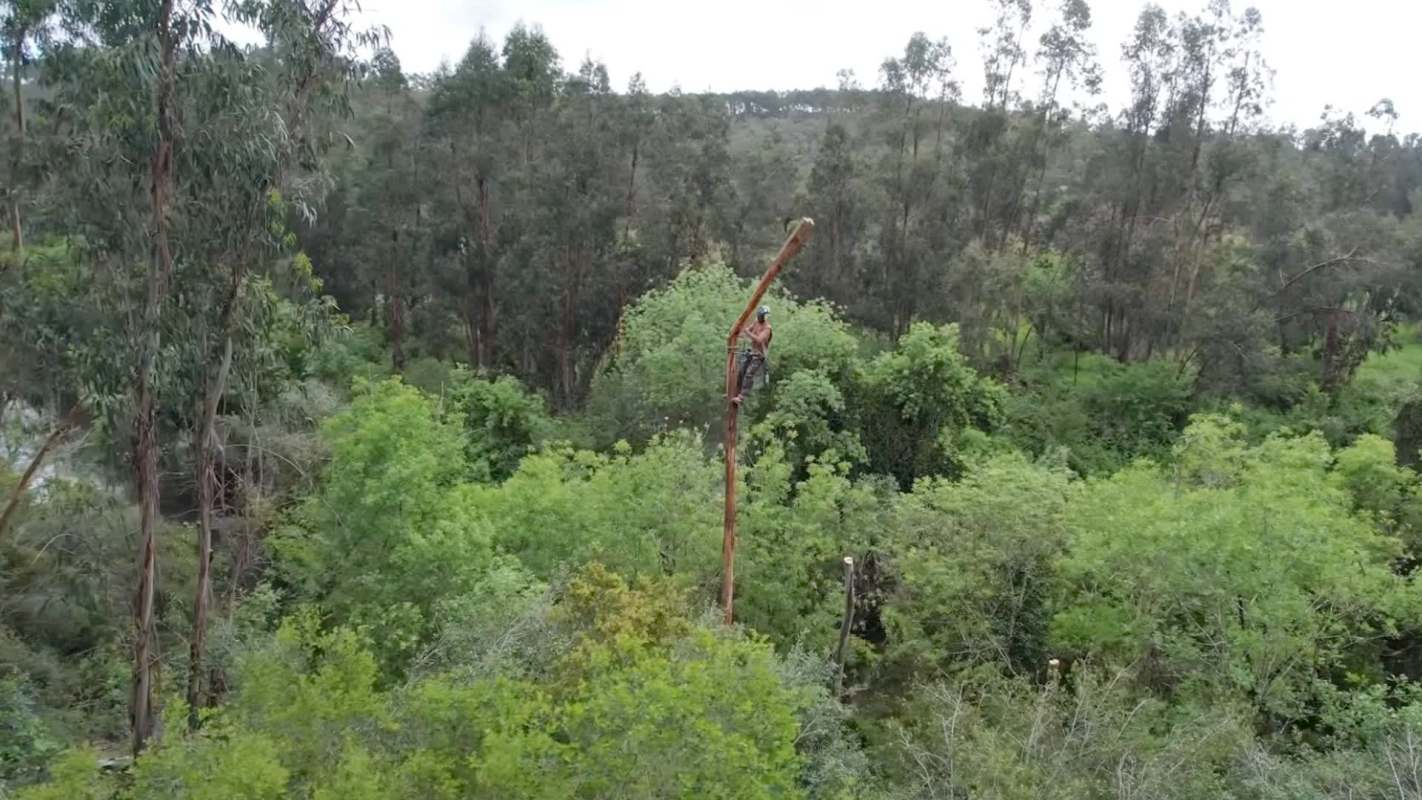
After stands of damaging eucalyptus were removed along Portugal's Mira River, conservation workers and volunteers are trying to answer an encouraging question: How quickly can a native river forest return once pressure from a thirsty, fast-spreading tree is gone?
Early signs suggest the answer may be promising, and the project could offer a useful model for restoring waterways that support both wildlife and nearby communities.
What's happening?
A spring video update from the Wilder Mira team, published by Mossy Earth Field Notes, documents restoration work in southwest Portugal on stretches of the Mira River where eucalyptus had already been cleared.
Rather than relying on a single method, the project is dividing the area into different trial plots. Some are being left to regenerate naturally; some are being planted with native river-loving (riparian) species such as ash, alder, and Portuguese oak; and others pair that planting with bramble control to test whether less competition improves seedling survival through the first dry summer.
Alongside those trials, each planted tree is being logged through GIS mapping and followed through long-term vegetation surveys so the team can measure survival and track shifts in the plant community over time. As the update explained, "We plant native trees, monitor their survival, and compare natural regeneration with active restoration to learn what works best."
Why does it matter?
Riverbank forests do far more than improve the scenery. Healthy riparian corridors help stabilize banks, cool waterways, create habitat for fish and other wildlife, and boost biodiversity in places that might otherwise be overtaken by invasive or non-native plants.
TCD Picks » Quince Spotlight
💡These best-sellers from Quince deliver affordable, sustainable luxury for all




Cooler, more stable rivers can support healthier ecosystems, reduce erosion risks, and improve the resilience of landscapes facing hotter summers and increasingly unpredictable rainfall. In this case, the team said the work also overlaps with efforts to restore habitat for endemic fish in the basin. Nature can begin responding quickly once a monoculture is removed.
What's being done?
Much of the effort has been hands-on. Volunteers planted seedlings manually, and municipal workers also took part in restoration at three other river stretches where invasive giant reed had previously been removed. Those sites needed enrichment planting to help create a more shaded, biodiverse river forest.
Instead of watering the new trees, researchers are leaving them to face natural conditions. That should reveal which approaches can work without extra irrigation, especially during the first summer, when young trees face their hardest survival test.
To track the results, the team is carrying out detailed field monitoring, including quadrat surveys, to measure how vegetation changes in the years ahead. That kind of follow-up can help restoration groups and local governments use time and money more effectively in future projects.

Get TCD's free newsletters for easy tips, smart advice, and a chance to earn $5,000 toward home upgrades. To see more stories like this one, change your Google preferences here.







