


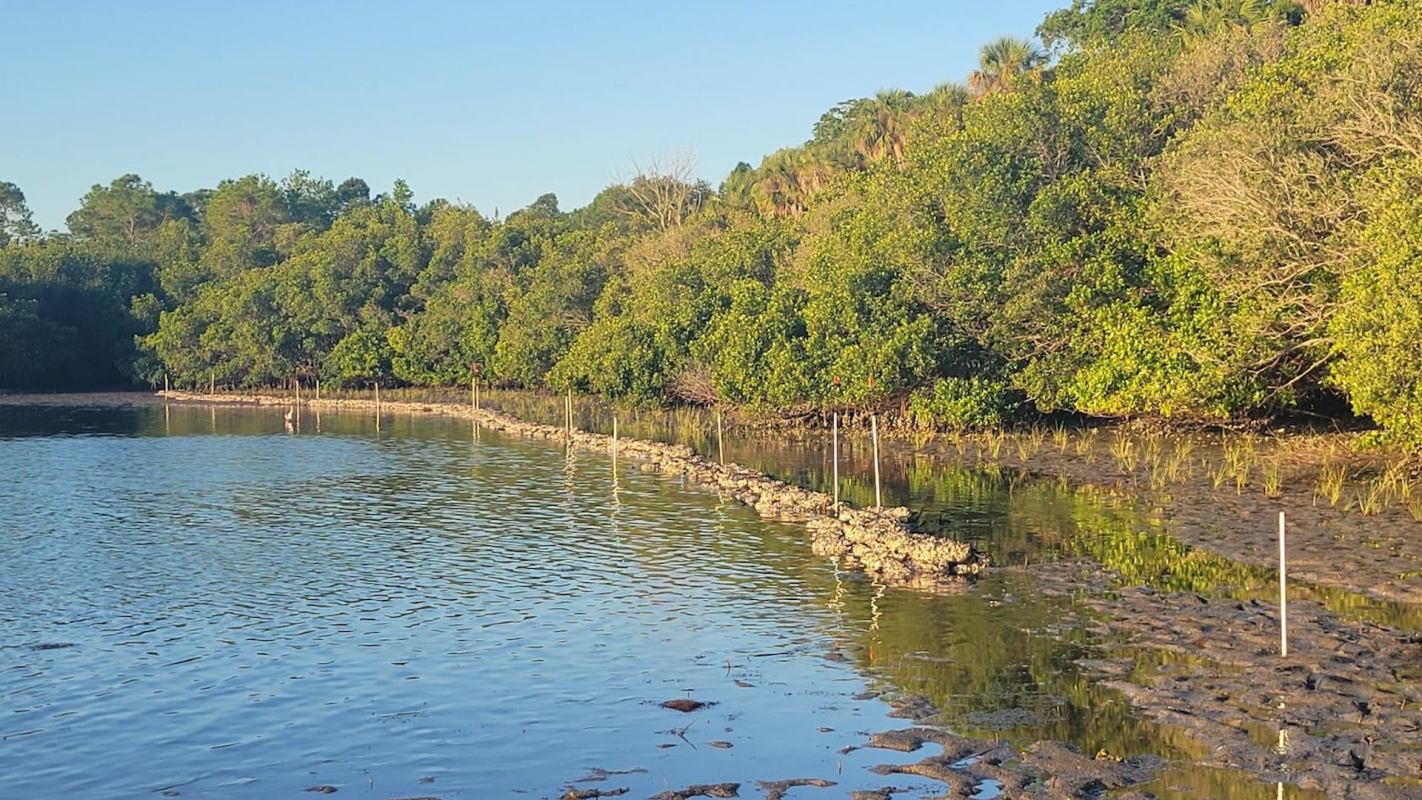
Florida's answer to rising seas may look a lot softer than a concrete seawall: oyster shells, mangroves, marsh grasses, and coconut fiber logs.
Across the Tampa Bay region, communities are rebuilding coastlines with "living shorelines" — and in at least one case, an offshore oyster reef stayed put through hurricanes while helping limit flood damage.
According to WFSU, Florida's tidal shoreline stretches about 8,500 miles, the most in the contiguous United States.
But that geography also leaves many communities exposed as sea levels rise.
Rising global temperatures have raised Florida's waters by roughly 8 inches since 1950, and in some places, levels could climb by about another inch every few years.
Local governments around Tampa Bay have spent the past decade testing nature-based coastal defenses.
TCD Picks » Quince Spotlight
💡These best-sellers from Quince deliver affordable, sustainable luxury for all




At Philippe Park in Safety Harbor, Pinellas County has installed eight different living shoreline projects, including oyster bags, reef domes, marsh grass, and other reef structures designed to reduce erosion and support marine life.
"We know that there used to be oysters in this part of the bay," Stacey Day, who leads the effort for Pinellas County, told WFSU.
One oyster reef placed offshore in 2023 helped reduce flood damage during hurricanes the following year.
"It didn't move at all in the storms," Day said.
Other counties are making similar shifts. In Manatee County, officials are replacing a cracked, aging seawall at Rose Park with a gentler shoreline built from oyster bars, artificial reefs, and native plants.
In Sarasota County, a living shoreline at Blackburn Point Park, absent a decade ago, is now considered a success.
For coastal residents, it is a safety and quality-of-life issue. Old seawalls can crack, weaken, and eventually fail, leaving parks, neighborhoods, and infrastructure more vulnerable to flooding during storms.
Living shorelines work differently. Oyster reefs help break up waves before they hit land, reducing erosion and buffering floodwaters.
"Each adult oyster can filter a lot of water up to 50 gallons a day," Day said.
That means these projects can protect property while supporting healthier bays, fisheries, and recreation.
They may also offer a longer-lasting investment. Unlike hardened shorelines that deteriorate over time, natural systems can grow stronger as oysters accumulate and plants take root.
That makes them an appealing tool for communities facing rising repair costs and more frequent coastal flooding.
In a state where waterfront living is central to local economies and daily life, solutions that protect shorelines while restoring habitat could help communities adapt without relying only on expensive gray infrastructure.
Much of Florida's living shoreline work so far has taken place on public land, led by counties and supported in part by state adaptation funding through the Resilient Florida program.
Some sites use mesh bags filled with oyster shells. Others rely on mangroves, loose shells, rocks, sand, or coconut fiber logs to rebuild a more natural coastal edge.
At Blackburn Point Park, those materials turned what had been a steep drop-off into a functioning shoreline over about a decade.

Get TCD's free newsletters for easy tips, smart advice, and a chance to earn $5,000 toward home upgrades. To see more stories like this one, change your Google preferences here.







