


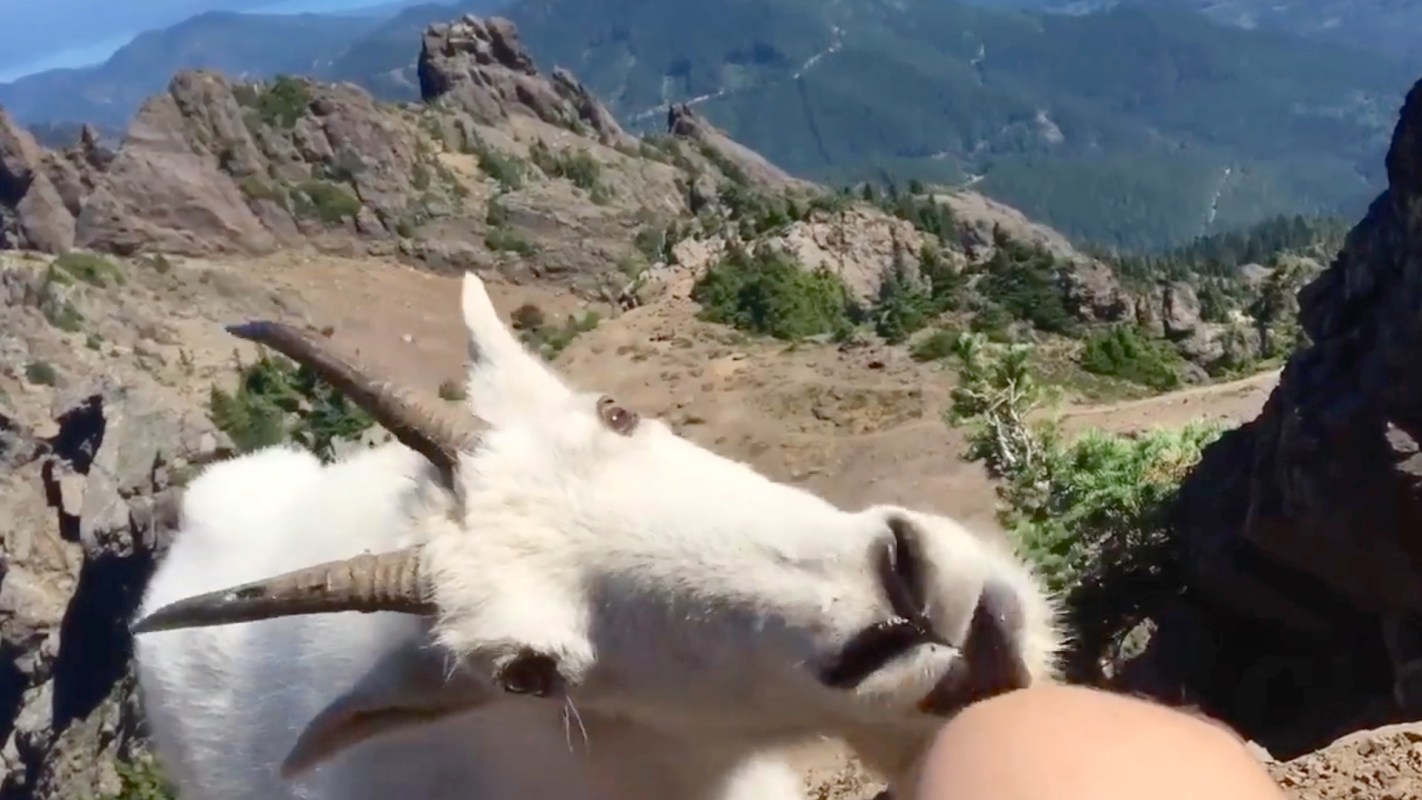
A mountain goat has gone viral after walking right up to a hiker and licking him atop a Washington summit.
What happened?
The footage of the encounter was posted to Reddit, where it quickly picked up 16,000 upvotes and hundreds of comments.
In the video, the mountain goat on Mt. Ellinor in Washington's Olympic Mountains approached the hiker and repeatedly licked him, sparking curiosity and delight among wildlife enthusiasts.
(Click here if the embedded video does not appear.)
Commenters quickly pushed back on the interpretation that the mountain goat was "friendly" or "greeting" the hiker, as initially described by the original poster.
Instead, the top reply reframed the scene, saying, "'Friendly?' That mountain goat just sees the human as a salt lick."
TCD Picks » Quince Spotlight
💡These best-sellers from Quince deliver affordable, sustainable luxury for all




That explanation matches a pattern long noted by hikers and wildlife managers in the Olympic Mountains. Mountain goats are often attracted to salt from people's sweat and even urine.
Other commenters piled on, agreeing that it was the hiker's sweat that attracted the animal. One commenter wrote, "Exactly. It's hard to get the salt they need at those altitudes."
Another user added context, writing, "This can become dangerous as goats have been known to bite onto hiker's clothes (the fabric absorbs the hiker's sweat). If this happens on a steep incline, the goat can pull a hiker right off their feet and cause injuries."
Why does it matter?
Human-wildlife encounters can become dangerous when animals begin associating people with food, minerals, or other easy rewards. What looks calm or curious in one moment can later become bold, pushy, or aggressive.
This risk is not abstract in the Olympic region. Mountain goats there have a documented record of conflict with people, leading National Park Service officials to relocate hundreds of goats over the years.
In another incident in the Olympic Mountains, a hiker was killed after being gored by a mountain goat.
Human activity may be part of what made this encounter possible in the first place. A BBC Future explainer has noted that wildlife attacks are often linked to human behavior, habitat pressure, or habituation rather than animals being randomly aggressive.
So a moment that looks cute on camera can actually reflect an unhealthy relationship between people and wild animals, and one that puts both at risk.

Get TCD's free newsletters for easy tips, smart advice, and a chance to earn $5,000 toward home upgrades. To see more stories like this one, change your Google preferences here.







