


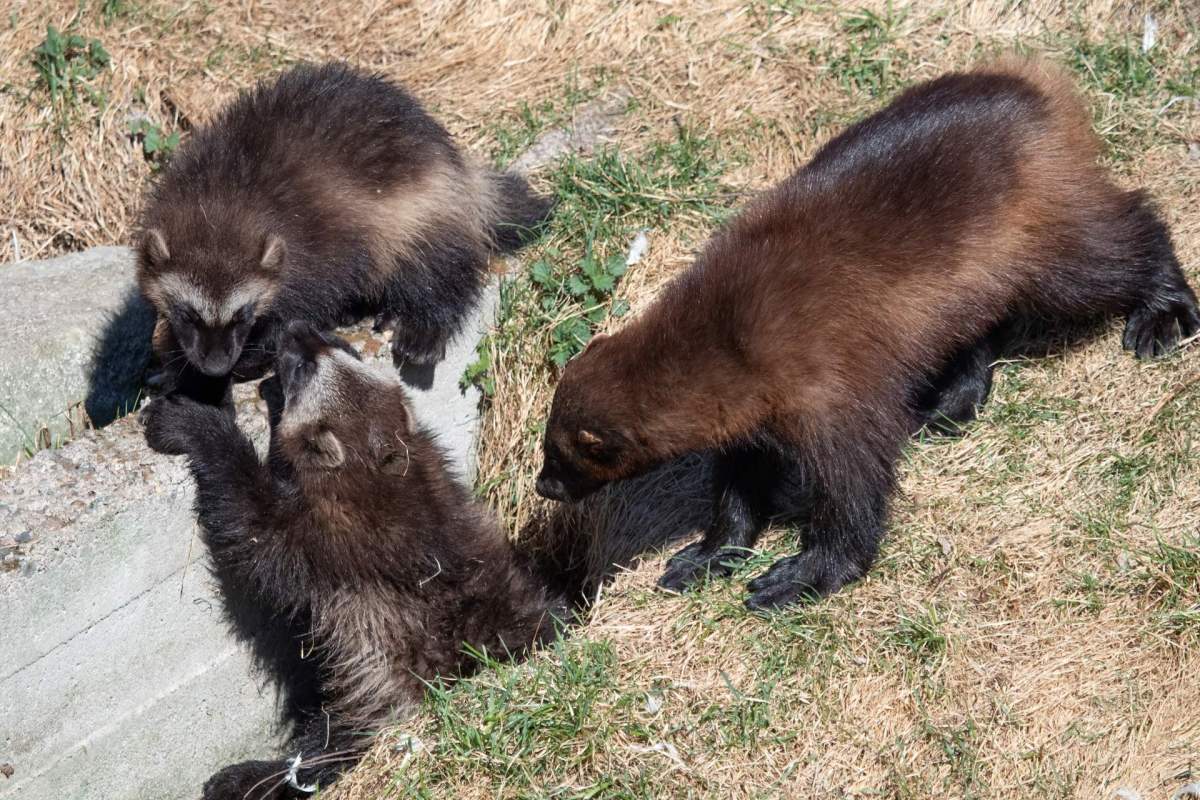
At Washington's Mount Rainier National Park, hidden cameras have recorded a wolverine father accompanying his young and brothers continuing to spend time together beyond infancy.
Here's what to know
The park went more than a century without a verified case of a female wolverine breeding and raising offspring until the National Park Service announced two kits on Aug. 20, 2020. Their mother, Joni, has raised five documented litters inside the park, according to Backyard Garden Lover.
Joni's 2025 kit followed a year in which she didn't give birth. Before that break, she had raised litters for four consecutive years, including triplets in 2023, the Cascades Carnivore Project reported in March.
Researchers with the Cascades Carnivore Project believe Van, Joni's mate, offers his kits protection and access to food. Cameras recorded him accompanying the 2023 triplets when they were about four or five months old, challenging the previous belief that male wolverines aren't involved in raising the litter after mating.
Before dispersing in 2024, two brothers from that litter spent about three months meeting near monitoring stations, where cameras caught them playing and resting together.
More background
Animals moving south from Canada began repopulating wolverines' former habitat in Washington's southern Cascades. Years of poisoning, shooting, and trapping had led to their presumed disappearance there by the 1920s.
TCD Picks » Quince Spotlight
💡These best-sellers from Quince deliver affordable, sustainable luxury for all




The weather wasn't helping, either. Snow accumulation in the study area's wolverine habitat was only 34% of the annual norm as of Feb. 5, 2026, according to Backyard Garden Lover. The Cascades Carnivore Project's February 2026 report also put the water volume in Washington's snowpack at 52% of normal.
Warm rain can soak and destabilize the deep snow around wolverine birthing chambers. Females rely on that snow to insulate their newborn kits.
Nursing mothers may need to travel farther for food if warmer conditions spoil the meat wolverines store beneath snow or in tree wells.
What's being done?
Dr. Jocelyn Akins, a researcher with the Cascades Carnivore Project, led the camera installations around Mount Rainier beginning in 2018.
DNA from hair samples helps researchers trace the wolverines' origins and connections to other populations. The cameras let them distinguish individual animals by photographing their distinctive chest markings.
At least one of Joni's young has reached Oregon, according to the project. Tracking such movements helps researchers identify connections important to wolverine recovery.
Akins highlighted routes across Interstate 90 in 2021, emphasizing connections between habitats that allow wolverines to find unrelated mates and maintain genetic diversity.
Chip Jenkins, then the park's superintendent, spoke about the first litter when it was announced.
"It's really, really exciting," Jenkins said.
Mount Rainier National Park officials keep sensitive breeding locations confidential to avoid any disturbances, while researchers continue monitoring through cameras and DNA sampling instead of approaching dens.
Where can I learn more?
Cameras help researchers monitor Mount Rainier's wolverines, and connected habitats help the animals find mates. These stories follow camera sightings in Thailand and Peru, and orphaned bear cubs receiving care in New Mexico and Ontario.
• In Thailand, cameras captured a mother leading her cubs as tiger populations grew.
• In Peru, a baby giant armadillo appeared on camera, with Indigenous knowledge aiding conservation.
• At New Mexico's only bear rehabilitation center, orphaned cubs learn to forage without their mothers.
• In Ontario, cubs rescued near railways now have a path back to the wild.

Get TCD's free newsletters for easy tips, smart advice, and a chance to earn $5,000 toward home upgrades. To see more stories like this one, change your Google preferences here.
Cool Picks







