


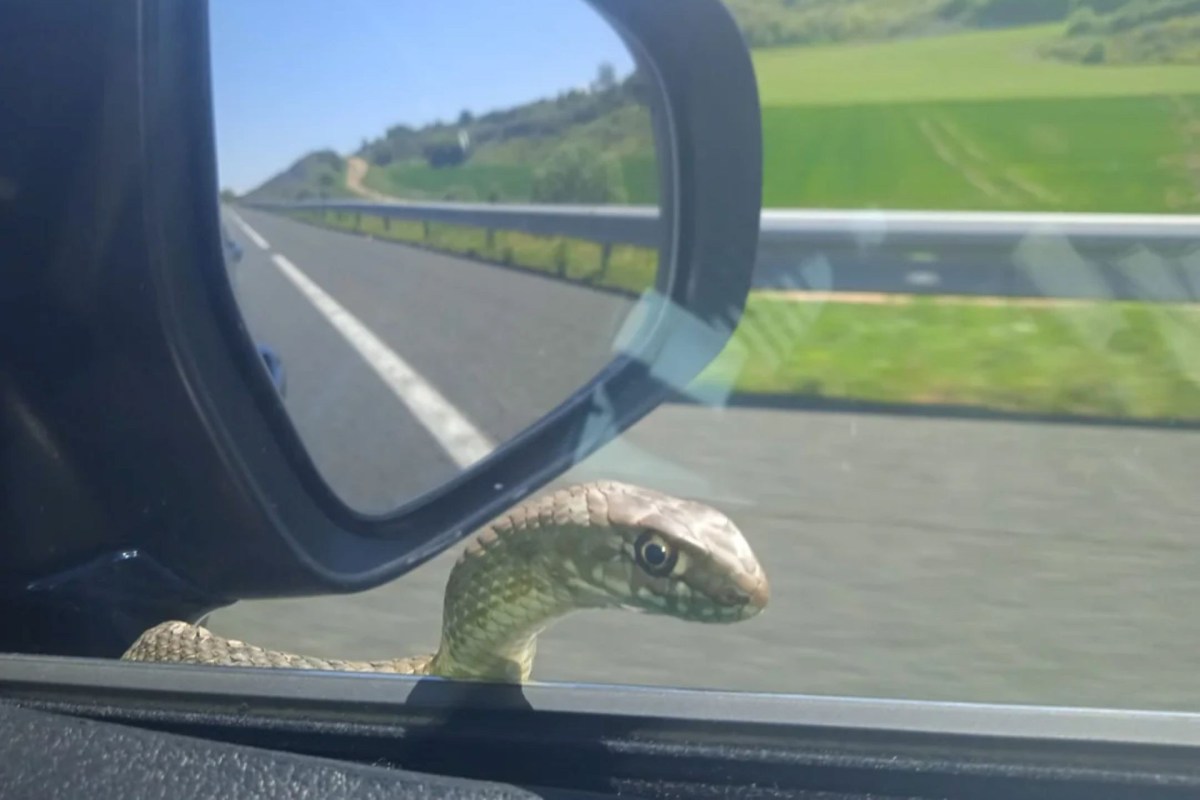
A normal drive on a Spanish motorway turned into a bizarre wildlife encounter when a snake suddenly appeared outside the car.
What happened?
The incident was shared in a Reddit post about a driver who came across the snake while on the highway. "This cutie appeared in the car while a coworker was driving on the highway," they explained.
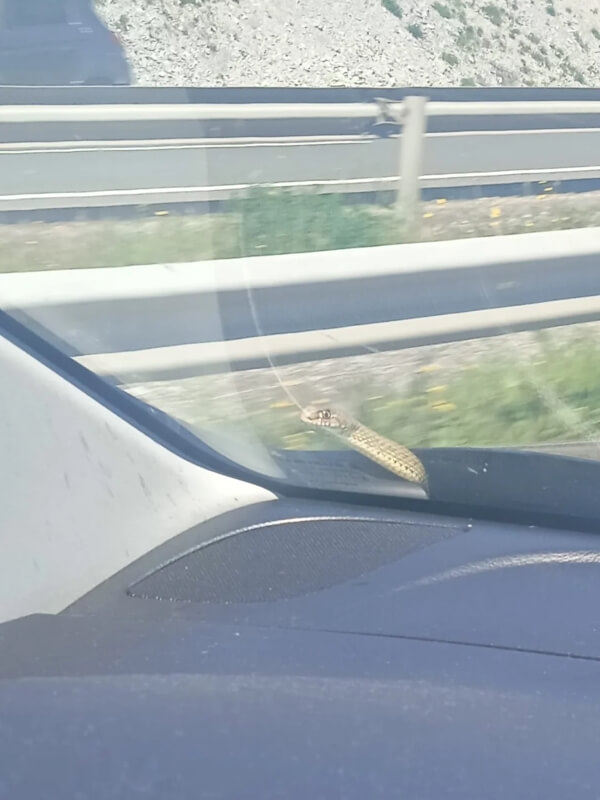
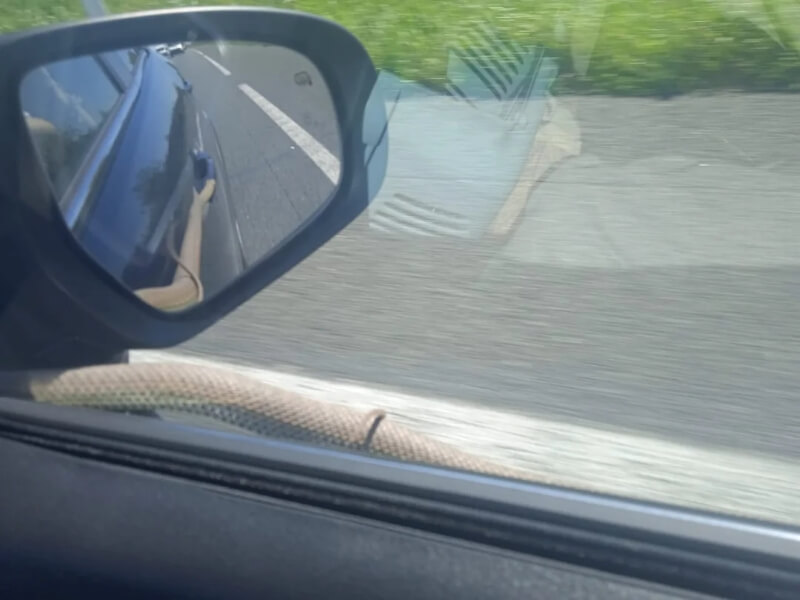
"The photos aren't great, given the circumstances, but look at the one in the rearview mirror—how it's clinging to the door handle, biting it so the wind doesn't blow it away.
One commenter identified the snake, "This is a Montpellier snake, species is Malpolon monspessulanus."
"And it's pretty, but I wouldn't want it to pop up in my car while I'm driving on the highway," the original poster responded.
Another person commented, "Omg this is both amazing and terrifying. Terrifying because I can't imagine just traveling down the highway and looking over to see snake eyes at eye level!"
TCD Picks » Quince Spotlight
💡These best-sellers from Quince deliver affordable, sustainable luxury for all




While the snake made for a dramatic sight, it was not believed to pose a major threat to the people in the car.
Why does it matter?
Even when an animal is not especially dangerous, a surprise encounter inside a moving vehicle can be extremely risky. A startled driver can lose focus in an instant, and at highway speeds, that split second can make all the difference.
The snake was likely stressed, too. Roads, traffic, and vehicles create confusing and hazardous conditions for wildlife, and close calls like this often reflect the ways human infrastructure cuts through animal habitat. In some cases, animals also end up in or around cars after people park near brushy or undeveloped areas.
Many tense human-wildlife encounters are shaped by habitat disruption, encroachment, and other human activities that bring animals and people into closer contact.
What's being done?
The best response in a situation like this is fairly straightforward: Maintain control of the vehicle, avoid sudden movements, and pull over only when it is safe to do so. If an unknown wild animal is inside a car, drivers should avoid trying to grab it while the vehicle is moving and should contact local animal rescue or roadside assistance if needed.
Better road design can also help reduce these encounters. Wildlife crossings, fencing, and habitat restoration can give animals safer routes and keep them farther from traffic. Projects such as California's Wallis Annenberg Wildlife Crossing aim to reconnect habitat split apart by a busy freeway.
Small precautions can matter, too. Check the car if it has been parked near tall grass or scrub, keep windows closed when possible, and remember that wild animals usually want to escape, not fight.

Get TCD's free newsletters for easy tips, smart advice, and a chance to earn $5,000 toward home upgrades. To see more stories like this one, change your Google preferences here.







