


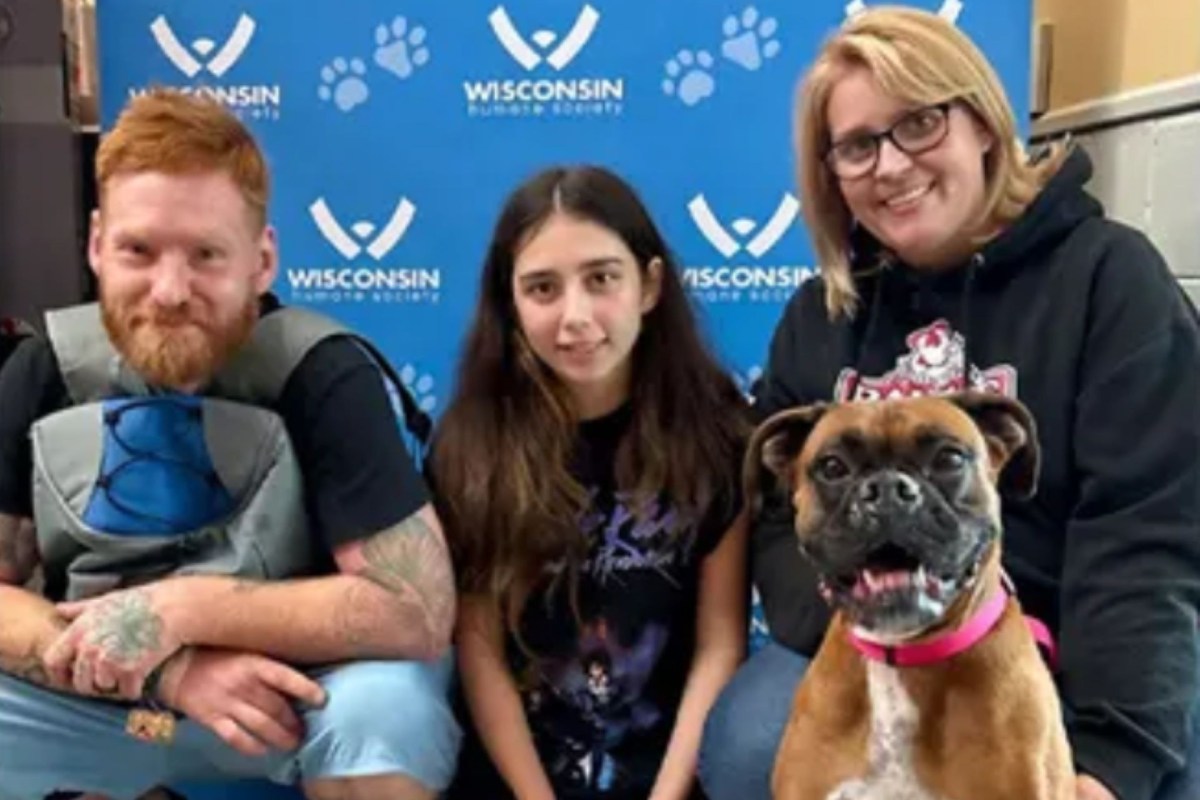
A beachside rescue in Wisconsin ultimately led to a cross-state family reunion after Charlie Sue, a 6-year-old Boxer who had disappeared two years earlier, was traced back to her family in Pennsylvania. She made it home after a stranger, a veterinarian, and shelter staff helped connect the dots.
What happened?
Charlie Sue later ended up at the Wisconsin Humane Society's Ozaukee Campus in Saukville after Cedar Grove Veterinary Services was unable to reach her family, according to FOX 6 Milwaukee. Before that transfer, a Good Samaritan had found her on July 25 about a mile north of Harrington Beach and brought her to the clinic, where a veterinarian scanned her microchip.
Once shelter staff matched the chip registry to its listed owner, they reached Carry Ann of Saltsburg, Pa., whom the Wisconsin Humane Society identified as Charlie Sue's owner.
The family immediately arranged to pick her up. After what the Wisconsin Humane Society described as a 12-hour, 600-mile trip across five states, Carry Ann, her husband and their daughter arrived at the shelter on Aug. 1, where Charlie Sue greeted them by leaping into their laps with kisses and tail wags.
Why does it matter?
Without a scannable microchip and a registry linked to an owner, a dog found far from home could easily remain unidentified.
The reunion depended on a passerby willing to help, a veterinary team that checked for identification, and shelter staff who kept following up until they made contact.
TCD Picks » Quince Spotlight
💡These best-sellers from Quince deliver affordable, sustainable luxury for all




A microchip cannot prevent a pet from going missing, but it can improve the chances of getting that animal back if someone finds it.
What's being done?
This case showed several standard lost-pet measures doing exactly what they are meant to do. A veterinary clinic checked Charlie Sue for a microchip, a humane society campus took over her care, and staff kept pursuing the registration information until they reached the owner.
Animal shelters and veterinary offices also serve as critical checkpoints for lost pets, especially when an animal has no visible identification or is found far from where it belongs.
Useful steps include making sure a pet is microchipped, confirming that the registration is active, and updating the phone number and address attached to the chip if anything changes. Keeping a collar tag current and asking a veterinarian during routine visits to verify that the chip can still be scanned can also help.
Bringing a wandering pet to a shelter or veterinary office to check for a microchip can be one of the fastest ways to help that pet get home.
Angela Speed, vice president of marketing and communications at WHS, said, "We reunite thousands of animals with their families every year, but this reunion was nothing short of magical."

Get TCD's free newsletters for easy tips, smart advice, and a chance to earn $5,000 toward home upgrades. To see more stories like this one, change your Google preferences here.







