


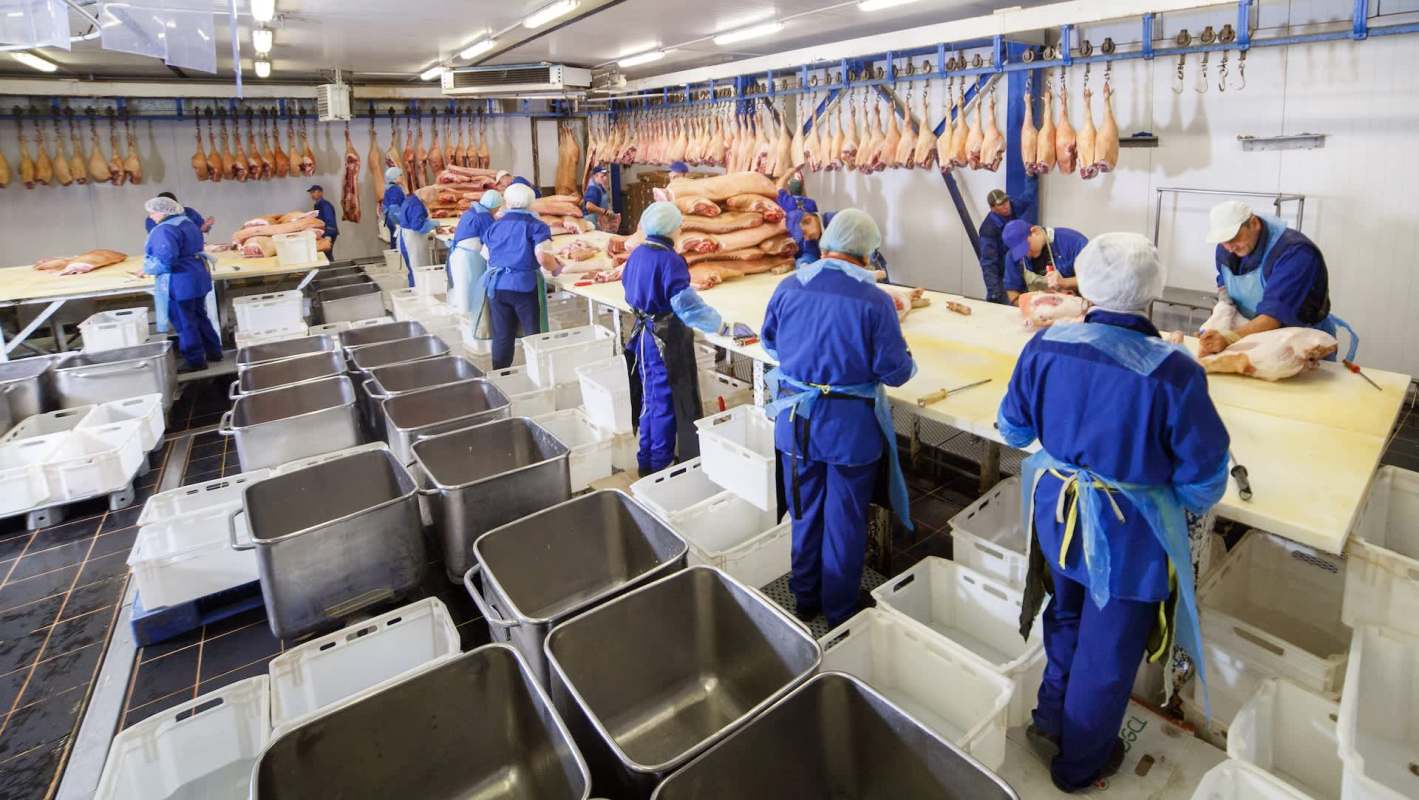
One former federal meat inspector warned that a Trump administration proposal to speed up slaughterhouse lines could make an already dangerous industry even more harmful for workers and public health.
The U.S. Department of Agriculture proposed rules, formally released in February, would raise the maximum poultry slaughter speed from 140 chickens per minute to 175, Inside Climate News reported. For hog plants, the agency would eliminate the current cap of 1,106 pigs per hour.
Jill Mauer, who spent over 30 years inspecting meat plants for the government, recently urged the USDA to reconsider this rule change, per ICN.
Mauer's message was straightforward: Faster lines mean less time to catch contamination, more chances for serious injuries, and more pollution linked to industrial meat production.
Injuries are unfortunately quite common at American slaughterhouses. According to OSHA reports, 1,520 workers in slaughterhouses across 29 states were hospitalized between 2015 and 2021.
In an April comment she submitted to the USDA, according to ICN, Mauer wrote: "I am one of many meat inspectors who have raised concerns about the USDA's efforts to increase line speeds through high-speed, reduced inspection models and pilots. Many inspectors feel they cannot speak openly about what they have seen."
TCD Picks » Quince Spotlight
💡These best-sellers from Quince deliver affordable, sustainable luxury for all




She continued, "I made the decision to step forward publicly because of what I witnessed firsthand over many years, particularly at my own plant."
But concerns go beyond worker safety. Critics say faster lines also raise the risk of food contamination.
As Mauer put it, higher speeds leave "less time to observe, less time to react, and less margin for error. Inspectors may see issues — dressing defects, contamination, or signs of disease — but not have to time or support to fully address them before the next carcass arrives."
The proposals have drawn more than 72,000 public comments. Labor advocates, food safety groups, animal welfare organizations, and environmental experts have all objected. In late April, two senators and three House members also urged the USDA to stop the changes, warning they could lead to more serious injuries and more foodborne illness.

Get TCD's free newsletters for easy tips, smart advice, and a chance to earn $5,000 toward home upgrades. To see more stories like this one, change your Google preferences here.







