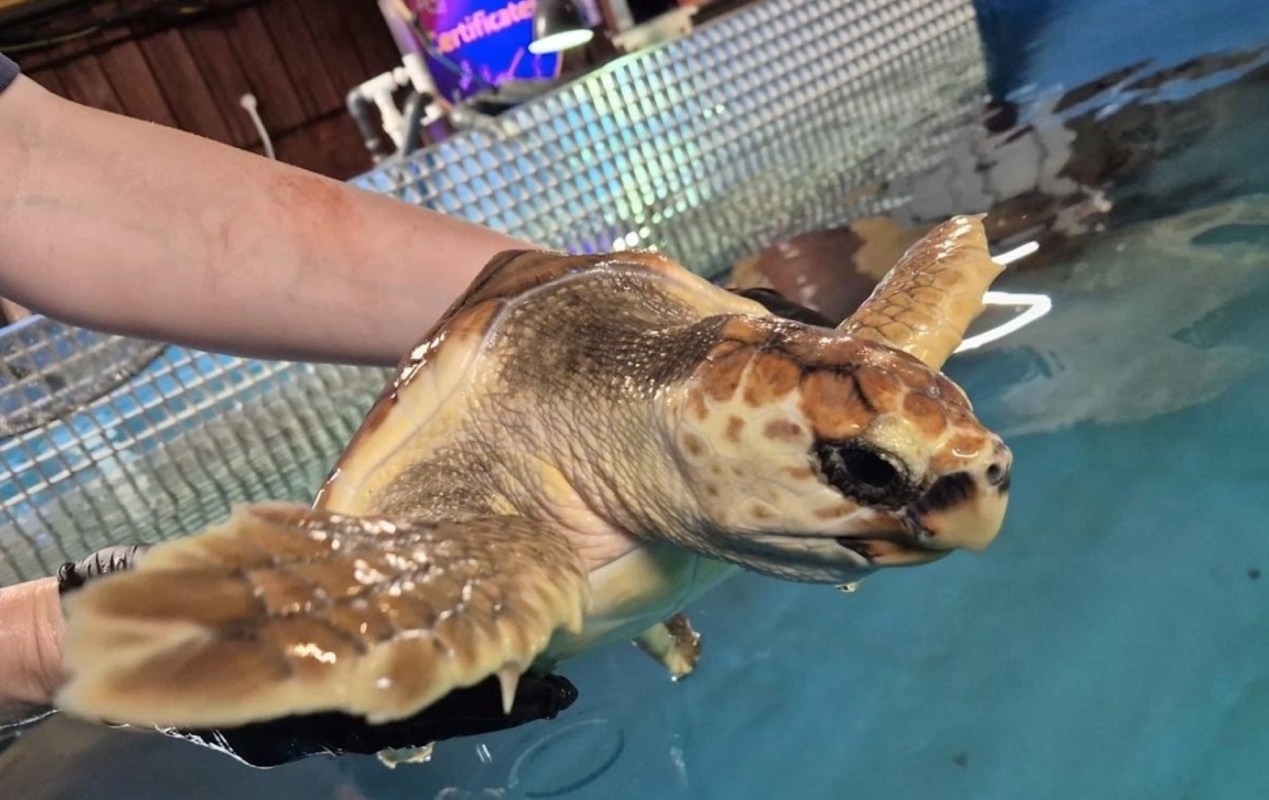
Crush, a loggerhead turtle found apparently lifeless on a Jersey beach on Jan. 19 after Storm Goretti, has been cleared to leave the U.K. after months of treatment for hypothermia and malnourishment and travel 1,500 miles toward warmer waters for release.
What happened?
According to BBC News, the turtle was discovered on a Jersey beach on Jan. 19 in the aftermath of Storm Goretti, and at first she appeared lifeless.
Crush was malnourished and suffering from cold-stunning, a hypothermia-like condition that can cause a turtle's body to shut down.
Her initial treatment took place at New Era Veterinary Hospital in Jersey. Clinical director Peter Hawarth then kept her at his family home for two weeks before taking her in a box onto a flight to Southampton.
She was later moved to Weymouth Sea Life Centre for more extended rehabilitation.
Sea Life centre manager Seb Webster said staff kept close watch on her recovery there.
TCD Picks » Quince Spotlight
💡These best-sellers from Quince deliver affordable, sustainable luxury for all




"We've been doing regular CT scans, regular weighing to make sure that growth is as expected," Webster said.
As she awaits that next journey, Crush is back in quarantine and being readied for a flight to the Azores, where she will spend a brief period at a specialist facility before being released.
Although her sex has not been confirmed, rescuers have referred to Crush as "she" because she has a larger tail like female turtles, though she is likely named after the male turtle Crush from the "Finding Nemo" and "Finding Dory" movies.
Why does it matter?
The species is listed as vulnerable on the IUCN Red List.
BBC News reported that loggerheads number about 2,000 breeding females worldwide, and only about one out of every 1,000 hatchlings survives to adulthood.
Loggerheads help maintain balance in marine ecosystems, and healthier oceans benefit coastal communities, fisheries, and the broader food web people rely on.
Crush probably drifted north from subtropical waters off North Africa on storms and currents. The outlet added that other loggerheads have also been found in Sussex, Suffolk, and as far north as Tiree in Scotland.
What's being done?
Crush's return to the wild is being managed cautiously.
Webster said Sea Life team members expect to accompany Crush from Heathrow, and that after she reaches the Azores, she will be observed before release to ensure the long trip has not set back her recovery.
The rescue effort depended on coordination among local residents, veterinary professionals, animal care teams, and conservation facilities.
For the team that helped save her, the moment is both emotional and hard-won.

Get TCD's free newsletters for easy tips, smart advice, and a chance to earn $5,000 toward home upgrades. To see more stories like this one, change your Google preferences here.