


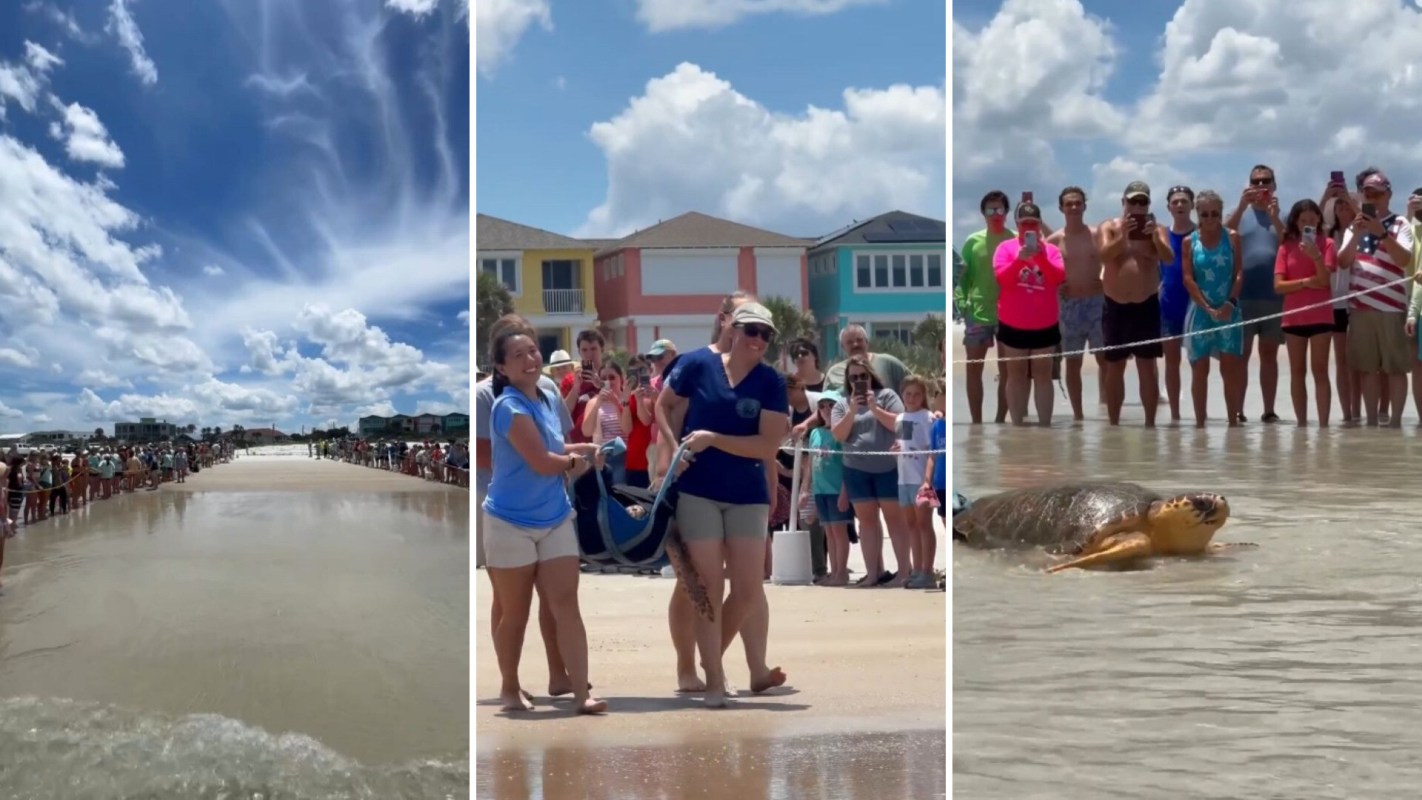
A 100-pound loggerhead named Wombat is giving Florida beachgoers something to celebrate after a public release showed the recovering sea turtle heading back into the water.
The public sendoff drew a crowd, following months of recovery for a turtle that had first reached the center in poor condition.
What happened?
As WKMG-TV reported, the sub-adult loggerhead was found stranded near Volusia County's Marine Science Center in Wilbur-by-the-Sea in late March and was returned to the ocean after three months of rehabilitation.
According to Marine Science Center turtle rehabilitation manager Allie Bernstein, Wombat made a full recovery after receiving antibiotics, fluids, vitamin injections, and added nutritional support.
When Wombat arrived, Bernstein described the sea turtle as "underweight, lethargic, anemic, and covered in epibiota, which is an indication that they've been sick for a period of time."
Footage of the event shows spectators lining the shore while staff carry Wombat in a supportive sling-and-scale setup before placing the turtle on the beach.
TCD Picks » Quince Spotlight
💡These best-sellers from Quince deliver affordable, sustainable luxury for all




Ahead of the release, staff implanted a microchip and attached two flipper tags so researchers, nesting monitors, and others who encounter Wombat later can identify the turtle.
Even at about 100 pounds, Wombat is not yet fully grown.
"This particular loggerhead is still a sub-adult, so it still has a lot of growing to do," Bernstein said. "The goal is to be able to get back out there and eventually become part of the breeding population."
Why does it matter?
Since the busy season started, the Marine Science Center has recorded 205 sea turtle intakes, along with about 85 to 90 gopher tortoises and freshwater turtles.
Roughly 20 sea turtles remain in care at the facility.
Because loggerheads are the main sea turtle species nesting on Volusia County beaches, returning a recovered turtle like Wombat to the water could help support future breeding populations.
What are people saying?
Ahead of release day, Bernstein said Wombat was showing the kind of attitude staff hope to see: "The closer they get to release, the feistier they can become. So that's what we want to see. When they're feisty, we know they're getting ready."
Bernstein said the broader aim is for turtles like Wombat to one day contribute to future generations: "Hopefully it goes out there and becomes part of the breeding population and helps with the next generations of loggerhead."

Get TCD's free newsletters for easy tips, smart advice, and a chance to earn $5,000 toward home upgrades. To see more stories like this one, change your Google preferences here.







