


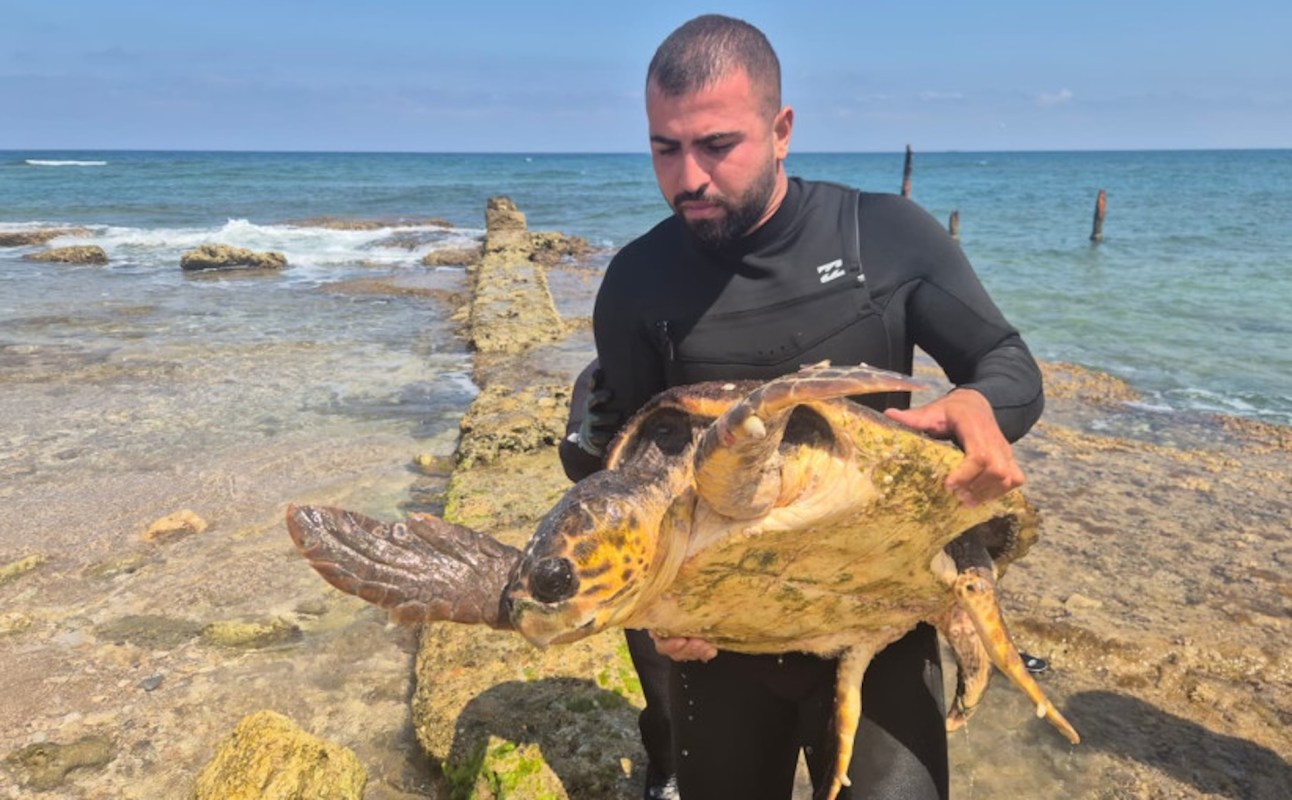
A giant loggerhead sea turtle has a second chance after a rescue near Haifa, Israel, where lifeguards spotted the animal struggling in the water with a fishing line wrapped around it.
The incident is drawing attention not only because of the turtle's size, but also because it underscores how quickly discarded fishing gear can become a life-threatening danger for marine wildlife.
What happened?
The rescue began when three lifeguards with the Haifa Municipality's Coastal Department saw the entangled turtle in the water and moved to get it out of danger, The Jerusalem Post reported.
Professor Roee Diamant, who heads a marine-science lab at the University of Haifa, then joined the effort, and the team contacted the Israel Nature and Parks Authority hotline to help coordinate the response.
Roughly 30 minutes after that, marine unit inspector Ilya Baskin arrived at the beach and took the turtle to the National Sea Turtle Center in Mikhomoret for treatment.
The turtle was later named Halil after one of the people involved in the rescue, and it was sent for rehabilitation.
TCD Picks » Quince Spotlight
💡These best-sellers from Quince deliver affordable, sustainable luxury for all




Why does it matter?
The rescue highlighted a threat that often goes unnoticed until an animal is found in distress. So-called ghost gear includes abandoned nets, hooks, and fishing lines left behind in the ocean or on beaches.
For sea turtles, that debris can cut into tissue, restrict movement, make it difficult to swim or feed, and lead to severe injuries or death.
In Halil's case, the damage is already serious. The rescue center said the turtle's injured limb is "in a state of necrosis," although X-rays also showed "it was not broken."
Any release back into the sea will have to wait because recovery is expected to take time.
The same waste can also harm other marine animals and damage coastlines used for recreation and tourism.
Diamant said he regularly works along that part of the coast and stressed that abandoned fishing gear is a problem far bigger than this one rescue.
"There is a very large amount of ghost nets, fishing lines, and hooks that people leave behind," he said. "This is a very problematic and dangerous hazard."

Get TCD's free newsletters for easy tips, smart advice, and a chance to earn $5,000 toward home upgrades. To see more stories like this one, change your Google preferences here.







