


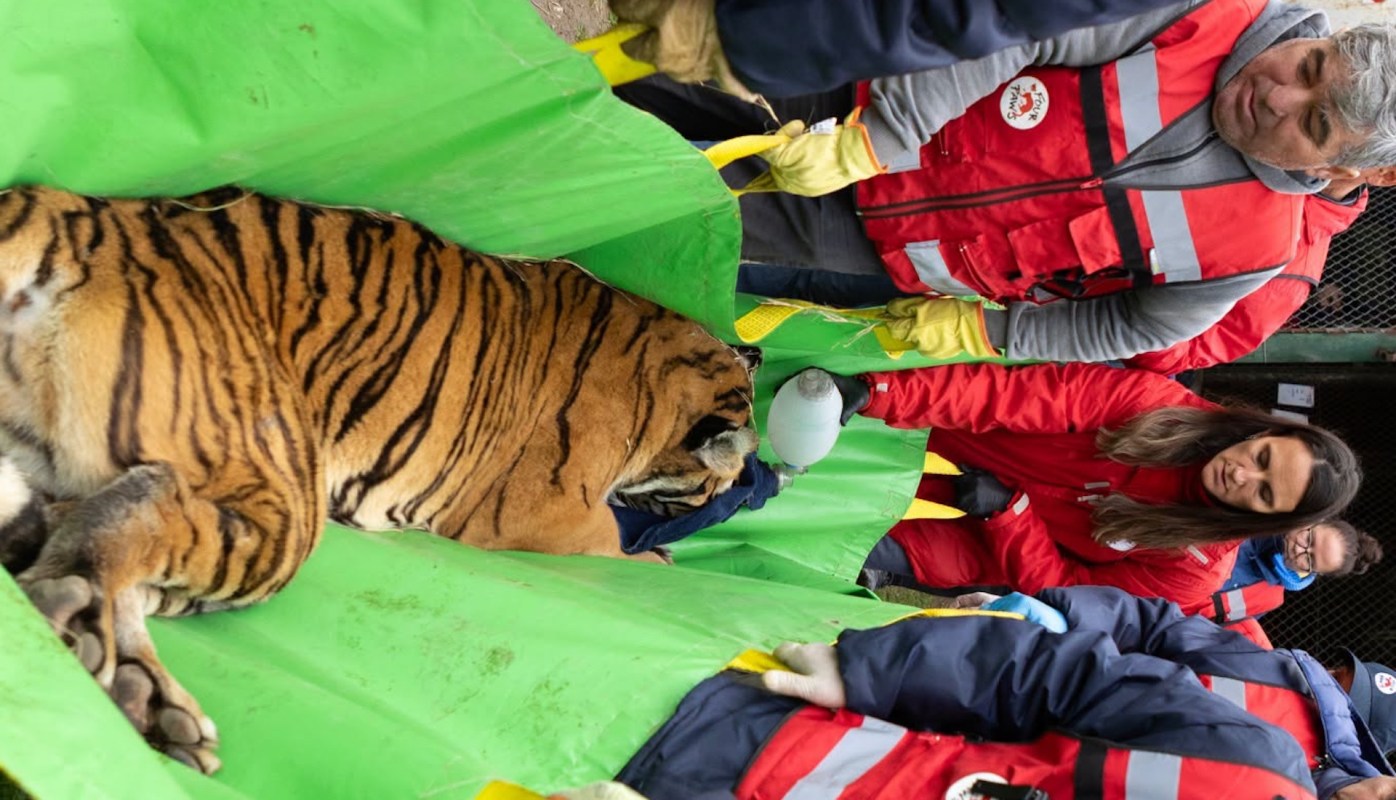
After years in cramped enclosures at a closed Argentine zoo, 30 lions and tigers are finally being moved to sanctuaries in South Africa and Colorado.
Here's what to know
After being recovered from the former Luján Zoo, about 43 miles outside Buenos Aires, the big cats were placed into transport crates to begin the long trip, The Associated Press reported.
The animals were divided between two destinations: Lionsrock in South Africa is taking in six lions and nine tigers, while The Wild Animal Sanctuary in Colorado will receive seven lions and eight tigers.
Luciana D'Abramo, program director for Four Paws, told the publication that the mission ranks among the largest relocations of captive big cats anywhere in the world.
"We are putting everything into making this go as smoothly as possible so we can celebrate that 30 lives have improved because of this effort," D'Abramo said.
The travel plans varied by destination, with the Colorado-bound animals going through Chile and those headed to South Africa passing through Frankfurt or Amsterdam before continuing by road to Lionsrock.
TCD Picks » Quince Spotlight
💡These best-sellers from Quince deliver affordable, sustainable luxury for all




While some of the cats were conditioned to walk into their crates on their own, others needed sedation, including two tigers that veterinarians transported in canvas slings.
More background
In 2020, Argentine authorities shut down the Luján Zoo because of safety and animal-welfare concerns.
It had become known for allowing visitors to handle lions and tigers and pose for souvenir photos, a practice that posed obvious dangers for animals and people alike.
D'Abramo said the number of big cats had fallen to about 112 by the time Four Paws first arrived in 2023, down from roughly 200 when the zoo was closed. When the organization was able to assume control of the site, only 62 remained.
Among the surviving animals, some struggled to walk because of obesity, malnutrition, or muscle loss, while others suffered from dental disease, kidney problems, injuries that never healed properly, and complications linked to declawing.
"That alone shows the level of overcrowding and the conditions in which these animals have endured," D'Abramo said.
What's being done?
At the former zoo, Four Paws has retrained longtime workers in updated animal-welfare practices while also improving food and veterinary treatment. More than 20 lions and tigers remain at Luján as Four Paws searches for permanent homes.
Both sanctuaries are equipped to help the animals recover. Lionsrock houses more than 80 big cats in 148 acres of natural enclosures, and The Wild Animal Sanctuary in Colorado provides expansive grassland habitat for rescued lions, tigers, and other animals.

Get TCD's free newsletters for easy tips, smart advice, and a chance to earn $5,000 toward home upgrades. To see more stories like this one, change your Google preferences here.







