


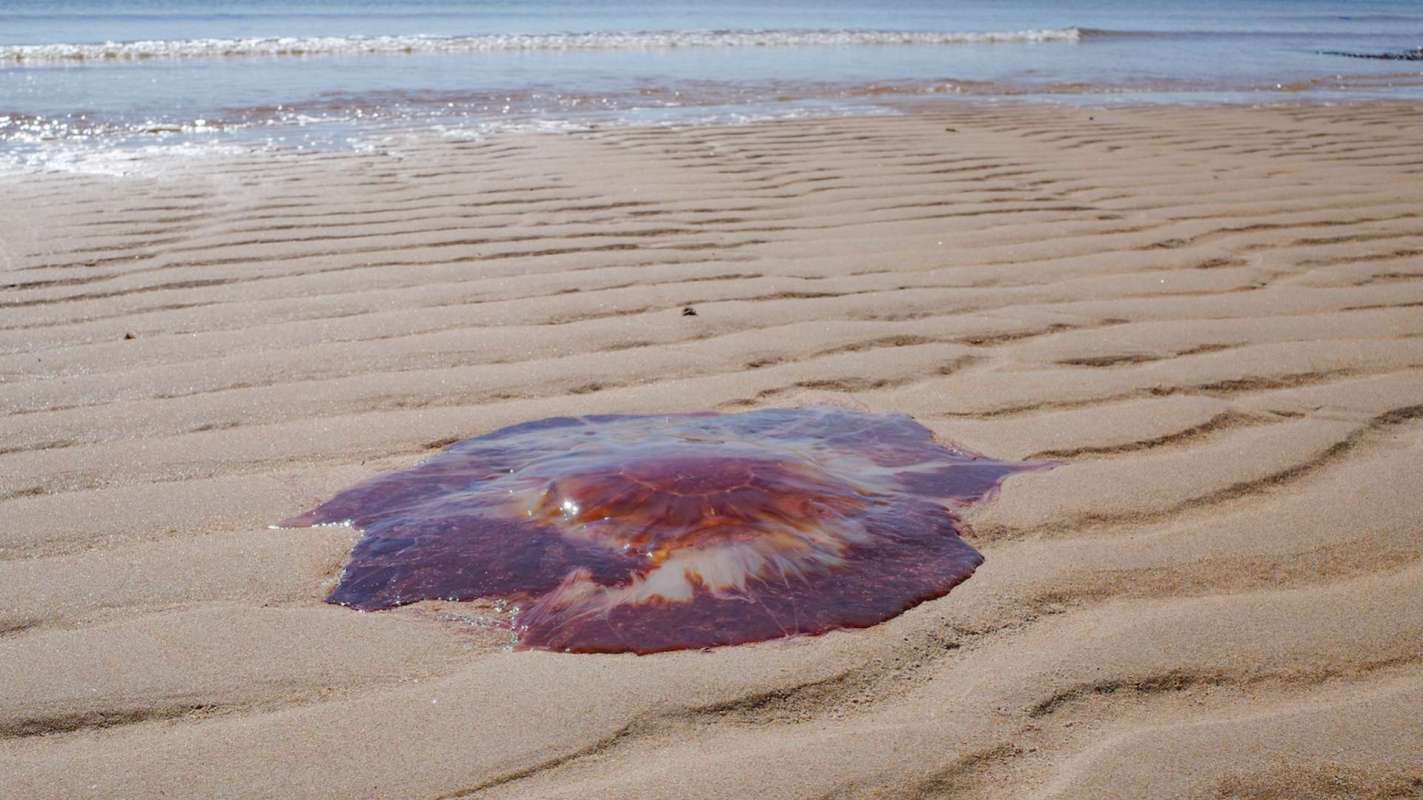
Beachgoers on an island in Wales are being urged to stay alert after a string of painful encounters with Lion's mane jellyfish, a striking species whose long tentacles can inflict severe stings on swimmers.
Its appearance is distinctive: a reddish-brown bell with long, fine tentacles hanging beneath it in eight clusters.
Here's what to know
Reports collected by North Wales Live describe Lion's mane jellyfish appearing at beaches including Porth Dafarch, Benllech, and Porth Eilian, with people saying both they and their pets were badly affected.
Stings from lion's mane jellyfish are seldom deadly, but they can still cause "excruciating weals," according to North Wales Wildlife Trust. Some reactions resemble a bad rash, while more serious cases may need medical attention.
It is considered the world's second-longest animal, with tentacles measuring 120 feet, making it longer than a blue whale.
Beachgoers told North Wales Live that the pain can be severe and slow to fade. One man told the outlet that his wife was left in "severe pain" after being stung while swimming, adding: "Took painkillers and anti-histamines plus a very hot shower. It took several hours for the pain to subside."
TCD Picks » Quince Spotlight
💡These best-sellers from Quince deliver affordable, sustainable luxury for all




The risk is not limited to swimmers. One woman told North Wales Live that her dog touched a stranded jellyfish and "had a huge reaction," while a yachtswoman in Moelfre Bay reportedly needed help after a sting to one eye while pulling in a line coated with jellyfish tentacles.
More background
Lion's mane jellyfish are native to British and Irish waters, though encounters can feel especially alarming when they happen in popular swimming and walking areas, according to the Marine Life Information Network.
Even stranded or dead jellyfish may still sting, because venom in the tentacles can remain active for days.
Humans and wildlife are increasingly crossing paths in shared spaces, as explored in this BBC Future article on why wild animals attack humans. Along the coast, that overlap can include swimmers, pets, paddleboarders, and sailors coming into contact with marine life in shallow water or washed up on shore.
Changing ocean conditions may also influence how often people notice jellyfish, as warming seas can affect marine species' timing, movement, and abundance.
What can be done?
The National Health Service advises that anyone stung by a jellyfish should rinse the area immediately with seawater — not fresh water. Any visible tentacles should then be removed carefully, using tweezers or even the edge of a bank card.
The NHS also recommends soaking the affected skin in very warm water, around 104 to 113°F, for 20 to 45 minutes to help relieve pain. If symptoms persist, or if the sting affects the mouth, throat, or area near the eyes, people should seek medical treatment.

Get TCD's free newsletters for easy tips, smart advice, and a chance to earn $5,000 toward home upgrades. To see more stories like this one, change your Google preferences here.







