


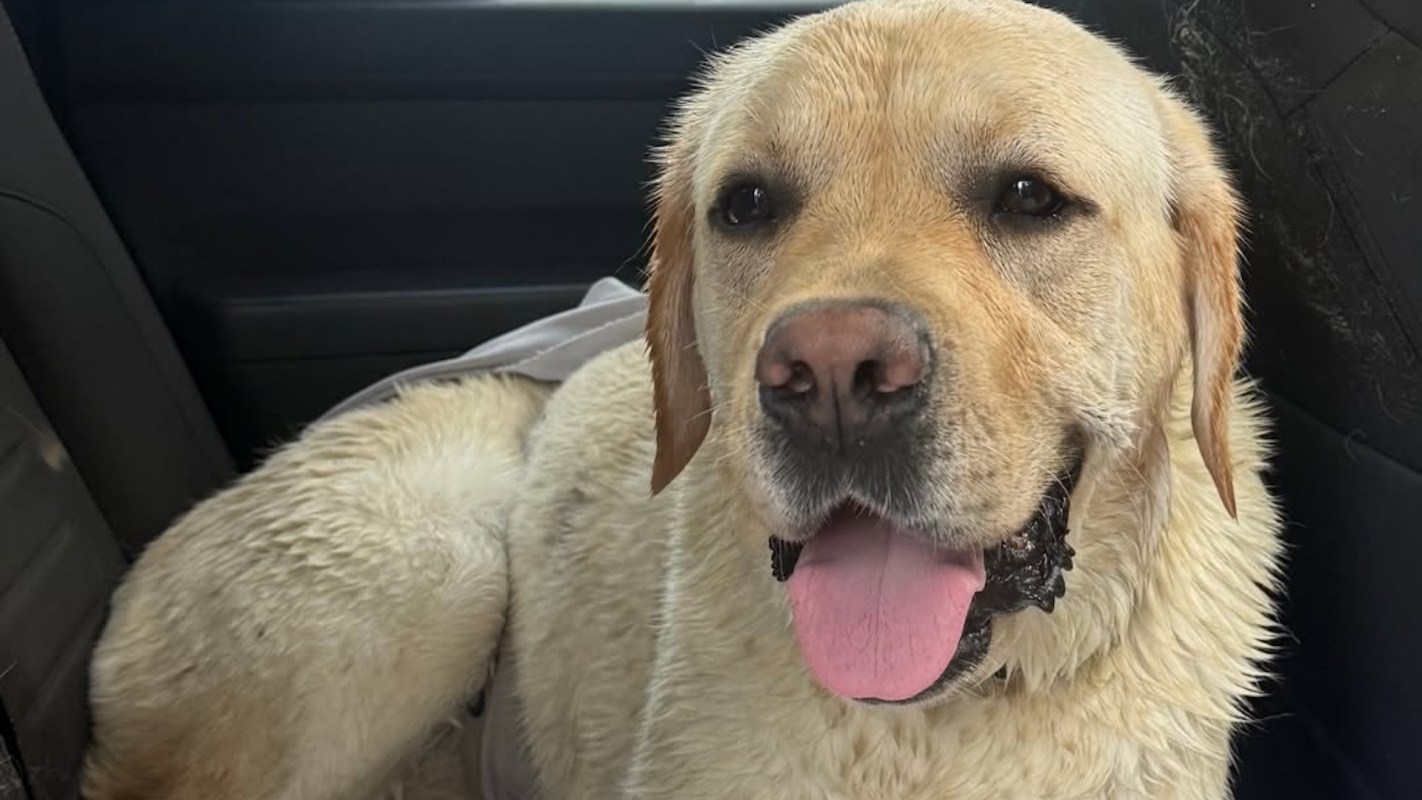
A South Carolina lifeguard is being praised after using his emergency training on an injured dog, WSAV reported.
Finn, an English Lab, was badly hurt by a stingray on Hilton Head Island, and lifeguard Arsham Mirzaei helped stabilize him before he was taken for additional treatment.
Here's what to know
According to WSAV, Mirzaei was working with Shore Beach Service when Finn, a 2-and-a-half-year-old English Lab, was struck by a stingray and suffered a serious cut to his stomach.
Before Finn was taken to the hospital for stitches, Mirzaei worked to stop the bleeding, put together a makeshift bandage, and help with the dog's pain.
"The biggest thing was getting the bleeding under control," Mirzaei said. "Once the bleeding was under control, the next move was the bandage, since he was cut right down in the belly."
He said the wound's location made a standard wrap difficult, so he had to find another solution.
TCD Picks » Quince Spotlight
💡These best-sellers from Quince deliver affordable, sustainable luxury for all




"It was kind of hard to get something there and get the bandaging going. So, I grabbed one of the T-shirts I had in the truck, cut it in half, put the four-by-fours, and put the heat pack on it because a hot pad is the same kind of heat no matter who you are, K9 or human. The heat pack is the best solution for the pain."
More background
Finn's owner, Lisa Miner, said the family later saw a photo of him riding to get treatment and felt reassured by how he looked.
"He was in the back seat with this T-shirt wrapped around him, and he didn't look upset," Miner said. "He looked a little kind of weird, but he was smiling."
In eight years on the job, Mirzaei said, he had never treated a dog injured by a stingray.
What can be done?
Mirzaei said Finn's next lesson may be the "stingray shuffle," a foot-dragging method often recommended in shallow water to avoid surprising stingrays.
Miner said Finn is recovering well and is left with little more than a scar—and a family that is still deeply thankful for the person who helped him.
"It's hard to put words to it because you know that there are, like, heroes that, like, cross your path," Miner said. "Throughout your life, you don't always get that opportunity to say thanks. So, we're just really grateful that we were able to say thank you today."
Where can I learn more?
Finn's rescue brings together a few familiar themes: beach safety, remarkable dogs, and the people working to keep animals safe. Here are a few stories in that vein, from a trained surf dog in Texas to conservation work overseas and coastal changes in North Carolina meant to protect wildlife in the water.
• On South Padre Island, a surf lifeguard dog spotted a swimmer in distress early.
• In Africa, puppies trained in Wales used their noses to protect vulnerable wildlife.
• In Tasmania, researchers found dogs were more accurate and efficient at detecting harmed wildlife.
Each one is a reminder that training, quick action, and straightforward safety steps can make a real difference for animals and people. That same idea runs through Finn's recovery on Hilton Head Island.

Get TCD's free newsletters for easy tips, smart advice, and a chance to earn $5,000 toward home upgrades. To see more stories like this one, change your Google preferences here.







