


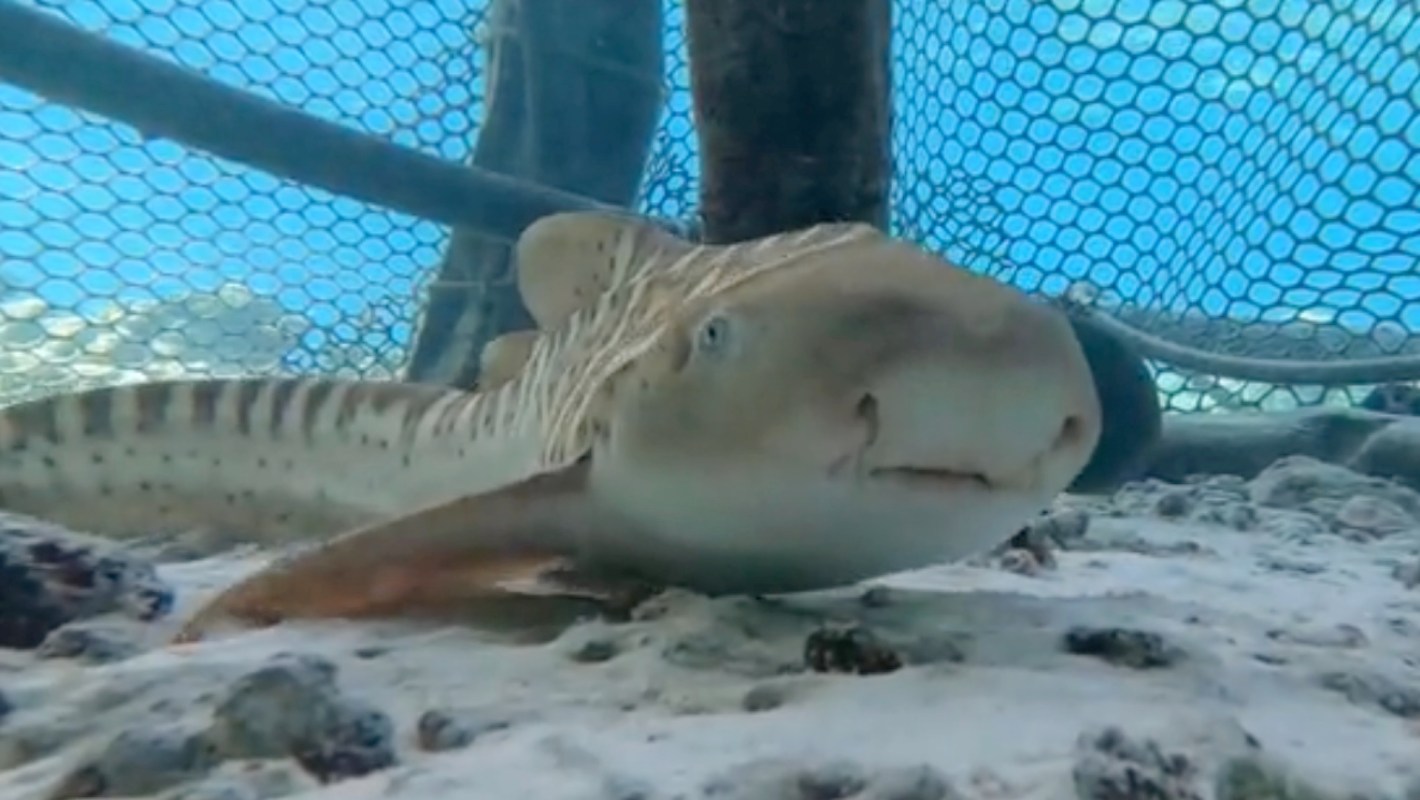
An endangered shark that has become scarce across its usual habitat is beginning to return through a large-scale rewilding effort.
CNN reported that, in Indonesia's Raja Ampat archipelago, conservationists have now released 82 Indo-Pacific leopard sharks, which are also called zebra sharks, bred in aquariums into safeguarded waters.
Here's what to know
The animals are being released through ReShark's Stegostoma tigrinum Augmentation and Recovery project. The organization describes it as the first shark-focused rewilding effort of its kind and says 15 healthy sharks have now been spotted in Raja Ampat.
Mark Erdmann, executive director of ReShark, explained to CNN that the local population had fallen to a critically low level: "Back in 2019, in Raja Ampat, we estimated that there were about 20 individual adult sharks remaining."
Habitat loss, fishing pressure, accidental capture, and trade tied to shark fins and exotic leather have driven steep losses in the Indo-Pacific leopard shark population over the last three generations. The species is listed as endangered by the International Union for Conservation of Nature.
Yet, this project has helped aquariums raise the sharks until they are large enough to be released into their native habitats after they are tagged for tracking purposes.
TCD Picks » Quince Spotlight
💡These best-sellers from Quince deliver affordable, sustainable luxury for all




Restoring an ecosystem's predator can help rebalance a reef, and healthier reefs can support the marine life coastal communities rely on.
More background
Egg-laying is one reason leopard sharks are considered a workable candidate for captive breeding and release, and the species is also harmless to people.
For David Ebert, who leads the Pacific Shark Research Center at San Jose State University and is not affiliated with ReShark, this factor makes the species a practical starting point.
Ebert told CNN, "About 43% of sharks are egg layers," and added, "With live bearing, you have a whole different set of issues to deal with. So, this is probably a good species to potentially start with."
Whether the effort can rebuild wild populations will take years to determine. But the IUCN has already noted the potential for this project to meaningfully help the species, already framing it as a conservation success story.

Get TCD's free newsletters for easy tips, smart advice, and a chance to earn $5,000 toward home upgrades. To see more stories like this one, change your Google preferences here.







