


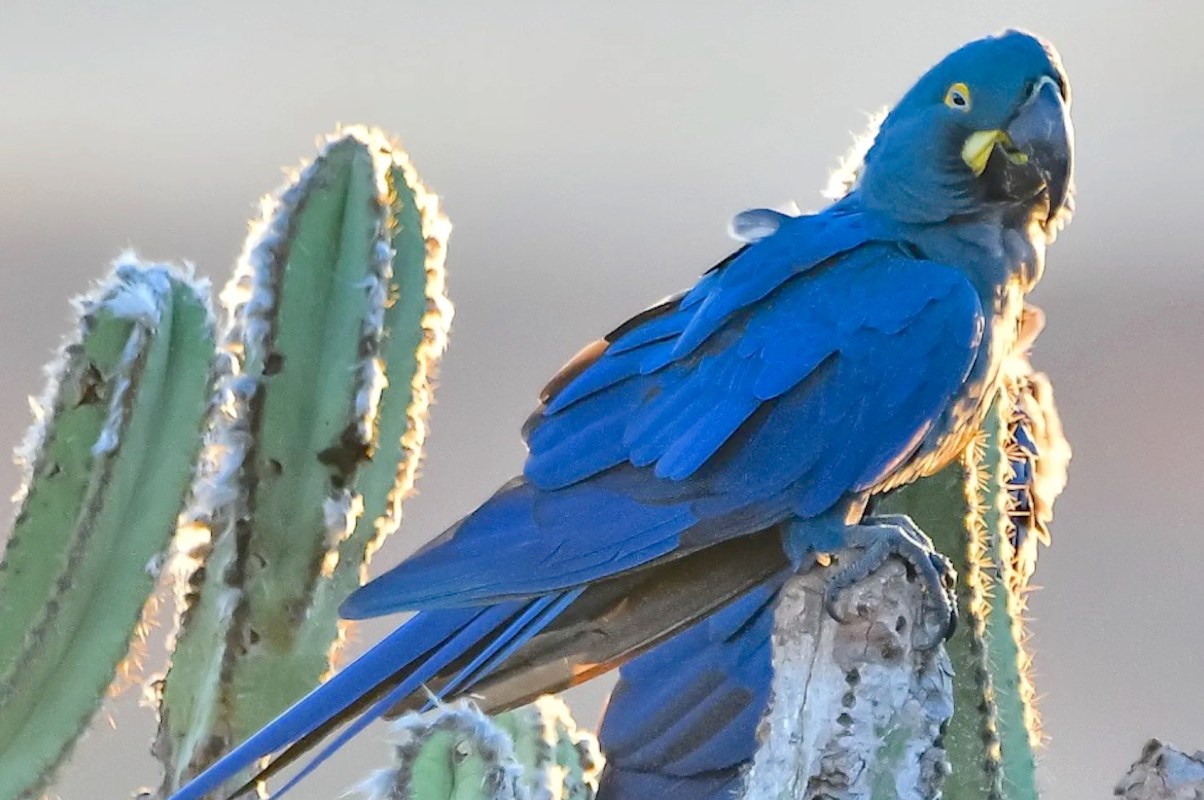
A striking photo of an endangered indigo macaw is drawing attention to one of the world's most restricted bird habitats and to the conservation work helping keep the species alive in Brazil.
In the wild, these indigo-blue parrots, also known as Lear's macaws, are confined to Brazil's backlands of Bahia.
What's happening?
In an Instagram post, one NGO, Fundação Biodiversitas, alongside wildlife photographer Elisa Focante, shared an image of Lear's macaw, calling it "one of the rarest, most fascinating, and most endangered birds on the planet."
It also linked the bird's limited range to the need for protection, saying the species' "only natural habitat in the world is the backlands (sertão) of the state of Bahia, Brazil," and emphasizing the importance of the Canudos Biological Station and wildlife sanctuary.
The species' future in the wild depends on that specific landscape continuing to sustain it. Focante wrote that the sanctuary at Canudos "has become one of the world's most important conservation centers dedicated to protecting this remarkable species."
The post then described the macaw as about 30 inches long, with blue-indigo plumage and two distinctive yellow markings.
TCD Picks » Quince Spotlight
💡These best-sellers from Quince deliver affordable, sustainable luxury for all




Why does it matter?
When an animal survives in only one natural habitat, any disruption to that ecosystem can have outsized consequences. Species like the Lear's macaw are especially vulnerable to habitat degradation, shifting land use, and other environmental pressures.
Luckily, conservation success can also have a direct, measurable impact. Protecting one region can preserve an entire species, rather than just one of many scattered populations.
For a species with such a narrow range, this local work is especially important. Conservation efforts do not have to be spread thin across a continent when the bird's survival is tied so closely to one region.
Saving the Lear's macaw comes down to protecting the exact habitat it needs, and not simply raising broad awareness about endangered species.

Get TCD's free newsletters for easy tips, smart advice, and a chance to earn $5,000 toward home upgrades. To see more stories like this one, change your Google preferences here.







