


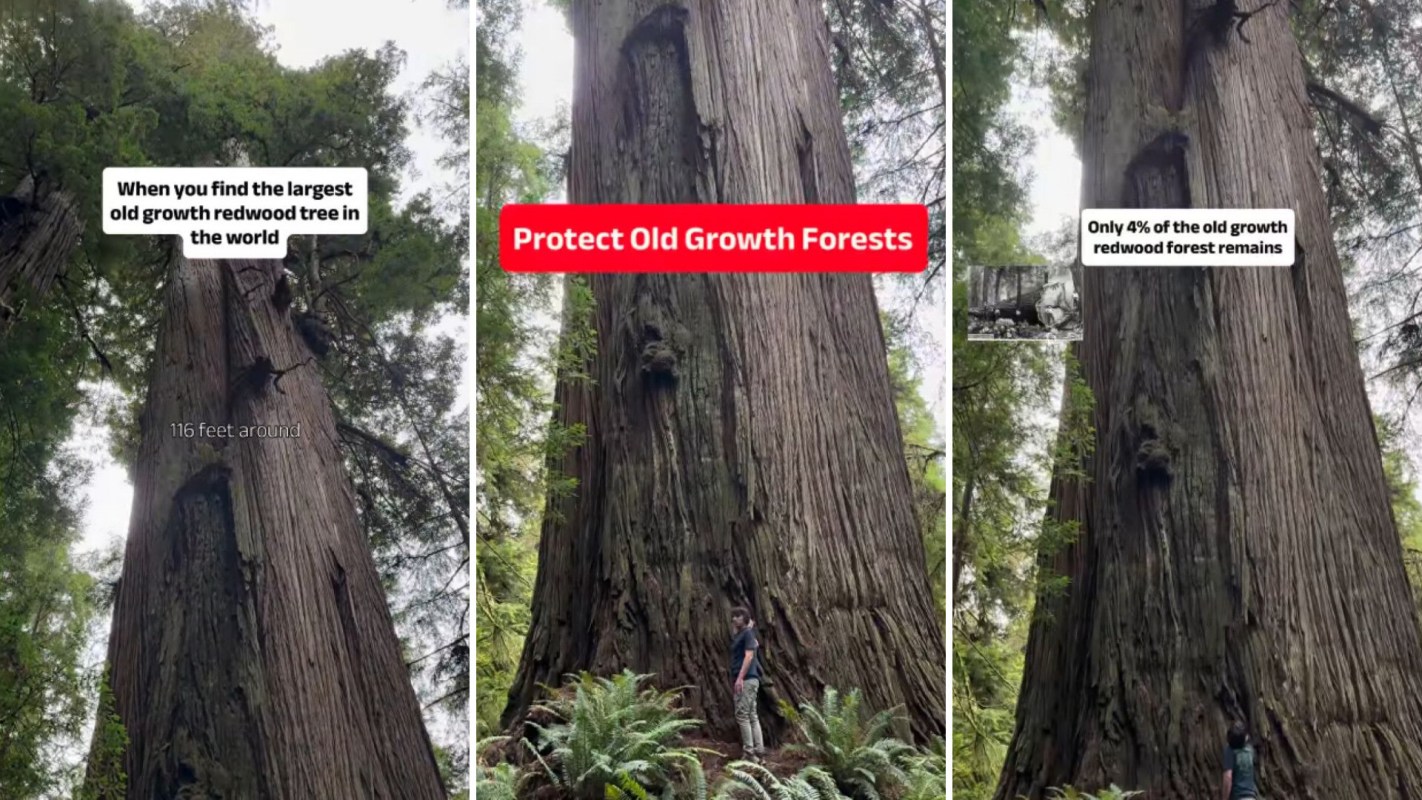
A California group said in an Instagram post that it had located the largest redwood tree on Earth following a two-year search.
While celebrating the remarkable tree, the post also provides a reminder that awe-inspiring forests are not guaranteed to last, especially as old-growth habitat continues to disappear.
Here's what to know
In its post, Sacramento Food Forest (@sacramentofoodforest) described an old-growth coastal redwood as having a "base width of 116 feet," and said it is "over 1,500 years old and 310 feet tall." It also claimed the tree is wider at the base than "the largest tree in the world, a giant sequoia named General Sherman."
(If you can't see the video, click here.)
While these precise claims aren't fully verified, the post included a video showing the tree's remarkable size.
Sacramento Food Forest also took the opportunity to contrast the current state of the forest with an earlier landscape, saying larger redwoods once occupied a 2 million-acre coastal band before widespread logging drastically shrank that area.
TCD Picks » Quince Spotlight
💡These best-sellers from Quince deliver affordable, sustainable luxury for all




"Only 4% of that ancient redwood forest remains today," the creator said.
Commenters appreciated the tree's size and beauty but also expressed regret for what has been lost.
"The fact that we only have 4% of these old growth redwoods left is a tragedy beyond words," wrote one.
More background
For millennia, redwood trees have played a vital role in the regional ecosystem.
"Old redwood trees spend their entire life helping native biodiversity thrive and protecting humans," Sacramento Food Forest wrote in the caption.
When ancient forests are replaced with intensively managed timber plantations, communities can lose habitat complexity, shade, moisture retention, and the cultural value of landscapes that took centuries or longer to develop. Protecting mature forests can help preserve places that benefit both wildlife and future generations of humans.
"I'll plant thousands of these, it doesn't matter if I don't live to see them this big," chimed in one commenter.
What can be done?
Preserving old-growth trees helps protect biodiversity, maintain healthier landscapes, and keep natural spaces available for education, recreation, and cultural connection.
While planting trees has many benefits, the post emphasized that replanting alone is not a substitute for safeguarding ancient forests that took more than a millennium to develop.
Where can I learn more?
The importance of protecting forests goes beyond numbers and aesthetic value. Trees can help improve air quality, support biodiversity, and provide crucial habitat for a wide variety of creatures.
• In Sonoma County, a once-logged redwood forest expanded by 1,500 acres.
• Across California, humans introduced eucalyptus that now crowds out native trees and reshapes habitat.
• Across the West, future forests might look different as tree regeneration falters in cooler climates.
• Along California's Highway 49, residents mourn landscape as a $125 million expansion removes trees.
• In California and Arizona, lawmakers debated long-term protection for Joshua trees as pressures mounted.

Get TCD's free newsletters for easy tips, smart advice, and a chance to earn $5,000 toward home upgrades. To see more stories like this one, change your Google preferences here.







