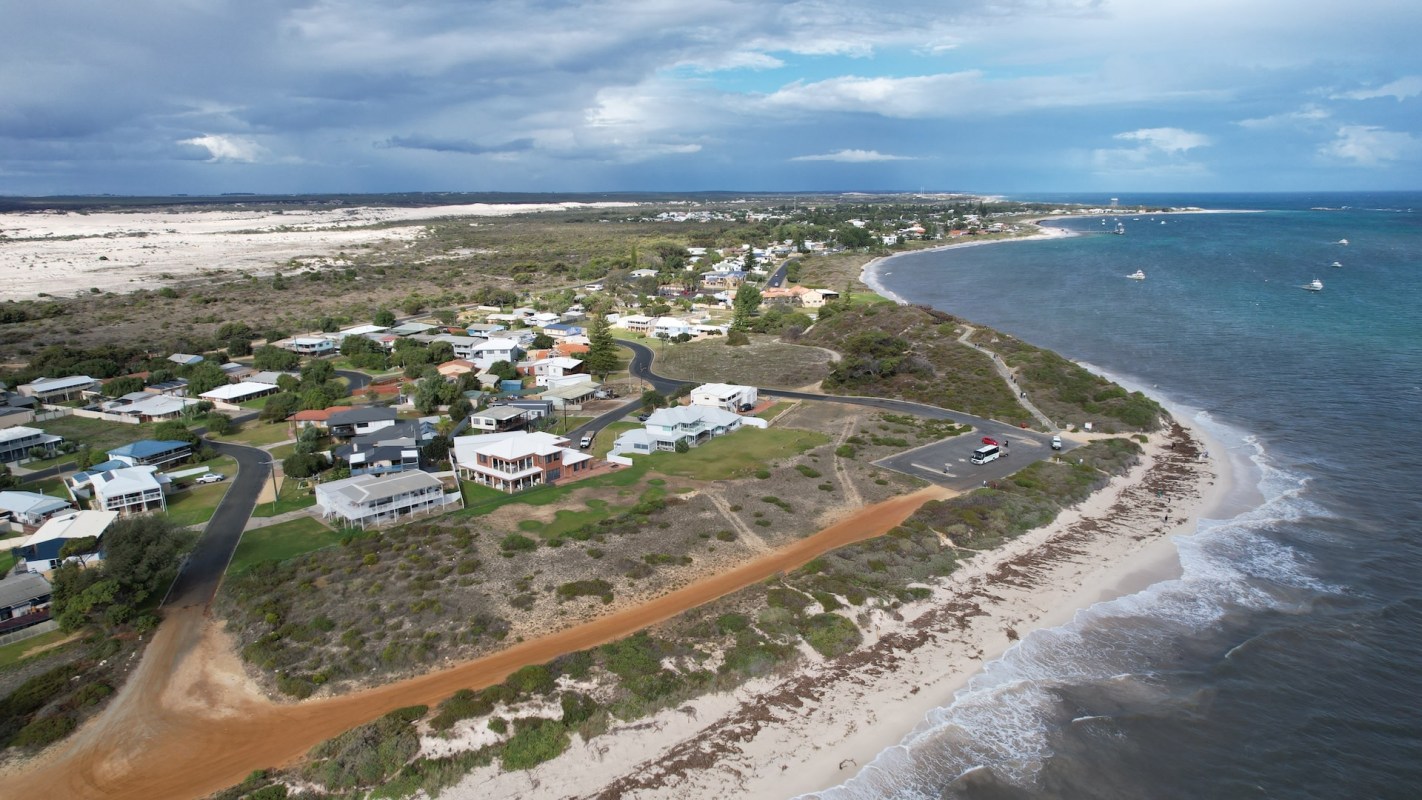
Residents of Western Australia are dealing with the loss of a prominent local landmark after it became unstable due to coastal erosion.
What's happening?
According to the Australian Broadcasting Corporation, the town of Lancelin, just north of Perth, Australia, started the process, as of mid-August, of demolishing the structure supporting an iconic coastal lookout.
The lookout had become a beloved landmark and tourist destination, thanks to its scenic views of the ocean. Unfortunately, the platforms and stairs laddered up along the beachy cliff had become unsafe for visitors due to a swiftly eroding coastline that destabilized the structure.
"It's terrible — we never expected this sort of event to happen," Peter Murphy of the town's District Community Association told ABC.
Why is the loss of the lookout concerning?
Coastlines have always been in a state of flux, with wind and water combining to alter the shape and size of a landscape composed largely of loose, sandy soil.
But as the warming of our planet drives weather patterns that are increasingly erratic and intense, coastlines are changing more rapidly. Rising sea levels, stronger winds, and more extreme storms are washing away substantial portions of the shore.
TCD Picks » Quince Spotlight
💡These best-sellers from Quince deliver affordable, sustainable luxury for all




Local government president Linda Balcombe explained that tough choices needed to be made in Lancelin to keep both residents and tourists safe.
"I've been really sad about this whole thing. I wish we could save it," she said. "I think it will make us realise what we can lose if we don't look after it."
Balcombe also said, however, that she felt some did not understand the very real dangers that coastal erosion can pose.
What's being done about erosion?
While many environmental advocates and local governments are working to stop erosion from washing away homes, key buildings, and historical sites, planning and financing resilient infrastructure projects can be a challenge.
|
Do you think your city has good air quality? Click your choice to see results and speak your mind. |
 Definitely 🥰
 Improving public awareness of climate threats can help to build support for the research, policies, and implementation that might make a difference. It can also encourage new solutions.
In the United States, for instance, a Washington State farmer decided to take matters into his own hands, battling erosion by dumping basalt cobble along the coastline in an effort that borrowed from Indigenous methods and surprised many with its success.
Countless scientists are adding to our box of potential tools too. Researchers at Northwestern University, for example, have developed a means of hardening sandy coastal soil against erosion using low-level electric currents.
In Australia, researchers are still trying to figure out the best approach to erosion along the western coast because of its unique landscape.
"[It's] a very long coastline, it's sparsely populated and very complex with a lot of limestone … cliffs and marine ecosystems," Arnold Van Rooijen, a lecturer at the University of Western Australia, told ABC. "I think governments are working very hard to deal with this issue, but it's definitely not straightforward and every site needs a tailored approach."

Join our free newsletter for good news and useful tips, and don't miss this cool list of easy ways to help yourself while helping the planet.