California just got a rare piece of unequivocally good water news.
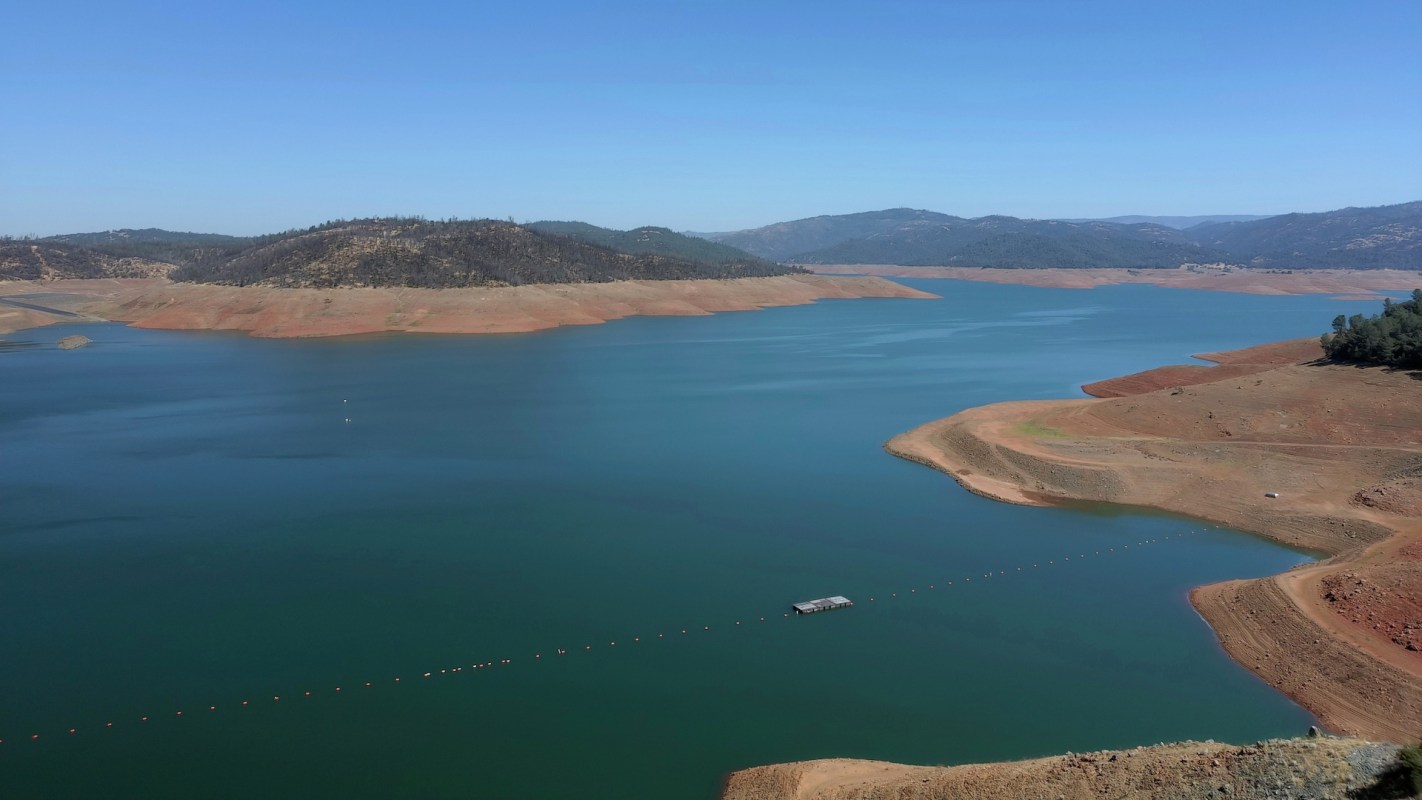
Lake Oroville, the state's second-largest reservoir, is nearly full after another solid winter, marking a striking reversal from the drought years that turned its receding shoreline into a symbol of California's water crisis.
According to the Mercury News, the reservoir was at 99% capacity earlier this month, or about 122% of its historical average for mid-May. It was sitting just roughly two feet from being full.
For a state that has spent years lurching between severe drought and flood anxiety, that is no small milestone. And the significance extends well beyond Butte County.
Lake Oroville is one of the most important pieces of the State Water Project, the sprawling system of reservoirs, canals, and pumps that moves water to cities and farms statewide and reaches 27 million residents, from San Jose to San Diego, according to the Mercury News. When Oroville is in strong shape, cities and farms alike have more flexibility. When levels fall too far, tighter restrictions and tougher trade-offs often follow. That is what makes this year's rebound especially notable.
As recently as August 2022, after three punishingly dry years, Oroville was just 22% full. Water levels had fallen so dramatically that the dam's hydroelectric turbines could no longer operate. The exposed lakebed and steep, barren banks became some of the most recognizable images of the state's drought emergency.
TCD Picks » Quince Spotlight
💡These best-sellers from Quince deliver affordable, sustainable luxury for all




Since then, the picture has changed dramatically. Three wet winters in a row, followed by a near-average winter this year, helped refill the reservoir. The result is the fourth consecutive year in which Oroville has reached or nearly reached capacity, something that has happened only a handful of times in the reservoir's history.
That kind of stretch matters. Fuller reservoirs help stabilize household supplies, ease immediate pressure on water-conservation measures, and provide farmers with a more dependable irrigation source. They also allow water managers to plan more deliberately for dry periods instead of operating in near-constant crisis mode.
The turnaround is also a reminder of how central water infrastructure remains to life in California. Oroville Dam, the tallest dam in the United States, impounds a reservoir capable of storing 3.4 million acre-feet of water. That storage helps sustain communities and agricultural regions that do not receive enough rainfall on their own to support their populations and economies.
Still, the good news comes with an important caveat.
Although Northern California rainfall was close to normal this winter, warmer temperatures meant more precipitation fell as rain instead of snow. By mid-May, the statewide Sierra Nevada snowpack had shrunk to just 14% of normal for that point in the season. That limits how much additional runoff reservoirs like Oroville are likely to receive in the months ahead, and it means another wet winter may be needed to keep supplies strong into next year.
Even so, Oroville's near-full status offers a clear example of what resilient water management can look like when storms arrive, and the state has the capacity to capture the water. State officials told the Mercury News that improved forecasting also helped operators retain more water this year rather than releasing it too early for flood control.
For Californians, that translates into something straightforward but meaningful: less immediate worry about shortages, and a little more confidence that the state can better withstand climate extremes when its reservoirs are managed effectively.
"It's great to have," said Tracy Hinojosa, operations manager for the State Water Project. "We're very pleased we were able to capture what we could."
Jeffrey Mount, who the Mercury News described as a PPIC water center senior fellow and professor emeritus at UC Davis, said the streak is highly unusual. "This is pretty impressive to have it full four years in a row," he said. "It is extremely unusual."
Hinojosa also pointed to recent winters dominated by powerful storms as a major reason for the reservoir's recovery. "We've had significant atmospheric river storms," she said, according to the Mercury News. "The storm door has been open. Those have been opportunities to capture more water. They have been really helpful."

Get TCD's free newsletters for easy tips, smart advice, and a chance to earn $5,000 toward home upgrades. To see more stories like this one, change your Google preferences here.