


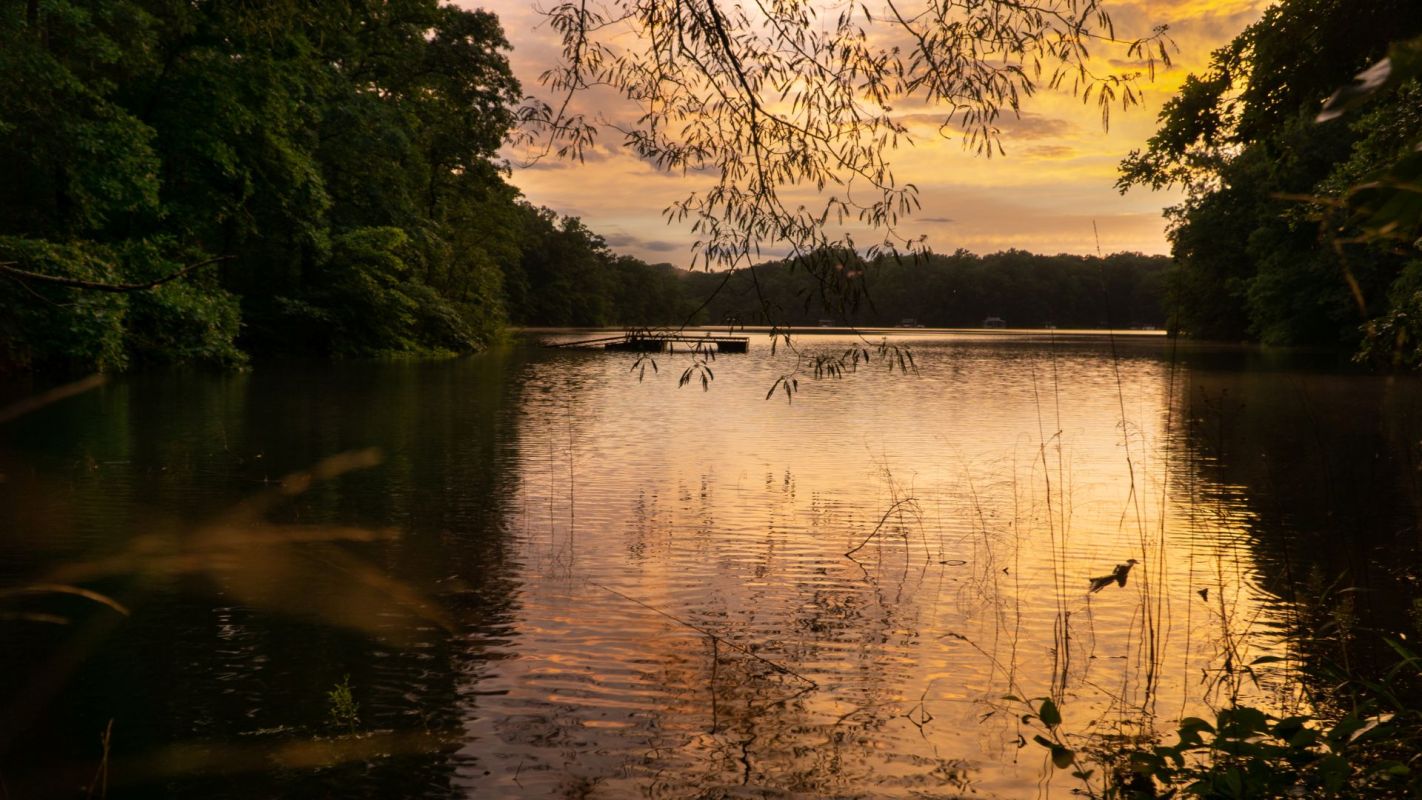
Lake Hartwell may have gotten much-needed relief after heavy rainfall, but the rise in water levels may be temporary.
Rain on October 10 and October 11 washed muddy runoff into coves at drought-stricken Lake Hartwell, leaving some parts of the South Carolina-Georgia reservoir a chocolate-milk brown.
As of October 10, Hartwell was still about 7 feet below its temporary operating target and 11 feet below historical averages.
Here's what to know
In a TikTok post, creator @gavinjsears said, "The recent rain is certainly welcome, but a few inches of rainfall doesn't automatically translate into a few inches of lake-level recovery."
@gavinjsears Lake Hartwell is looking more like chocolate milk after some much needed rain! And before anyone says it, NO, the entire lake doesn't look like this. Most of this footage was taken in a cove where muddy runoff from the recent rainfall is flowing into the main lake. As rainwater moves across the surrounding land, it picks up soil, clay, and sediment, which gives the water that muddy brown appearance. This is called turbidity, and you can actually see the difference in the footage where the muddy water meets the clearer water of the main lake. But what does all this rain mean for Hartwell's water levels? As of October 10, Lake Hartwell was sitting at approximately 648.92 feet above sea level. That's over 11 feet below its historical summer full pool of 660 feet and about 7 feet below the new temporary operating target of 656 feet. The recent rain is certainly welcome, but a few inches of rainfall doesn't automatically translate into a few inches of lake-level recovery. Some rain soaks into the dry ground, some runs into creeks and tributaries, and some evaporates. How much reaches Hartwell depends on where the rain falls across the watershed, how saturated the ground is, and how much water is released downstream. We could see some improvement as runoff continues making its way into the lake, but it's too early to say exactly how much. Meaningful recovery will take more widespread, sustained rainfall. And remember, even when the drought ends, Hartwell's operating target is now 656 feet year-round because of the Clemson Saddle Dike safety restrictions. After months of watching docks sit on dry land, I'm just glad we're finally getting some rain. We'll take every drop we can get! Has the rain made any difference in your part of Lake Hartwell? 👀 #LakeHartwell #AndersonSC #SouthCarolina ♬ original sound - Lockness Monster
He also said the murky water shown in the video didn't represent the entire reservoir. Most of the footage came from a cove where runoff from rainfall on October 10 and October 11 was entering the main lake, making the muddy inflow stand out against clearer open water.
According to his explanation, turbidity causes the muddy appearance: rainwater moves across nearby land, collects "soil, clay, and sediment," and clouds the water.
TCD Picks » Quince Spotlight
💡These best-sellers from Quince deliver affordable, sustainable luxury for all




Although the muddy water may be a sight for sore eyes, it doesn't guarantee a rebound. On October 10, Lake Hartwell stood at about 648.92 feet above sea level, more than 11 feet below its historical summer full pool of 660 feet and roughly 7 feet under the reservoir's new temporary operating target of 656 feet.
"Has the rain made any difference in your part of Lake Hartwell?" he asked.
More background
Not every inch of rain boosts the lake. Some water is absorbed by dry ground, some travels through creeks and tributaries, and some evaporates before it can significantly affect Hartwell.
How much the reservoir recovers depends on conditions across the broader watershed, including where precipitation falls, how much moisture is already in the soil, and how much water is being released downstream. A few inches in one spot or isolated showers may not raise the lake much.
He also referred to "months of watching docks sit on dry land," underscoring how long low water had already been affecting the shoreline before this muddy runoff arrived.
What's being done?
Because of Clemson Saddle Dike safety restrictions, Lake Hartwell is operated with a 656-foot year-round target instead of the former 660-foot summer full-pool mark.
Any rebound from October rain has to be measured against that new benchmark. Hartwell remained well below that lowered target level on October 10.
He said the lake could still improve as additional runoff comes in, but added that "it's too early to say exactly how much," and that "meaningful recovery will take more widespread, sustained rainfall."
The creator wrote, "I'm just glad we're finally getting some rain. We'll take every drop we can get!"
Where can I learn more?
These stories show how low water levels, drought, and uneven rainfall have left shorelines far from normal.
• In North Carolina, Lake Norman stayed low as drought forced Ramsey Creek Beach to close.
• Across North Carolina, two drought-shrunken lakes looked almost unrecognizable from above as water levels dropped.
• In West Texas, Lake J.B. Thomas rose sharply after rain, underscoring how crucial refill remains.
• In Alberta, Ghost Lake turned worryingly shallow as some areas fell to two feet deep.
• In Utah, Gunlock Reservoir filled completely after powerful storms, a striking contrast to Hartwell.

Get TCD's free newsletters for easy tips, smart advice, and a chance to earn $5,000 toward home upgrades. To see more stories like this one, change your Google preferences here.







