


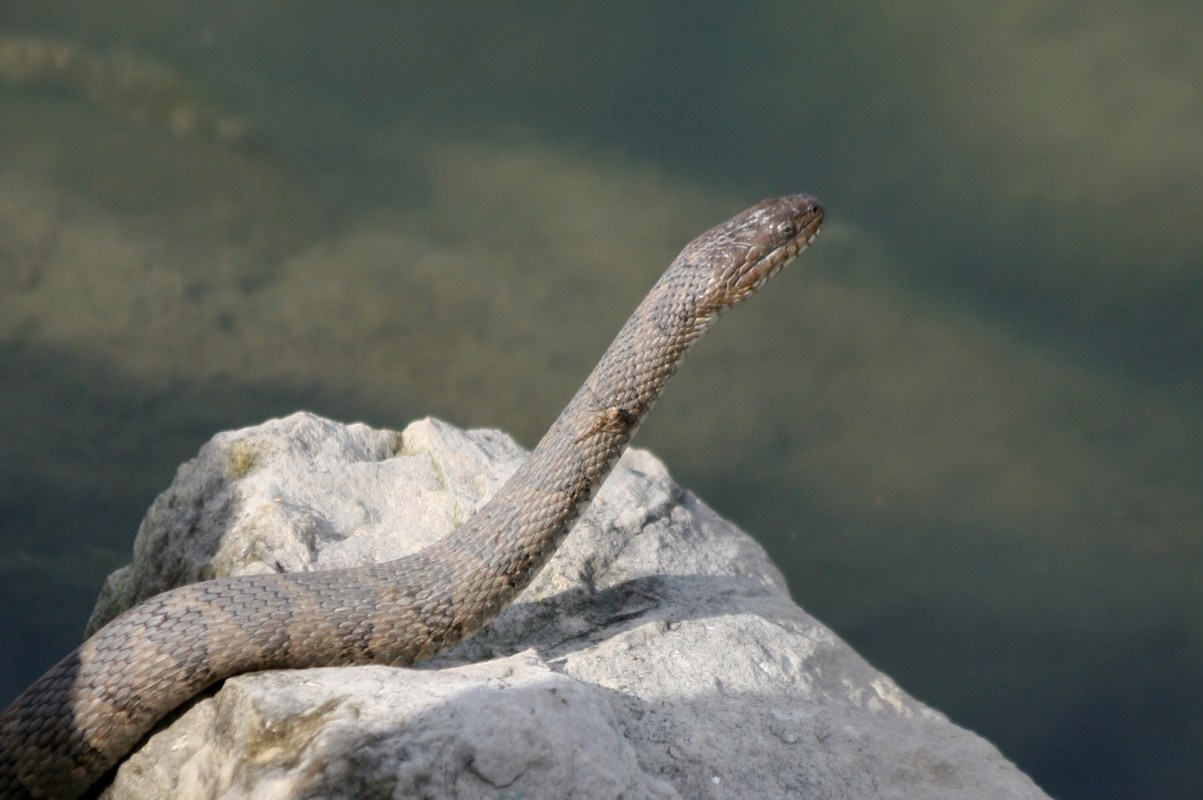
Lake Erie is one of the United States' most snake-populated lakes — including one species found nowhere else.
Here's what to know
Lake Erie is the only home of the Lake Erie watersnake and is among six U.S. lakes noted for especially high snake populations — the only lake on that list outside the Deep South.
As Cincinnati.com reported, citing World Atlas, the Lake Erie watersnake is a distinct subspecies within the common watersnake group. Its appearance differs from the more familiar banded form because those markings have mostly disappeared, leaving it largely gray and better camouflaged against limestone shores.
The subspecies has responded remarkably well to ecological change, with round gobies now making up about 90% of its diet.
More background
While the snakes getting attention around the western islands are primarily nonvenomous watersnakes, Ohio does have three venomous snakes.
Copperheads live in southeast Ohio, massasauga rattlesnakes are associated with swampy and wet areas, and timber rattlesnakes are found in southern Ohio.
TCD Picks » Quince Spotlight
💡These best-sellers from Quince deliver affordable, sustainable luxury for all




According to OhioPARC, the massasauga rattlesnake remains endangered after declines linked to habitat loss and the expansion of farming. The timber rattlesnake also remains endangered in the state after losses tied to habitat loss, human targeting, and unregulated collection.
The Ohio Department of Natural Resources described the timber rattlesnake as "one of the last mature forest species."
What can be done?
At Lake Erie and elsewhere in Ohio, people should avoid provoking snakes and give them room. Even the venomous species usually avoid confrontation, staying still or moving away unless they feel threatened.
The Ohio Department of Natural Resources also recommends making homes and yards less attractive to snakes by removing junk, rocks, brush, and boards, and keeping grass cut and landscaping maintained.
If a snake gets into a living space, the Ohio Department of Natural Resources said it should be removed and released at least a mile from the home. Residents can also contact the Ohio Department of Natural Resources at 1-800-WILDLIFE (800-945-3543) or wildinfo@dnr.ohio.gov.
Snakes remain part of Ohio's natural balance. As the Ohio Department of Natural Resources notes, they are "important for controlling destructive insects and rodents."
Where can I learn more?
Similar pressures are playing out in the Great Lakes, coastal Spain, and monsoon-hit Delhi, where changing ecosystems are leading to more snake encounters.
• In the Great Lakes, divers found the longer you look, more zebra mussels surface.
• On Ibiza, invasive snakes now advance as if they were on a battlefront.
• In Delhi, monsoon flooding is helping snakes invade local communities more often.

Get TCD's free newsletters for easy tips, smart advice, and a chance to earn $5,000 toward home upgrades. To see more stories like this one, change your Google preferences here.







