


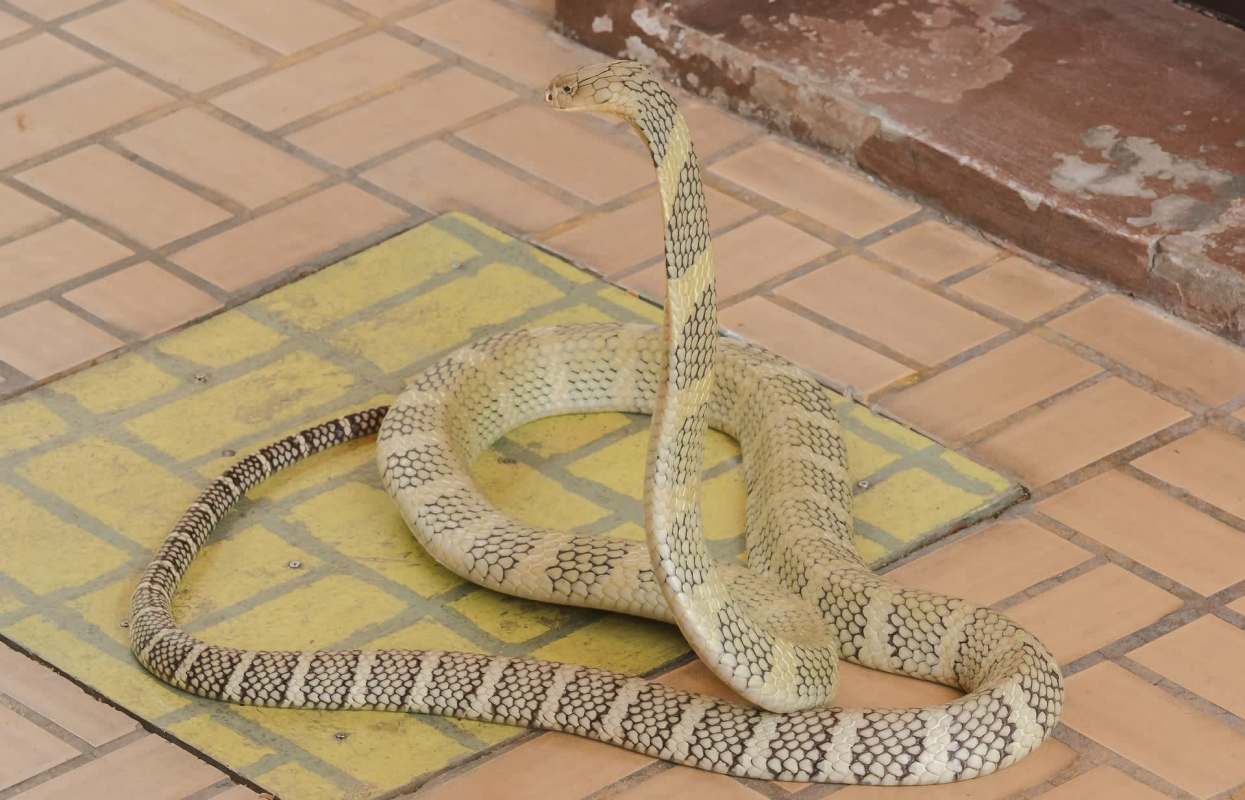
A 12-foot, venomous king cobra was safely removed from a university campus in Bangladesh in April, marking the second rescue of a king cobra there in just two days.
What happened?
Near the Drama and Dramatics Department of Chittagong University, a student spotted the massive cobra in the afternoon before alerting authorities, according to The Daily Star.
The outlet reported that shortly thereafter, the Society for Snake and Snake Bite Awareness arrived at the campus at about 4:30 p.m. and successfully captured the serpent after a 30-minute operation.
The snake was measured to be about 12 feet long and weighed roughly 13 pounds. According to The Daily Star, the campus' waterfall area was the site of another king cobra capture the previous day, involving a snake about 8 feet long.
Ibrahim Khalil Al Haider, an assistant professor of zoology and a 3SA adviser, told the publication the recent sightings reflect environmental pressures that are pushing snakes toward populated areas.
He said that "the hilly areas on the western side of the university are being occupied by the forest department and local residents, where cultivation and other human activities are ongoing."
TCD Picks » Quince Spotlight
💡These best-sellers from Quince deliver affordable, sustainable luxury for all




He added, "This is destroying the natural habitat of snakes, forcing them to move towards populated areas in search of shelter."
Why does it matter?
King cobras are highly venomous, and an unexpected encounter could put students, staff, and responders at risk.
When forests, hillsides, and other natural areas are altered for farming or development, animals often move towards roads, neighborhoods, farms, and into public institutions in search of food, water, or shelter.
These encounters can also point to habitat disruption. Human pressure on ecosystems can increase the chances of close contact between people and wild animals, leading to more conflict.
Experts generally advise people in snake-prone areas to keep a safe distance, avoid trying to handle the animal, and contact local wildlife authorities or trained rescuers right away.
Reducing habitat destruction and planning land use more carefully can help lower the odds of repeated encounters like this one, protecting both communities and the species displaced by human activity.

Get TCD's free newsletters for easy tips, smart advice, and a chance to earn $5,000 toward home upgrades. To see more stories like this one, change your Google preferences here.







