


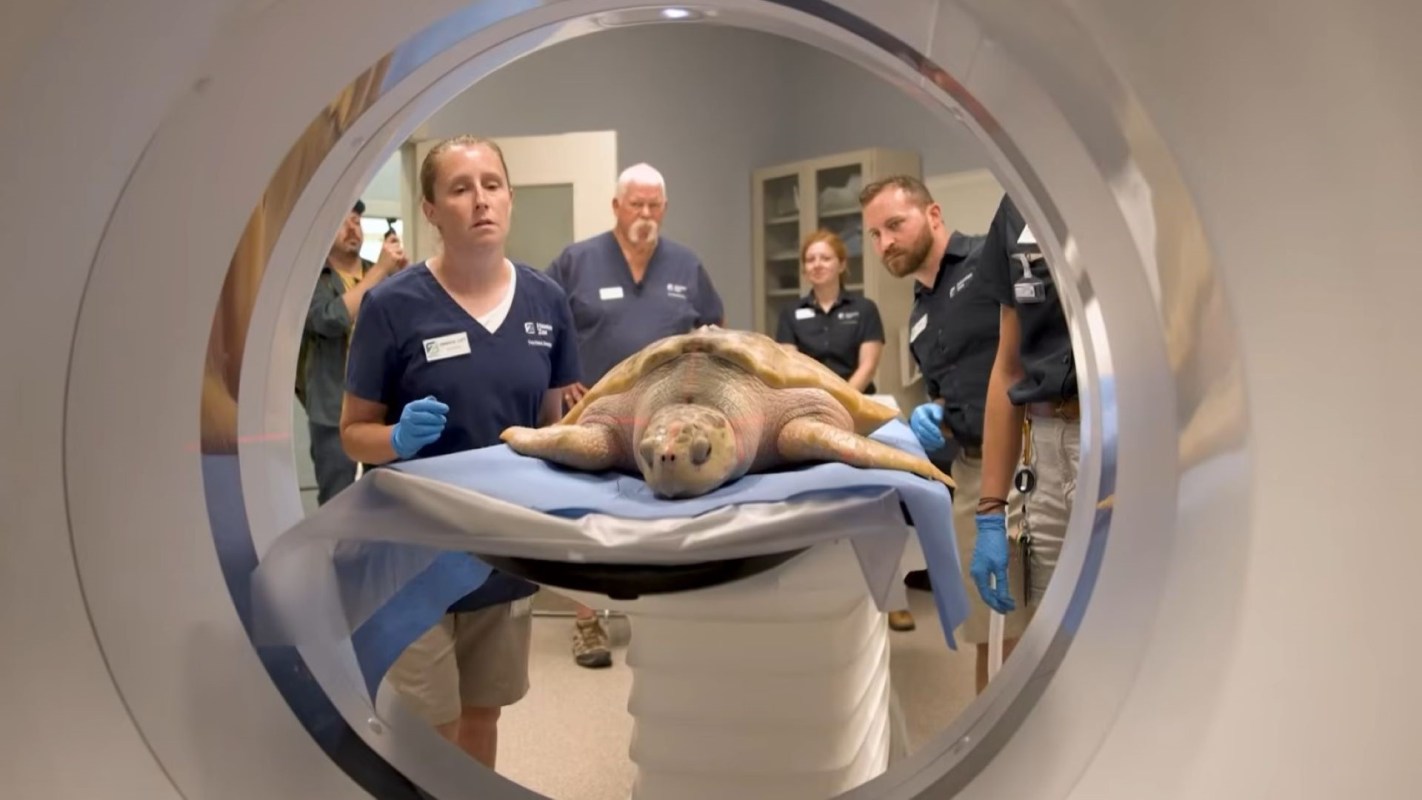
A Kemp's ridley sea turtle that ended up on a Welsh beach after drifting thousands of miles off course has now been transported 5,000 miles to Houston, a move that brings Rhossi back to the region where experts ultimately hope to release him into the Gulf of Mexico.
Getting there required survival through icy Atlantic conditions, years of rehabilitation, and international travel, Good News Network reported. Rhossi is now back within his usual range, but vets say one more medical hurdle remains before he can go free.
Here's what to know
According to Good News Network, Rhossi weighed just 2 pounds when they found him. After rehabilitation, he has now grown to 46 pounds.
Kemp's ridley sea turtles are usually found in the Gulf of Mexico and are considered one of the world's most endangered species, though strong ocean currents can sometimes carry them far across the Atlantic.
After Rhossi reached Houston, veterinarians conducted a full evaluation of his organs, eyes, mouth, shell, and flippers. He also underwent X-rays and a CT scan, which revealed lingering pneumonia in his lungs.
Still, Houston Zoo's veterinary team said Rhossi appears healthy, active, and vigorous overall — an encouraging sign for a turtle that has already survived long odds.
TCD Picks » Quince Spotlight
💡These best-sellers from Quince deliver affordable, sustainable luxury for all




More background
Rhossi's return stands out not only because he survived, but because it required a rare degree of international coordination.
The effort involved the Anglesey Sea Zoo, the Houston Zoo, the Texas State Aquarium, the U.S. Fish & Wildlife Service, NOAA, and Welsh helicopter pilot Darren Briggs.
Among the specialists involved, Good News Network said, was renowned senior veterinarian Dr. Joe Flanagan, who briefly returned from retirement to assist with Rhossi's care. Moving a protected marine animal between continents also required close coordination of treatment, transport, and plans for his eventual release.
What's being done?
No release decision has been made yet, and the Houston Zoo is keeping Rhossi in treatment for the time being.
The primary concern is clearing the pneumonia detected in his lungs so he has the strongest possible chance of survival once he returns to open water.
Public support is part of that system as well. Good News Network noted that part of each Houston Zoo admission ticket supports the zoo's sea turtle rescue and rehabilitation program, creating a direct connection between visitors and hands-on conservation work.
The Houston Zoo said it will keep treating Rhossi until staff can "ensure the best possible chance of a successful return to the wild."
Where can I learn more?
Rhossi's story is one example of what can happen when endangered sea turtles are pushed off course, injured, and nursed back to health by rescue teams. Similar efforts in U.K. waters, along the East Coast, and on nesting beaches show how military crews, aquarium staff, and conservation programs step in when these animals end up far from home.
• In UK waters, the Royal Navy helped rare sea turtles return home after storms derailed migration.
• In Delaware, rescuers are in a race against time after a propeller strike wounded a sea turtle.
• Across nesting beaches, conservation work has fueled remarkable resurgence of sea turtles despite decades of decline.

Get TCD's free newsletters for easy tips, smart advice, and a chance to earn $5,000 toward home upgrades. To see more stories like this one, change your Google preferences here.







