


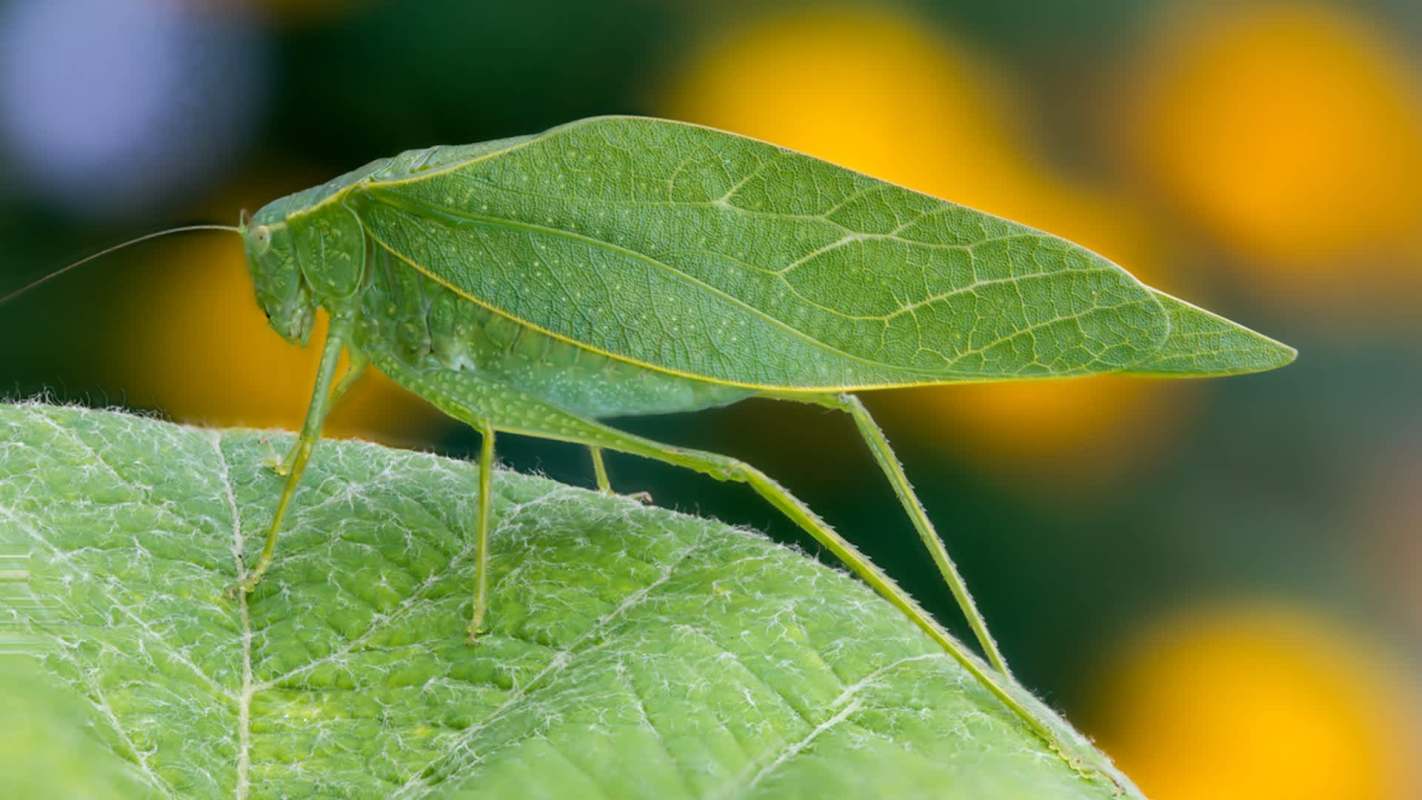
On warm August evenings in New York's Hudson Valley, the loudest sound outside may be coming from the trees rather than from crickets. Katydids, green insects that blend in with leaves, can overwhelm the nighttime soundscape in August. Most people recognize the noise long before they ever see the insect, and many do not realize it can deliver a painful bite if picked up.
What's happening?
One reason katydids are so hard to find is that, unlike crickets, they spend most of their time in trees and shrubs instead of near the ground. Their bright green bodies remain hidden in the leaves during the day, and their wings have vein-like markings that make them resemble foliage.
In the Hudson Valley, August is peak katydid season, as WPDH reported. After dark, males attract females by moving their front wings together, and when many are calling at once, the combined buzz and chirp is often mistaken for crickets. Living high in the canopy makes them much easier to hear than to spot.
WPDH also warned against handling them: katydids do not sting, but the chewing mouthparts they use on leaves can produce a hard bite when they are provoked.
Why does it matter?
Even though the noise is a familiar part of August and September, the insect making it often escapes notice because it stays camouflaged high in the trees. The risk of a painful bite generally arises only when a person tries to pick one up.
WPDH also said katydids help support the local ecosystem, serving as prey for birds, bats, frogs, spiders, and other wildlife while feeding mostly on leaves, flowers, and at times small insects.
TCD Picks » Quince Spotlight
💡These best-sellers from Quince deliver affordable, sustainable luxury for all




What can I do?
Katydids are best observed from a distance.
If you hear the loud August chorus in your yard or a nearby wooded area, there is no need to intervene or try to identify the insect by hand.
Teaching children not to grab unfamiliar insects is a smart precaution as well.
Listening and observing after dark is safer than touching. Since katydids stay high in trees and shrubs, they are often easier to locate by sound than by sight.
These insects are part of a functioning backyard ecosystem. The summer chorus is a sign that local food webs — including birds and bats that rely on insects — are active.

Get TCD's free newsletters for easy tips, smart advice, and a chance to earn $5,000 toward home upgrades. To see more stories like this one, change your Google preferences here.







