


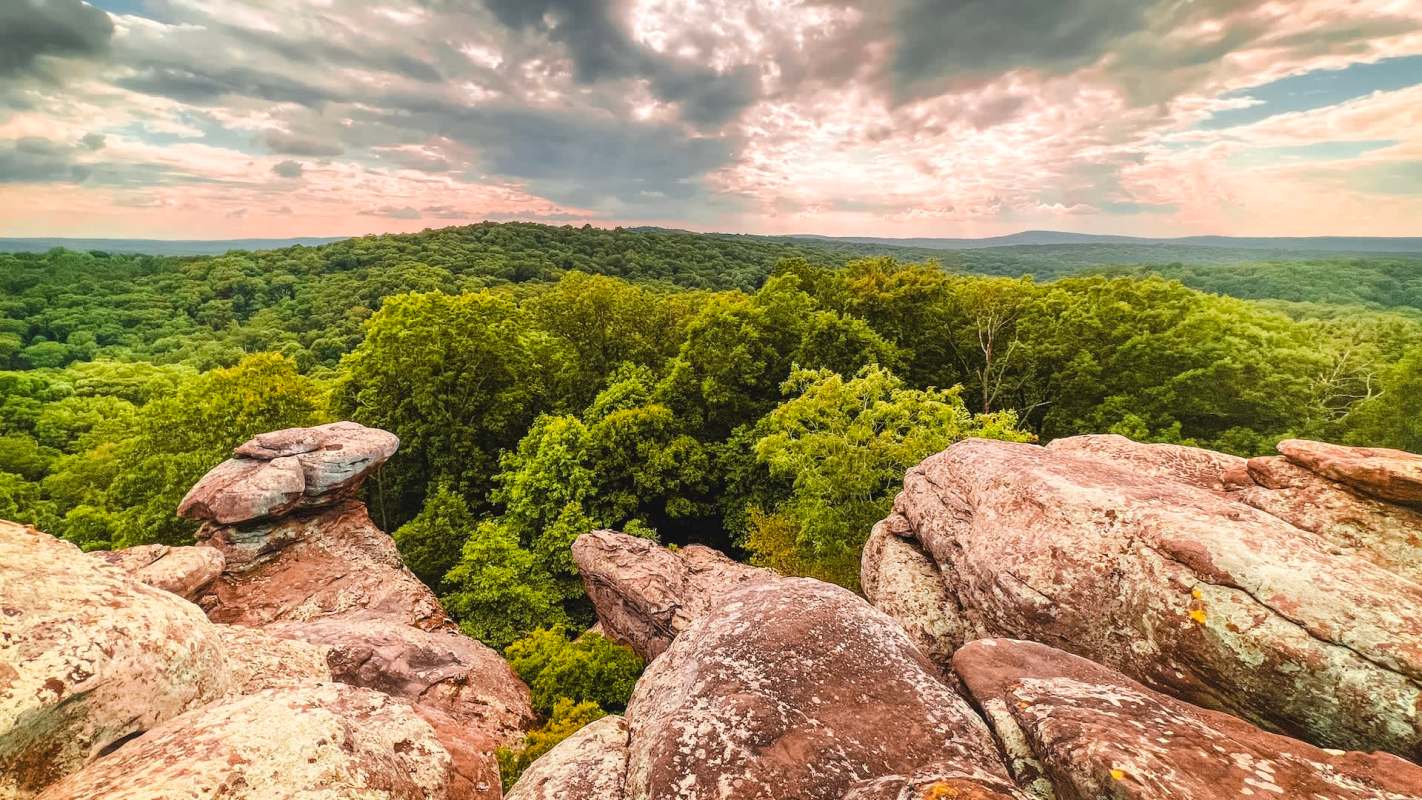
A federal judge has halted a commercial logging plan in southern Illinois' Shawnee National Forest after finding that the U.S. Forest Service approved the project before completing a required review of its effects on an endangered bat.
The ruling is drawing renewed attention to how federal agencies balance development on public land with protections for vulnerable wildlife.
Here's what to know
U.S. District Judge Nancy Rosenstengel ruled that the Forest Service violated the Endangered Species Act when it approved the tree-thinning plan in October 2024 without waiting for the U.S. Fish and Wildlife Service to finish its final biological opinion, according to Capitol News Illinois.
The dispute centered on 67 acres in Pope County. Environmental groups said the Forest Service's August 2024 assessment had already recorded Indiana bat detections there and found the project was "likely to adversely affect" the endangered species even with required mitigation measures, per Capitol News Illinois.
After the project received approval, the Fish and Wildlife Service issued its final opinion, identifying the area as habitat for the federally protected Indiana bat. It recommended avoiding logging from April through October, when the bats usually roost in trees.
Logging still began in mid-August 2025. By the time a temporary restraining order halted the work, 40 of the 67 acres in the project area had already been logged.
TCD Picks » Quince Spotlight
💡These best-sellers from Quince deliver affordable, sustainable luxury for all




More background
Rosenstengel was not persuaded by the Forest Service's claim that the error was minor because no resources were committed until 2025, after the bat review had been completed.
Indiana bats have been federally listed as endangered since the 1960s. The Fish and Wildlife Service said that by 2019, the species' population had declined by half over the prior five decades, with white-nose syndrome becoming a major cause after arriving in North America in 2007.
The judge also pointed to the fact that the contractor has not returned, with cut lumber still scattered across the forest floor. Rosenstengel said that undermined the agency's argument that formally vacating the approval would cause additional harms such as habitat loss, soil erosion or economic damage.
The ruling arrives as President Donald Trump's administration pursues broader changes that could ease approvals for logging, mining, drilling and road construction on federal lands.
What's being done?
The Shawnee project has been ordered suspended. Before any further work can proceed, federal officials may have to revisit the approval and fully incorporate the Fish and Wildlife Service's findings.
In July, the administration finalized a rule that narrows the definition of "harm" under the Endangered Species Act, a change that could make it harder to block development in wildlife habitat unless animals are directly injured or killed.
The Forest Service has also proposed rolling back the long-standing Roadless Rule, which has limited road construction in federally owned backcountry areas. Some land near the Shawnee project is currently covered by that protection.
"An agency cannot evade the jurisdiction of the federal courts merely by promising that it will not change its mind even if a court orders it to reconsider; otherwise, an agency could act as arbitrarily and capriciously as it wished and simply moot every challenge that came its way," Rosenstengel wrote, per Capitol News Illinois. "Fortunately, this is not the law."
Where can I learn more?
Similar clashes are playing out across public lands, where courts and federal agencies are wrestling over logging plans and wildlife protections. Judges are being asked to step in when critics say projects moved forward without enough safeguards.
• In Oregon, a judge blocked a contentious management plan after critics challenged old-growth logging.
• In the Great Divide Basin, a court stopped the government's drastic plan affecting horse habitat.
Federal land decisions are drawing close legal scrutiny when wildlife impacts are on the line. That's part of why the Shawnee ruling could resonate beyond one small tract in southern Illinois.

Get TCD's free newsletters for easy tips, smart advice, and a chance to earn $5,000 toward home upgrades. To see more stories like this one, change your Google preferences here.







