


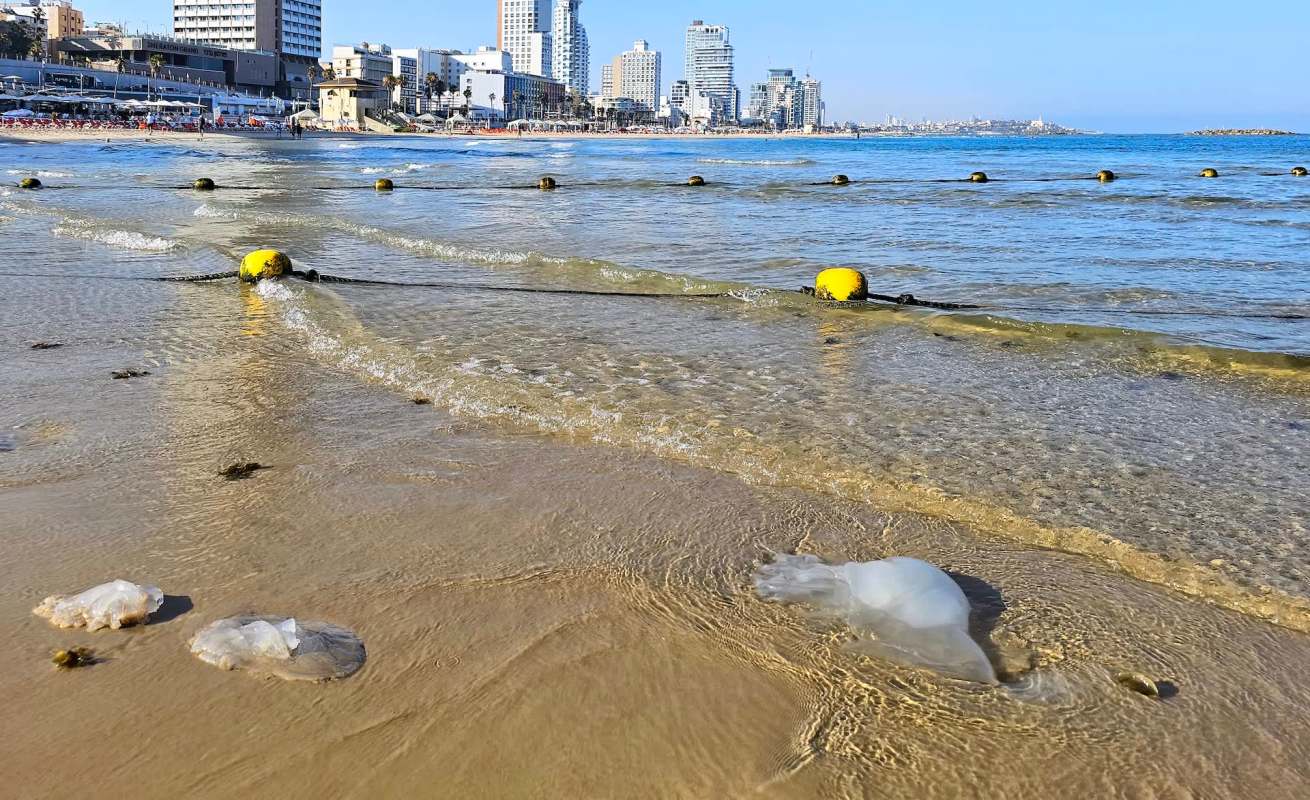
Swimmers on Israel's Mediterranean beaches were told to be especially careful, as officials issued an orange alert amid reports of jellyfish and painful stings.
The warning came as stable early-summer weather drew people outdoors and many into the water.
What's happening?
Officials placed the coast under an orange swim advisory, a level used to flag conditions that may be risky for those who enter the water.
Jellyfish sightings have been increasing in Israel along several parts of the Mediterranean coast. Specifically, beaches in Ashkelon and Ashdod have had huge increases in jellyfish sightings, per Israel Hayom.
Reports of stings from both the water and the shore, alongside sightings of jellyfish, were noted around Tel Aviv and Herzliya, according to Israel Hayom.
Haifa Bay, on the other hand, has not experienced the same kind of activity, but reports of "water stings" there were on the rise. That suggests swimmers may encounter jellyfish in the sea even when dense groups are not visible.
TCD Picks » Quince Spotlight
💡These best-sellers from Quince deliver affordable, sustainable luxury for all




Why does it matter?
The combination of rough Mediterranean conditions and increases in local jellyfish populations raises the risk of injury and discomfort. Even minor stings can quickly turn a beach outing into a first-aid situation, especially for children or people who have strong reactions.
Scientists have long linked some jellyfish booms to human-driven changes in the ocean, including warming waters, overfishing, and pollution, which have disrupted marine food webs.
When those pressures build, jellyfish can thrive in places where ecosystems are already strained.
Jellyfish also affect tourism, fishing, and even coastal infrastructure. These encounters can be difficult to avoid since swimmers may be exposed even without seeing a jellyfish.
Reducing the human pressures that can destabilize marine ecosystems, including ocean warming and pollution, may curb the conditions that allow these creatures to become so disruptive.

Get TCD's free newsletters for easy tips, smart advice, and a chance to earn $5,000 toward home upgrades. To see more stories like this one, change your Google preferences here.







