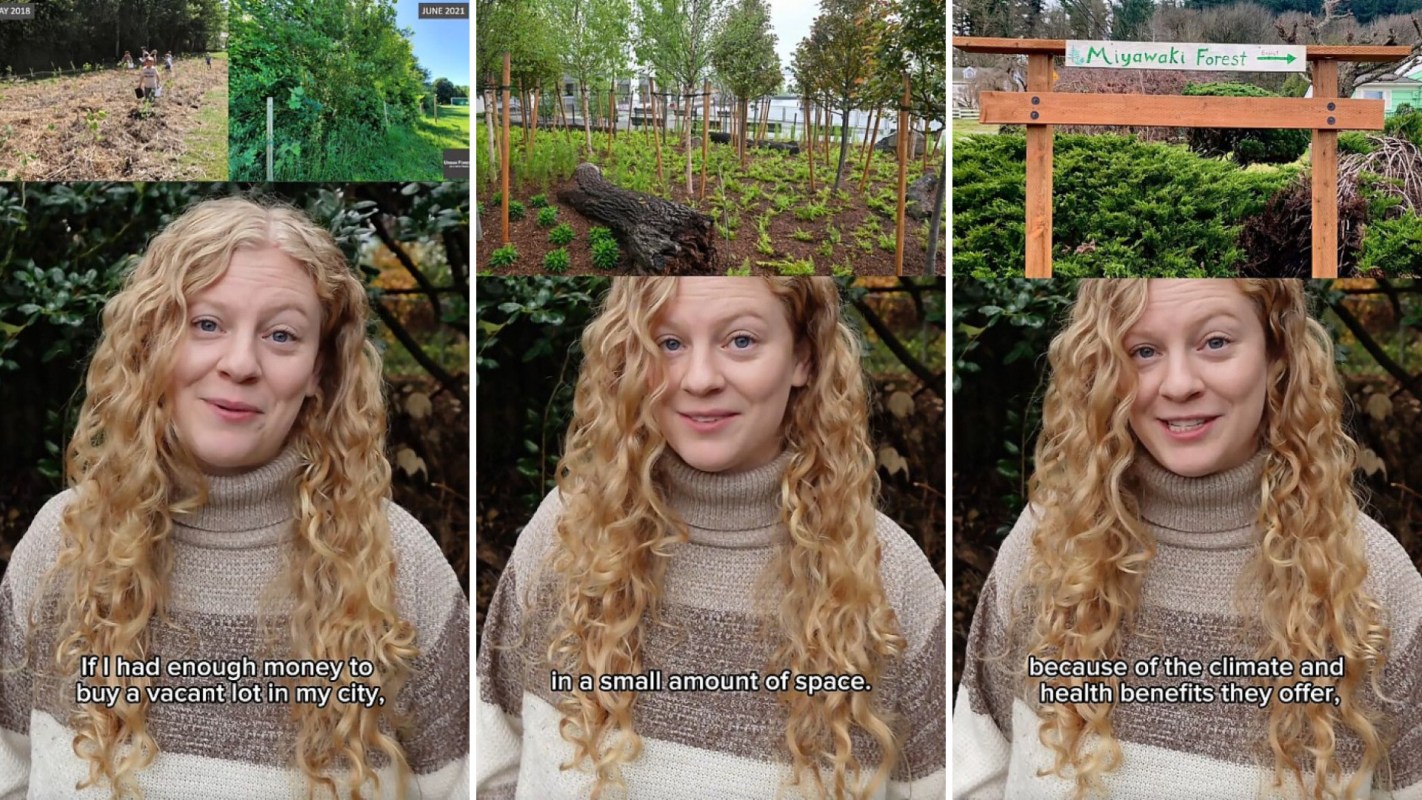
A vacant city lot could become a thriving native forest in just a few decades, thanks to a planting method developed by a Japanese botanist.
Here's what to know
Sustainability scientist Alaina Wood (@thegarbagequeen) described how these densely planted "pocket forests" can transform urban spaces.
In a TikTok video, Wood outlined an approach that packs a broad mix of native vegetation into a small space. Japanese botanist Dr. Akira Miyawaki originally developed the method to create planted buffers around industrial facilities.
"If I had enough money to buy a vacant lot in my city, I would probably turn it into a pocket forest," Wood said.
They cited research showing growth rates up to 10 times those of conventional plantings. Packing plants closely together pushes them to grow quickly as they compete for limited resources.
A biodiverse forest might otherwise take a century or more to develop, but this accelerated growth can establish one on a small plot within several decades.
TCD Picks » Quince Spotlight
💡These best-sellers from Quince deliver affordable, sustainable luxury for all




More background
Wood said pocket forests outperform conventional plantings on several measures, from flood reduction and pollutant removal to carbon capture and biodiversity.
Urban communities can use the Miyawaki method to establish greenery with less need for ongoing maintenance. These forests can become self-sustaining within just a few years.
Interest in pocket forests is growing because of their health and climate benefits. Cities around the world have already established them in a variety of climates.
What's being done?
People and wildlife could also find food in a pocket forest if edible species are mixed in with the other vegetation, the video noted.
One viewer said in the comments that local needs guide their work as a professional pocket-forest designer, including collaborations with state, county, and town officials.
Those projects can provide habitat for key migratory bird species while limiting erosion and reducing light and sound pollution.
Other viewers raised practical questions about putting the approach into action. One asked how small a forest could be while still providing the described benefits. Another suggested requiring data centers to fund pocket forests in the communities where they are built.
For one commenter, a pocket forest at a school already provides a connection with nature.
"My school has a pocket forest! I love it so much, there's a lot of birds on the big trees there are and it sounds so beautiful. So far it's going pretty good," they said.

Get TCD's free newsletters for easy tips, smart advice, and a chance to earn $5,000 toward home upgrades. To see more stories like this one, change your Google preferences here.
Cool Picks